


 Apple Podcasts

 Spotify
 RSS Feed
This Is a Booger. We’re Gonna Get Rid of It.” Nurse-Turned-Patient Mary Ghosh on Humor, Honesty, and the Chemo Playlist
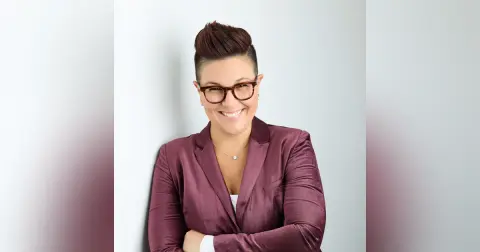

Dr. Brad Miller welcomes Mary Ghosh—registered nurse, triple-negative breast cancer survivor, and author of Chemo Burgers: A Music-Fueled Memoir of Humor and Hope in the Chaos of Cancer. Diagnosed at 41, Mary went through 16 rounds of chemotherapy, including four doses of “Red Devil” and 12 rounds of Taxol. In this candid, often funny conversation, she shares how music, humor, and honest storytelling helped her cope with treatment—and how writing her book became part of her healing and advocacy.
Brad and Mary explore:
- Why she gave her memoir the startling title Chemo Burgers
- The “boogers” metaphor she used for treatment’s unpleasant side effects
- Seeing cancer from both a nurse’s and a patient’s perspective
- How diagnosis changed her priorities, relationships, and sense of time
- Getting through intensive treatment, pneumonia, and the “messy middle”
- The songs—including “Seasons” by Chris Cornell—that helped her cope
- Finding laughter in a Halloween costume after losing her hair
- Balancing humor with grief, honesty, and vulnerability
- Turning her treatment blog into a book and a source of purpose
- Her advice for someone who has just received a cancer diagnosis
This conversation offers:
- An honest account of treatment: Mary talks about the realities of chemotherapy and why she wanted to describe the experience without sugarcoating it.
- A personal approach to coping: Hear how music and humor helped her get through difficult moments, without pretending the hard parts weren’t real.
- A reminder to make room for what matters: Mary reflects on spending time with family, choosing relationships more intentionally, and pursuing meaningful work.
- Encouragement for the newly diagnosed: Her first advice is to take a breath and remember that there may be time to gather information and meet with a care team before making a plan.
- A story of turning experience into connection: Mary explains how writing, advocacy, and messages from readers have helped her feel that her story can support others.
Cancer treatment can be grueling and uncertain. Mary’s story doesn’t minimize that; it shows how honesty, family support, music, and a little humor helped her move through it. Whether you’re facing cancer yourself or supporting someone who is, this conversation offers a warm, candid perspective on finding ways to cope—one song, one laugh, and one step at a time.
Dr. Brad Miller 0:00
Picture yourself in a recliner that doesn't quite recline, a warm blanket from the cart, an IV pole beeping like it's mad at you, and one earbud playing the song that's going to get you through the next four hours. That's in the chemo chair. Some of you listening here have been in that experience. Some of you may have that experience upcoming. Well, I want you to welcome you to our episode here of the Cancer and Comedy Podcast, where we're all about healing with hope and humor. My name is Brad Meller, and today my guest is Mary Ghosh. She is a registered nurse from the Detroit, Michigan, area, and a triple-negative breast cancer survivor. And she went through 16 rounds of some of the harshest chemo that there is. She came out the other side. She wrote a book about it. We're going to be talking about that here today. It's got a great title. Love the title. The title is "Chemo Burgers: A Music-Fueled Memoir of Humor and Hope in the Chaos of Cancer." Burgers. We're going to get into that here in just a second, and she'll explain it. So, Mary, welcome to our conversation here today, my friend.
Mary Ghosh 1:06
Thank you so much for having me, Brad. That was such a nice introduction, and I'm excited. I'm excited to be here and excited for our talk together and our time.
Dr. Brad Miller 1:14
Awesome. Well, Mary, I'm getting to know you a little bit. You kind of tell the truth about chemo. You're an RN, for one thing, and so you've kind of seen it from both sides of the matter, both as a healthcare provider and as a patient, and so you've and then you got the just real unique or the love of music that comes into play here. But I just got to, I just got to ask you right up front here, Mary. What's with the burger thing? Tell us about it. What's, uh? Everybody's asking. What? What? What do you mean by the chemo burgers? What's that all about?
Mary Ghosh 1:46
Sounds pretty gross, right? It sounds pretty shocking, pretty in-your-face. Which is exactly what I wanted for the title of my book. Because of a couple of things. First of all, I wanted a title for my book to give my readers the same feeling that I had when I was sitting in that doctor's office, being told that I had, first of all, breast cancer, and then being told that I would have to go through six months of chemotherapy. I was 41 years old, and it was the most shocking news I'd ever had. I was as healthy as can be. I found out after my second mammogram ever. I had, you know, my first one at 40 years old, when it's recommended, and then the second one at 40, which was clear, and then the second one at 41 years old, which showed that a 1.6-centimeter mass grew in one year, so that news sent just a shock wave and chills down my spine and everything that you can imagine that comes with a cancer diagnosis, as you and your listeners know. So I wanted a title for my book that was going to give my readers that same, like, what? What is that?
Dr. Brad Miller 3:02
Yeah, it gets your attention. That's for sure. Yeah,
Mary Ghosh 3:05
Grabs your attention, right? Yeah. So then the second part of it is that I wanted. I'm somebody who, if I can change the dialog or change the script of something that's going on in my life, just to give it maybe a funnier or a sillier perspective, I do that if it helps me get through times of heartache, times of, you know, just difficult times. If I can change the script and have a little control over that, so you will read in the book that there is an actual chapter that explains what chemo boogers are, which is an unfortunate side effect of
Dr. Brad Miller 3:42
So it's kind of a it's kind of a real thing. It's just not just a kind of a euphemism for things. It's kind of a real thing, right?
Mary Ghosh 3:49
Yeah, and without giving too much away, because it is a real thing. I wanted to be honest about what the side effects really are, right? But I ended up turning it into a metaphor for all the crap I was going through, sure, absolutely. Instead of calling something a medical term, you know, the side effect of alopecia, your hair falling out, or nausea and vomiting, it was like, no, this is a booger. We all, I mean, let's be real, let's be frank. We all have boogers in our lives, right? Of course,
Dr. Brad Miller 4:21
Of course,
Mary Ghosh 4:21
A very good purpose. They filter out all the junk that we're breathing in, right, in and out every day. But it's gross, right? But we all have it. Like, get rid of it, blow it out, move it on, move on to the next thing, and don't give it the attention that it's seeking. And so I pretty much named all of my side effects and the yuck I had to go through for six months: a booger. I'm like, this is a booger. We're gonna get rid of it, and we're gonna move on.
Dr. Brad Miller 4:52
Well, and that's part of what you did here, and that's why you wrote the book and is why we're having a conversation here today, because we love that. Here at Cancer Comedy, we love the attitude, you know, to try to see things with the absurdity of it all, and kind of the weird, dumb things, gross stuff that happens. Because when you have a physical ailment, you know, like cancer or something else like this, there's often some pretty gross things. Surgery is kind of gross sometimes, and chemotherapy is gross, and so is other treatment schedules, and you know people you know lose control of their bodies in various ways, and there's just not a there's some gross things of it. But you actually saw it from the role of a nurse and as a patient here, and I got a feeling you know I've was a pastor for 43 years, which I spent my fair share of time in hospitals with people, and I know there was always nurses and other caretakers who would some of would come in just kind of be dour and that kind of stuff and just get the job done, punch the time type type of thing. Other people come in and kind of give the patient or other people a hard time a little bit. You try to lighten the mood a little bit, even while you get to get the job. I got a feeling you're a little bit more of the latter in your care of people. Is that anywhere close to what I'm talking about here?
Mary Ghosh 6:09
I absolutely am, and to be honest as well, and I always like to point this out. I talk about it in my book. I was actually in pediatrics. I worked in pediatrics, not in oncology. Right. Um. So you know, a little bit of a different field, but yeah, I did have that experience of being on both sides of the table, the chair, whatever you want to call it, um, and so that helped me understand a little bit what patients might need or what they might be looking for, and I very much am like, I mean, yeah, this whole experience is gross. It's weird. It's- it's, you have to laugh sometimes. You have to, just because it's like this is not normal. You're dumping this poison into my otherwise healthy body. Things are going to be weird. They're going to be gross. And I just like being told the truth. I'm not like somebody, you know. I would tell my oncology nurse, like, just tell me what's going to happen. I like to plan. I like to understand it. Don't sugarcoat it. Don't give me this jargon that's like hard to understand. Just tell me, is this going to be weird and ingrown? And I felt like I had a hard time truly getting the truth out of anyone who hadn't been through it themselves. It's like the nurses and the doctors. Yes, they have all the knowledge. They're great at what they do. But if they hadn't been through it themselves, how can they really describe what it's like? And so I like I wanted to sort of write this guidebook or this honest, you know, handbook of what it's really like, so that if there's the next person feeling like young woman, I know it's not just women; it's it can be men too, who are just feeling lost and like, oh my gosh, am I headed into someone? Please just be honest with me.
Dr. Brad Miller 7:57
Yeah, that being honest, and I think you make a good point there about the experience aspect. I've spent a lot of time in teaching hospitals where you know you have the kind of the lead doc coming in, had a gaggle of half a dozen or so other medical interns and medical people learning, and you could just sometimes see their intensity and sometimes see the glazed overlook in their eye because sometimes just caused by being near young people and so on, they hadn't experienced some of the things that other people had. But you've experienced it, you know. You at least you've had the medical training, you've had that type of thing going on, and so you also have this thing going on where sometimes the the you know the the doctor or the nurse is not the best patient in the world because they know too much. Does any of that kind of stuff come into play? Did your training help you at all? And did knowing too much kind of be a factor in how you handled it?
Mary Ghosh 8:52
it? Um, did the training come into play? Yes. Like, I, you know, are not bothered by needles and understanding how all of that stuff works, and IV tubing and and the the little ins and outs of that stuff. No, yes, that helped me, but because of the fact that I truly didn't understand oncology, no, I don't think I knew too much because I didn't know anything, especially not being prepared for a cancer diagnosis or all the drugs that you're being bombarded with, I knew, I knew just a brief overview, but I definitely did not feel like I knew too much.
Dr. Brad Miller 9:31
Yeah,
Mary Ghosh 9:33
Which maybe was a blessing to this guy. Yeah,
Dr. Brad Miller 9:34
Of course, of course. Well, well, Mary, what was something? What did nobody tell you about this experience that you wish somebody had told you going into it?
Mary Ghosh 9:48
Oh, that's a good question. I think I could give you 20 different answers, but I think I think overall, I would say. That it completely changes you. It com. I am a different person than I was. I'm going on four years. I'm a different person, and honestly, in a positive way. I think it taught me so, so much, and I'm sure you've heard this theme before on your podcast. But cancer changes you. It puts things in perspective. It makes you appreciate the smallest blessings in life a little bit more. And I do. I live my life in a way that's just like. I also don't put up with maybe some of the nonsense I put up with before.
Dr. Brad Miller:Yeah, I got you. I got you on that. Yeah. I saw. Yeah. Well, give me. Give you. You gave me kind of a vague example. I don't put up with the nonsense. Can you be more specific about how this changed you? Was this an emotional thing, a relationship thing, a physical health thing, something else? How do you relate to your family? Anything along those lines? Tell me an example of how this changed you.
Mary Ghosh:I think all of those things have physically changed me. I think I choose much more wisely how I spend my time and who I spend my time with. I say no to things more easily if it doesn't feel right. No to certain relationships in my life, or yeah, certain behaviors from people that maybe I would have accepted in the past because it just does. It puts this timeline that, you know we all have we all have only a certain amount of time here on this earth and a cancer diagnosis and everything that I went through just really makes you stop and go. Okay, well, I got through that. I survived that. I'm beyond lucky and blessed. And now, moving forward, how does my time look? And I think you make it.
Dr. Brad Miller:I think you're making a very good point about the time. And I want to come to that in a minute. But you were on the tip of your tongue, saying something else. I interrupted you. For me, it was, " I'm sorry.
Mary Ghosh:I sorry I lost my train of thought too.
Dr. Brad Miller:But sorry, I was just thinking about time when you mentioned time. How for me I term this, and some of the writing I've been doing has to do with sometimes call it cancer time or kind of 3D time, where you know we all have finite time, but we just don't know what it is. You know, we I had a one of one of my secretaries of one of my churches was killed in a car wreck, and that was she was here one day and gone the next. So, but in cancer, when you get that diagnosis, I call it kind of magnifies and exemplifies. I call it 3d time because it kind of comes right in your face. You know, in my case, my doc said if I didn't do something about my situation, maybe three years I would have left. It's been about four years now since that happened. But you know, it gives you a sense of, okay, I don't have time for toxicity in my life, but I do want to do the things that give me joy, give me meaningfulness, or just accomplish some of those things I haven't done before. Traveling, whatever it would be- was any of this a part of your experience, Mary?
Mary Ghosh:Absolutely, and it starts on a bigger scale with the book. I mean, never in a million years did I think in my life I would write a book. It's a lot of work to write a book,
Dr. Brad Miller:indeed.
Mary Ghosh:But writing helped me heal from my own trauma, and it also made me realize that if my story can help just one other person out there, then I'm going to go for it. I'm going to do that. That's how I'm going to spend my time. I also have a wonderful husband and two kids who were pretty young when I was going through everything, and I want to spend every moment with them. We love to travel. You talked about travel. I'm like, I, I don't know if and when I could have a recurrence. I don't. At the time, you know, when you're first diagnosed, you don't know what stage it is. You don't know what treatment looks like. I mean, you're like, oh my gosh, is this? Are they gonna give me like a really bad prognosis? You don't know. And so, yeah, I just, it's just like setting aside a timeline, like you said, of just like, I wanna, I wanna travel the world. I wanna spend as much time with my family. I want to get my word out there with my book. I have found myself also that I'm becoming this huge advocate for breast cancer awareness because it's just it's alarming the rates out there right now, especially in young women. So this whole thing has given me a completely different purpose in life. That I hate to say. I don't want to say I was meant to have this, but I kind of feel like it happened for a reason.
Dr. Brad Miller:Yeah, since you've got a sense of purpose now, it sounds like you may. I'm sure he had a purpose before, but a different set of circumstances has made that the case. I know I. Really started this podcast as a result of my cancer situation, and so yeah, yeah, I was podcasting before this, but in some other areas of life, but leaned into this a little more than three years ago when and my my co-host is my co-host is a breast cancer warrior. She likes to call herself a warrior rather than a survivor because that's the approach of kind of attacking it, you know, and you know, trying to be assertive about the whole situation. But you know, cancer is one of those things that can humble you as well. We want to be assertive. We want to make the best use of our time, but cancer is one of those things that can knock you in the butt too and wear you out physically and emotionally, relationally, and all those types of things. If I remember, you just said correctly, 16 rounds. That's a lot of rounds. That was several months. I know enough about that. That'd be several months of treatment. And was there any, you know, 16 rounds? Was any of that time in the kind of the you know the messy middle of that, or any other time when you kind of go, man, I don't know if I can do this again, or if there's any thought that you know of of just just grinding it out and get to get back to you know get onto the next stream. But tell me about any thoughts or feelings you may have along that line of kind of the grind-it-out part.
Mary Ghosh:Absolutely. So yeah, the type of breast cancer I have had was called triple-negative, as you mentioned in the beginning. And what that simply means, in a very basic nutshell, is that it's not driven by any hormones, and so it can't be treated by hormones as well. And so they have to use the most aggressive type of chemo to kill the cancer cells, and I don't know. I'm sure your podcast partner or you have heard of the Red Devil. Have you heard of that?
Dr. Brad Miller:Indeed, indeed, I'm familiar with it. Yes, it
Mary Ghosh:Is just brutal, brutal. And I had four doses of that, and I remember somebody in the beginning.
Dr. Brad Miller:Lucky, lucky you, right? My goodness, wow!
Mary Ghosh:Somebody said early on. No, I think it was my oncologist who said we give four because not nobody can handle more than four, and usually after the fourth, you end up in the hospital, and that's what happened to me. I got pneumonia. I spent five days in the hospital. It was terrifying, but and then and then I did another. What's the math there? 12 rounds of Taxol after that. So yeah, by the end, which was Christmas into New Year's of 23, I was just absolutely spent. I was down and out. I was weak. I was, I was just all the things. I was so done with it, and I didn't think that I could finish it. But I had an amazing support system around me- friends and family that encouraged me to keep going. So they
Dr. Brad Miller:Got they're the ones who kind of helped you get back in that chair for those the next Red Devil. Okay, all right.
Mary Ghosh:Oh yeah. Yeah, and I know not everybody's able to have that kind of community around them, but it really, really helped me. And then to incorporate the music, the music is what. Oh yeah. Yeah. Yeah. I really.
Dr. Brad Miller:Well, let's let's let's go let's go there and talk about the music. What, what you? Well, first of all, are you a musician yourself? Let me ask you that. Are you a musician? Yes. So,
Mary Ghosh:So I grew up, and I talk about this quite a bit in the book about how my middle school band director, mrs. Lutz. I have to give a shout-out to her. She still. I actually met up with her recently and gave her a copy of my book. She was one of. I feel like everybody has that one teacher that really impacted them in their life, their whole life after long after your school years. So anyway, she was my middle school band director, and she just taught me the love of music. I played clarinet at the time; I still play it here and there, not as much as I would like to. I'm in the handbell choir at my church. Oh, that's cool. Yeah, yeah. I actually did a book event last couple of weeks ago where I incorporated all of these local independent Detroit musicians into some book readings. But yeah, I any and all type of music, any and all genres that speak to me, I love. So yeah, would I call myself a musician? But
Dr. Brad Miller:You have a great love of music. Like, I come from a perspective. I used to be a disc jockey a long time ago, and that's kind of my. I can't I can't play anything musically, but I love music. I but well, I I could speak, but here's my quick story about my I can speak relatively well, but singing is not my thing. When I used when I was in high school, I was in the church singing choir group, youth choir thing, and after a while, the director said, "Brad got a job for you. You're going to be the narrator. You lip-sync the songs, and you just introduce them." So that was my start. Of my DJ career at the end of my singing career, that was for for for for me. Yeah, but let me ask you: when you're in the chair, when you're doing going through, you mentioned music. Was there any particular jam that was your song, or any particular songs, or group of songs that kind of got you through?
Mary Ghosh:Yes. So the whole book is based on my chemo playlist. So there's a variety of songs that got me through for different reasons, but the one song I speak the most of that means the most to me is a song called "Seasons" by Chris Cornell, who is the deceased actually lead singer of. He played for Soundgarden back in the '90s. He actually lost his life here in Detroit, but anyway, that song speaks to me on so many levels because it talks about this being a certain season in your life, and he talks about wanting to fly above the storm, and he talks about there was so many things that spoke to me in that song. Still, the song that I listen to when I take off in an airplane because it calms my nerves. So that, yeah, and again, that's you know more of like a punk rock band, and then I have some classical music that got me through, and then you know some hip hop. So, it just depends. I can't say there's. It has to just speak to me, and music just enters, you know, it enters my eardrums, and it it calms me. And I never did any formal music therapy at the hospital system that I was at, but I believe so strongly. And I know it sounds simple, but I feel like a good playlist can get you through some life's hardest advertising.
Dr. Brad Miller:Indeed, one of my songs was "Your Life Is Now" by John Mellencamp, which just makes the point, you know, live your life right now. And so, yeah, well, that's good. It's it's that's very cool to have that part of your experience. And you mentioned music therapy; that is actually a field of study and an application that helps with healing. So, as you know, as I'm sure you know, as a nurse, and then on this side of things, that the healing process isn't just the, you know, the chemo or the drugs or the surgery or whatever it is. It is the environment. It is the people around you. It is your emotional well-being, your mental health, all those types of things, your spiritual development are all part of the process here, and so we also believe here at Cancer Comedy that laughter and humor is a part of it too, and seeing the absurdity of things. So, was there a time here in this whole deal, Mary, where something about this whole experience just made you laugh, or you just kind of thought This is just silly? If there's so, tell me about that.
Mary Ghosh:Yeah. Oh, yeah. I right when you said that, I was like, Oh, I know exactly what it was, and it's it's it's a it's the Halloween chapter in the book. And my husband and I, my husband has a shaved head. He lost his hair in his 20s, and of course, I had a bald head at the time. All right. And we were invited to our annual Halloween party in the neighborhood, and actually that was after my hospital stay. That was after the Red Devil. I was just down in the dumps. I needed to get out of the house. I needed to get out of these four walls. I needed to laugh, to smile with friends, and we always like to do a couple's costume. And I was like, "What are we gonna do this year?" And so we decided to dress up as Austin Powers and his mini me.
Dr. Brad Miller:Love it, love it. So I gotta ask you, who was who was Austin Powers? Who was the mini me between you two? Who was that?
Mary Ghosh:Well, I was the mini me just only be purely because of the fact that he's taller than me.
Dr. Brad Miller:So okay, eah. So it was like it is classic, and my friends still are like that.
Dr. Brad Miller:So, what did you do the the picky in the mouth thing and all that kind of? Oh, that's awesome.
Mary Ghosh:You'll see it. It's so it was so fun, and it was just what I needed. It's it's it made my friends smile too. Made our kids smile. And
Dr. Brad Miller:In this case, part of the humor was I assume that both of you didn't have to buy a bald wig thing or whatever; you just had that had that going on. Well, that's awesome. And I just think, and just the fact that even you know, watching you and hearing you, I hear the lift in your voice. I see the smile on your face. Even telling the story about it, and that's part of what healing with hope and humor is all about. Is that you know does those things, those fire off you know some of the good some of the good dynamics in our body and all that kind of thing, and that and that's good. So I love I love that, and yet, you know, also humor. There's another side of humor that I think it's worth us at least mentioning for a moment here, you know, like when I when I got my diagnosis of cancer, I literally laughed out loud to kind of keep from crying because I called it my denial moment, and so sometimes that can happen where humor is also can be a way of kind of not facing what. You're dealing with, and I think part of what we can do to discern is kind of how you tell the difference. And I just wonder if that part of your experience at all about how we how we you know face the reality of what's going on with it, but still have a bit of a humor there and not try to to not to be in denial. You have any thoughts about that?
Mary Ghosh:Yeah, yeah. I mean, I think denial is a is a huge part of grief, right? I mean, isn't that one of the first step in a grief process? And so, yeah, I think I don't know. I think it kind of just ping pongs back and forth all the time. For me, it did anyway. I think some people have a hard time finding humor in it, and I can understand that. I think my natural personality just towards tends towards that, but the reality of it is are the tears and the things that my close family sees behind closed doors. You know, but I feel like if you can, you know, present as a present in a way to friends and family who, which by the way, I actually also found that as a some sort of a defense mechanism. Call it right or wrong, but as I was going through treatment, I was writing an online blog, and I found that I also needed to present the facts in a little bit of a funny way too, because I know that my mom was brokenhearted, and I didn't want to like write all this stuff on a blog that was going to make people sad.
Dr. Brad Miller:Yeah, right.
Mary Ghosh:And that's maybe just the mother in me that's protecting everybody from hurting from what I'm going through.
Dr. Brad Miller:That's that's that's being very vulnerable and honest of yourself to recognize that and to to share that as well. So
Mary Ghosh:yeah, yeah. So yeah, I think that I I hope I I let myself grieve as well. But I think that's the stuff you know my husband sees, and I didn't want everybody to feel my pain.
Dr. Brad Miller:Well, I just think there's, you know, extremes is what we got to be careful about. You know, extremes. If someone's just giggly all the time, that's not real. If someone's in tears all the time, that's sad in in a in a way of that. You know, that person is not coping coping at all. And so, coping means that you you kind of, and that's part of what I deal with coping with hope and humor. It has to do with how we try to understand what's going on with us, with with our lives emotionally, spiritually, physically, everything else, and to move forward anyhow. To move forward anyhow, and to use I call it being a coping organism because it's a part of our life, as opposed to kind of a coping mechanism, which is kind of something external. But but we can but we can use external things to help us, like music. You know, can help us as as well. And I'm interested in that. You mentioned some songs that were important to you and that kind of thing. I was wondering, just get back for a second on that. Is there ever a song? Is there a song that, or some type of music that you just can't listen to now? That somehow you have the opposite reaction to. Just it just hurts so much or anything like along that line.
Mary Ghosh:Something that hurts so much. I you know I can't pinpoint a specific song, but I don't know. I I guess I would I don't know. I would say any sort of real sad, sad songs about death and dying, I you know I I think that that would probably be something that I would avoid. But even I feel like sad songs sometimes also help you cope with your your feelings. Yeah, yeah. I don't know if there would be one in particular.
Dr. Brad Miller:Well, I just you know I just wanted to go there for just a second because sometimes there's those things that are so painful they hard they're hard to they trigger things you know on us you know there's certain songs that trigger things positively and negatively as well. Well, let's get into now for just a couple a few minutes here, Mary about about your book. You wrote this book, and then who who'd you write it for?
Mary Ghosh:I wrote it for two two groups of people. I wrote it for myself, and I wrote it for anybody else who finds themselves sitting in a chemo chair. And it's not just breast cancer patients, although of course you know my book is pink. It tends to be more breast cancer themed, but I think many other types of cancer patients can can relate to it. So, so there was this moment after I was done with treatment, and that's a whole nother topic because I feel like you're just sort of sent out into the wild, wild west, and it's like, well, okay, we're done now, and good luck. And it's like, wait a minute, I have spent you know weeks upon weeks upon months going to these endless doctors' appointments, checking in with my oncologist and my breast surgeon, and all that. And now you're just gonna like set me free, and I'm just gonna like wish it doesn't come back. So I found myself at the end of treatment going, "Huh. First of all, what just happened, and how can I now cope about cope and deal with the trauma of everything that I went through?" And so I I mentioned that I was writing that online blog throughout treatment, and I found that to be very therapeutic at the time. And I'm, you know, I'm just. I remember I was up in my room, and I told my husband, I said, I have an idea for a book. I and I kept saying it day after. I was like, I think I want to write a book. I think, and he, you know, we challenge each other and and build each other up. And he was like, Stop talking about it and just do it, and I was like, "You're right, you're right." And so I, I just felt very motivated motivated by that because again, I was like, "How am I supposed to go through the next five years?" Because they give you this five year window of like, if you don't have recurrence in those five years, your chances of long long term survival go way up. And I thought, what do I do for five years to not obsess about this all the time? And this book is my healing.
Dr. Brad Miller:That kind of became your magnificent obsession in a in a real positive way. Instead of because I think we can go, we can kind of do that downward doom scroll or doom spiral if we want. You can go to Doctor Google and drive yourself crazy and that kind of thing, or you can do something positive and make a contribution to the world, and that's what you're doing. And you've done that. You mentioned what you're on your blog, your online. I know you have an Instagram account, TikTok, and so on. That you're putting your put your story out there along with your book. So tell me a story, Mary, about someone who has been impacted by your work, either by your book or by your online presence. Have you had anybody kind of come to you and say, "Mary, you what you said or what your story or has been important to me?" Any stories like that, testimonial type things?
Mary Ghosh:Well, Brad, that is like my favorite question because I will tell you since September 2, and I'm still trying to you know get the book out there and market it and stuff. At least almost every day, I get a message, and I whether it's somebody I know or a friend of a friend who is like, "Hey, I sent my friend your book. They just got diagnosed. They love it. It's so uplifting. This and that." Those messages are just like fuel for my soul, and that's exactly why I did this. Because, again, we're living in this crazy world of one in eight women, and it just seems like everywhere I look, left and right, somebody's got breast cancer, and I'm like, or cancer of any kind. What is going on? And so, yes, I get, I have gotten so many great messages, and I just hope that it continues because I do feel like I mean this is not this is I'm not trying to get rich off of writing a book. I'm truly trying to like help people because I do think it's it's a helpful tool to have while you're sitting there. It's a story of hope. It's like, listen, I got through this, and so can you. And so, yeah, I get these messages, and there is nothing that fills my soul more than that.
Dr. Brad Miller:That's awesome. Yeah, that's awesome.
Mary Ghosh:I get it on Instagram. I get it through text messages. I've gotten emails, and I just I want to keep going. I'm I'm doing some local advocacy work here in the Detroit area, and I want to just I want to keep doing more now.
Dr. Brad Miller:Awesome, that's awesome. And well, I think what you just last said right there at the end there, it feels good, and that's part of your healing process, isn't it? As well to be something that contributes to the lives of others. Well, let's take it one step. Let's take that one step further here, Mary. We have an audience of people here on cancer comedy who many of them are just kind of this looking for some direction, some guidance on how to handle their journey. So let's just say that there is someone who's tuning into our conversation here today, and they may have just be at the beginning of their journey. Maybe they just got a diagnosis recently, or something else has kind of rocked their world. So what would be your encouragement, or just a word of advice to maybe a woman, particularly who is dealing with some of the things we've been talking about here today. What would be your word to that person?
Mary Ghosh:So I think initially the biggest thing, and and if you're speaking of somebody who literally, like let's say today, got a diagnosis, and I made a post about this recently on my Instagram is try and I know this is very easy, much much easier said than done. Stop and take a breath. I think that you are just in complete panic mode right away, and before you get all that information together and you meet with your cancer team, which can be a couple weeks, couple two to three weeks sometimes. I was just, I was completely shaken to my core. I was anxious. I couldn't live daily life anymore. I had two small children. I forgot how to pour a cup of coffee because I was in such shock. And if I could have gone back and. I would have said, take a deep breath, go take a walk outside, go get a coffee, go get your nails done. You have a little bit of time before you before you come up with a plan with you and your doctors. And again, I know it's easier said than done, but that is my biggest piece of advice. It's like I know we all tend to panic, and oh my gosh, it's the end and it's over, and you know, but you do normally have a little bit of time, and so that's what
Dr. Brad Miller:II thank you for that encouragement to our listeners here. I call that the insane period. I think almost everybody goes when they first get a diagnosis, you're just you're just nuts, you're just insane, and it could go it could go different different ways. So, well, your her name is Mary Ghosh, G H O S H, but and her and her website Maryghosh.com. But tell our listeners some more about how they can be part of your world, how they can be connected to you, and get your book and other things of that nature.
Mary Ghosh:Okay, so first of all, let me back up to the Instagram thing because I'm very active on social media. That's also a way I have found to advocate, and so my handle on Instagram is at chemo underscore candor, candor as in honesty, so C A N D O R, and I started that back in 24 when while I was working on my book, and so I just come up with all kinds of posts, mostly related to chemo. By the way, I never had to go through radiation. Sometimes people say, "Why don't you talk about radiation?" I never had to go through radiation, so I do tend to focus just on chemo, and but it's it's about mammogram reminders, and it's about posts of hope, and sometimes humor, and and but it's just at the end of the day. And so I've had a lot of fun with that, and I've gotten to know a lot of people throughout the cancer community in the U.S. and even abroad too. So anyway, I interact with every single person who writes me. So if you want to DM me, if you're struggling, if you're like, "Hey, what kind of breast cancer is it that you said you had?" I need some guidance. Anything you can think of, please DM me whatever you can, I love interacting with people through Instagram. I'm on TikTok as well. I tend to not say that. I know a lot of not everybody is same handle at chemo underscore candor. So yeah, that's there. And then my website, as you mentioned, Brad is marygosh.com, and there is a link there. There's a link on Instagram and a link on my website where you can buy my book. So it's on Amazon, but it's also if you go through my website. If you don't like supporting Amazon, there's plenty of other ways to buy my book through independent booksellers as well.
Dr. Brad Miller:Hey, and I bet if people you know Google up or do search engine of cancer and burgers are going to find you, aren't they? That's true. Not many other people going to pop up there. So we're going to put all those links, all those links, Mary, in our show notes@cancerandcomedy.com. I got to admit that I was just I was very intrigued about how our conversation was go when the title was chemo burgers, and I thought it's going to make me think. It's going to make me laugh and maybe do some things here. But I just have this image of you in that treatment chair. You kind of know what's going on a little bit, and you're thinking about those songs that are in in your in your earbuds, and you're you're coping in a way that makes some sense. Not, you know, not in the world of denial, but in a good kind of zoning out in a way, in other words, to cope with things. And that that that that's a good that that's a good thing. So I just encourage people to get your book, Chemo Burgers, and it's an audio too. I love that. I love that you did the audio of your own book, didn't didn't you? That that that is cool. And yes, I
Mary Ghosh:did. That was a great experience too. And yeah, people. I always forget to mention that. So thank you. And one more thing, I want to say about my book that I didn't mention, or I had said before that I really enjoyed writing throughout my cancer treatments on my online blog, and there's also a journaling space in my book. And I really found being able to write and journal my thoughts. And so, together with my readers, with those journal spaces, we that's how we curate the best chemo playlist that you can come up with. Listen to mine, or you can make your own. So
Dr. Brad Miller:I love that the best chemo playlist. I love that. I love that gives people a real practical thing to do and to be helpful to help them to cope to cope with hope and humor and music and put a song on it that speaks to you. Well, our guest today. Mary Ghosh, thank you for being our guest here today on Cancer and Comedy, and keep the hope going, my friends. Keep the music going, and keep developing your own playlist. Until next time, good people. This is Dr. Brad Miller from the Cancer and Comedy Podcast.
