


 Apple Podcasts

 Spotify
 RSS Feed
My Guardian Angel Drinks: Breast Cancer Awareness with Deb Krier
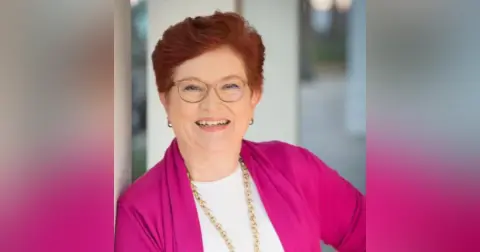

Dr. Brad Miller talks with Deb Krier about facing three different cancers while continuing to live, work, and find moments of humor. Deb shares how a routine mammogram led to a breast cancer diagnosis that shifted from stage zero to stage three after surgery, and later to stage four. She also recounts treatment for basal cell skin cancer and papillary thyroid cancer.
Deb describes building a “new normal” while managing ongoing treatment and running her business. She explains why “fine” can sometimes hide how someone is really doing, and why honest communication matters with friends, family, and care teams. Humor helps her ease tension, but she emphasizes that laughter doesn’t erase fear, difficult days, or the need for support.
Brad and Deb explore:
- The shock of Deb’s breast cancer diagnosis and how it changed after surgery
- Keeping parts of everyday life, including work, going during treatment
- What it means to say “I’m fine”—and when it may be better to answer honestly
- Using humor to bring relief without ignoring painful feelings
- Deb’s “warrior” identity and the importance of having a supportive tribe
- Why medical teams should remember patients can hear conversations nearby
- How business leaders can ask for help and give themselves room to navigate a health crisis
This conversation offers:
- Encouragement to make space for a full range of emotions
- A reminder that support can come from a community, care team, and trusted friends
- Ideas for being present for someone without forcing positivity or advice
- Deb’s perspective on maintaining a sense of agency through serious illness
Deb shares resources for people affected by cancer, including the Trying Not to Die community and coaching for leaders, at yourcancerwarrior.com. Her story reminds us that humor and hope can build connection through hard times—and that no one has to face them alone.
Deb Krier 0:01
Hey there, lifter uppers! I'm Deb Creer, the co-host of Cancer and Comedy, where our mission is to heal cancer-impacted people through hope and humor-something we like to call turning the grim into a grin. Well, as many of you know, October is Breast Cancer Awareness Month, and today's episode is titled "Excuse Me, That's Not on My Schedule. Doctor Brad's actually going to be interviewing me on breast cancer humor and refusing to be fine. So now here is the host of our cancer and comedy podcast, Doctor Brad Miller.
Dr. Brad Miller 0:34
Hey, Deb, and all of our lifter-uppers. Welcome to Cancer and Comedy. This is the podcast where we look to say that cancer or other adversities are not going to defeat us; we are going to keep on living. We're going to keep on thriving. We're going to keep on going. We're not going to be stopped by this. We're going to keep on going. And you, Deb, are a perfect example of this as we talk to you today about your breast cancer experience, your cancer experience overall, and breast cancer particular, and we're looking forward to that that that conversation because what we're really doing here, and you and I've been doing this podcast now for over three years, over 150 episodes, and is develop a community of people of like-minded people who aren't done living yet, or aren't you know aren't going to let be defeated by this, and we get on living their life, and just need little guidance, directions to do that. Both you and I have coaching programs to help people do just that. But that's what we're here for: to help people to. We like to call it turning the grim of cancer into the grim of a fulfilled life, and to develop a community of people who are like-minded. To ask people to join our community by going over to our website, cancerand comedy.com/follow, and be a part of our community. Well, Deb, I would love to talk to you today. And after you've gone through, many people have kept up with our podcast. Know that you've gone through cancer on at least three different occasions, and I understand that after three rounds of going through cancer, you don't go to checkups anymore. You go to reunions. Is that what you?
Deb Krier 2:09
This is true. This is true. You know,
Dr. Brad Miller 2:11
Kind of everybody knows your name, your coffee order, even your insurance number, all that kind of comes
Deb Krier 2:17
In, and they're like, "Oh, she's back.
Dr. Brad Miller 2:20
But the cool thing is that you've beaten cancer three times. It's kind of like, you know, foam me once, shame on you. Foam me twice, shame on me. Foam me three times, I'm calling management, and I'm getting after them.
Deb Krier 2:32
I know I'm gonna file a complaint. I just can't figure out who to complain to.
Dr. Brad Miller 2:36
Well, we love that we love talking to you and getting to know you more and more. And after we have our conversation, we'll have some more things to share here. So go on with the next part there.
Deb Krier 2:56
Right, right. Well, as we have said, and for those of you who listen all the time, you do want to stick around because after the conversation, we're going to have another one of Dr. Brad's bad jokes of the day. But then, of course, we turn very serious with the Faith It or Break It segment. Well, as mentioned, we would love for you to be part of our cancer and comedy community, where together we crush cancer with a message of how to cope with hope and humor. Please follow Cancer and Comedy at cancerandcomedy.com/follow.
Dr. Brad Miller 3:27
Well, Deb, I love you a lot. You are one of my great friends, and we got to know each other through the podcasting world a little more than three years ago, and put together this podcast to kind of respond to something you and I both saw, which was the need for people to have a way to navigate cancer- the bad news of cancer, with a little bit of hope and humor. And so we have a like-mindedness about that. And a few weeks ago, you and I had a pretty candid, somewhat humorous conversation about my cancer journey. So, this being Breast Cancer Awareness Month, I thought, you know, we could get into your story a little bit here today, and what I've learned about you in the three and a half years you and I've been working together is you are a delightful, wonderful person. But you're also stubborn as heck when it comes to cancer, aren't you? You know.
Deb Krier 4:16
I am. I mean, who wouldn't? You know, we're done, right? Right? You're. You know, and there were three totally separate types of cancer. I'm just the chronic overachiever.
Dr. Brad Miller 4:23
Wow, one of the things I love about you the overachiever in terms of overcoming cancer, and but you you never in none of these cancer episodes for you were on your agenda, were they? You know, the title of our episode is "Excuse me, I don't have time for this, so they weren't on your schedule. Where were they? So let's go there for a minute about how, you know, you were stubborn about dealing with it, but here you are, and you got after it, even though you didn't have time for it.
Deb Krier 4:54
Right. Well, yeah. I mean, it's not on anybody's agenda. It's not written in our day timer. Hey, get cancer today. You know, and now hopefully we do things like our annual checkups, all of those things, and we schedule those, and so you know we're paying attention to things like that. But yeah, when my doctor told me I've got breast cancer, I looked at her, and I said, "I'm sorry, I don't have time for that, and she just kind of looked at me like I'm not sure what to say
Dr. Brad Miller 5:23
Now. In that moment, was that kind of like a denial thing? Were you just kind of a reactionary thing? Did you, did you truly? I don't know. Were you kind of angry? Because, Kobe, tell me about the emotions you were kind of feeling at that time.
Deb Krier 5:37
Yeah, you know, it was a lot of mixed emotions. I'm sure part of it was just a stupid flip answer, right? Yeah. You know, kind of a way to lighten things, but there was also a lot of fear, a lot of anger, a lot of anxiety. You know, and part of that comes from the fact that many years ago I worked for an oncologist and I worked for the American Cancer Society, so I know just enough to really be dangerous about all this, and so I knew this was not going to be an easy journey. But I also remember thinking, It's not going to stop me,
Dr. Brad Miller 6:11
Right, right. So you mentioned that you had worked for the American Cancer Society and an oncologist, say, and just, you know, just living life. You know, you probably had people you knew in your life who dealt with cancer, breast cancer in particular, and things like that. So you had an awareness of it. But when did this when did the kind of switch happen from being others or them to me and mine? And what was that like? That transition for you.
Deb Krier 6:36
Right? Well, I had gone in for my annual checkup and had my mammogram, and it came back as having an issue, and that, right there, was a surprise because I didn't have a lump, I didn't have a bump, I didn't have any of the normal signs. I had what they call microcalcifications. I didn't know what that was, and so I did what I warned people not to do. I went to Doctor Google, Doc Google, and Doctor Google informed me that microcalcifications are something that every woman over a certain age has as we mature, right? You know, and it's just basically a function of changing hormones in our bodies, and so we get these things, and so I wasn't really all that concerned because the initial diagnosis was stage zero. Let's just watch this. I never got an oncologist for several months because nobody was concerned. You know, I had a couple more tests; those all came back negative, and then we finally did a little bit more comprehensive, where the surgeon went in and pulled lymph nodes, and eight of the 12 lymph nodes came back positive. So I went from going into surgery thinking I had stage three. Let's basically ignore this cancer to coming out and having or going in with stage zero cancer and coming out with stage three, and so I didn't really have time to process that. I mean, it was very strange.
Dr. Brad Miller 7:57
Yeah, you just kind of went into the whirlwind, didn't you? You kind of went from kind of a standard procedure most people, women particularly, go through- kind of getting the checkup till all of a sudden you went from zero to three, boom, like that, and so you know, and then you went through that, and then you've gone through it a couple more times. You've gone through Delese three times, and so tell me how that progressed. What I mean by that is, the second and third times, were you kind of ready for it? I don't know. Go, go, take me through a little bit. How were the different stages you went through?
Deb Krier 8:31
So the stage three diagnosis, actually several months later, was changed to stage four because there was a spot on my lung, or on my rib, that was inconclusive, so it wasn't cancer, but it wasn't cancer. And so they said, you know what? It's stage four, and some of my medical records actually do say bone cancer, and that startles me every time I see it. But there's been nothing further in that area, you know, which is nice. But yes, several years later, I was just going merrily along, right, and was at my primary care doc, and you know, she said, "Is there anything else? And I said, "Well, you know, I got this funny sore on my arm that won't heal, and I'd had it for several months, long enough that I probably should have been going. Scuse me. I think I got a problem, right? Because that is one of the things that we're told is, you know if you've got a sore that won't heal, there's there could be a problem. And so you know she whooshed me off to the dermatologist, who was very nice and very sweet, and you know and and he did a biopsy on it, and it came back as basal cell carcinoma. And to me, that sounds horrible, right? But it's your basic garden-variety skin cancer, which, considering I am a redheaded, freckly kid that grew up at an elevation of over 8000 feet and had no idea what sunscreen was, and still don't use sunscreen, it was kind of surprising that I never had any issues, and that was really easy to treat. He. Simply, he burned it off. I didn't even have a stitch, but I now get to go every six months and get checkups for that, and of course, watching, you know, in the meantime, and that's the thing is you know don't think folks oh I can wait till a checkup. Keep diligent the whole time, but then it's been three years. I had just a follow-up scan, you know, making sure everything was okay for my breast cancer, and it came back as there was nothing there. But oh, by the way, there were two lesions on my thyroid.
Dr. Brad Miller:
Oh boy!
Deb Krier:
So, off I go to the endocrinologist, and that was papillary thyroid cancer, which is a totally separate cancer. I was worried that it was a spread of the breast cancer, and they all said, "No, no, no. This is always a primary.
Dr. Brad Miller:
Congratulations, you got a whole Duke type of cancer.
Deb Krier:
A new one. You know, and fortunately, we hit very, very early. I did have to have my thyroid removed, but and and now I have to take until the day I die a pill every day because your thyroid has a pretty important function, and so I do have to take medicine every morning for that. But I didn't have to have any additional treatment for that. I get to go see him now every six months, and you know, for those checkups. But yeah, it's been kind of one of those blessings in disguise, right? Where we found some things very, very early on that could have been extremely serious later.
Dr. Brad Miller:
Wow. Well, that's good. But you had this, but you're having a change in your body, and you kind of then have a change in your, you know, you got to deal with it mentally and emotionally, and even spiritually, and even calendar-wise, in the sense of you you know you kind of mentioned that you know this kind of throws your world off. You're a businesswoman, and you've got that kind of thing going on. And so, what were some of the strategies you used to kind of navigate all that kind of stuff in those areas, mentally and physically?
Deb Krier:
Yeah, I tried, to keep everything as normal as possible, and I tell people, you know, it's it's it's more like it's a normal, right? It's a new normal.
Dr. Brad Miller:
I got you.
Deb Krier:
And you know, I kept working the whole time. I own my own business, and as much as I could, I kept working the whole time. Hospitals and doctors' offices out now all have really good Wi-Fi, and so I can sit there on my phone and just be working, but it gave me something, and still does something to think about and something to focus on.
Dr. Brad Miller:
Yeah,
Deb Krier:
You know, I wasn't just going to sit around and be poor Pollyanna and/or Debbie Downer. You know, we'll go.
Dr. Brad Miller:
down?
Deb Krier:
Okay. Yeah. And feel bad. You know, do I have bad days? Sure, but I want to do as many things as possible that are normal. You know, let's not have the pity parties. Let's, you know, get ourselves up and go merrily along.
Dr. Brad Miller:
Yeah, yeah. One of the things I love about just how you just have this attitude of I'm going to get through this no matter what. Right. And I think that also goes to one of the messages that you have, and I hear this from you all the time in our conversations, and it's on your website and other places. It's about this word "fine" and "not fine. So the word "fine" is kind of a four-letter word for you. So let's go there for that. Kind of unpack it for our audience again. What do you mean by when you hear somebody say, "I'm fine"? What does that make you do? Make your skin crawl a little bit? What does it do for you?
Deb Krier:
Well, it depends on the context, right? Yeah. If somebody at the convenience store says, "How you doing? Oh, I'm fine. That's, and that's perfectly fine. You pass somebody in the hall. How you doing today? Oh, I'm fine. That's that's that's okay. But when somebody really wants to know how we're doing- whether it's a friend, a coworker, a medical provider, fine is usually the I'm not; I'm really not doing well, right? And and
Deb Krier:
Obviously depends on the tone, right? I'm fine. If it's all matter, set the biting tone, then something's not right. I, I, I always, you know, there's, you know, like it to the fact where a wife asks her husband, "How does this look? Oh, it's fine.
Dr. Brad Miller:
Oh boy, okay.
Deb Krier:
Right then, you know, no, no. I've been, I've been, I've been there,
Dr. Brad Miller:
heard that one.
Deb Krier:
Yeah, yeah. So, you know, it's okay to you know to to say fine when it really doesn't matter, but if somebody really needs to know and wants to know, you can say you know good or bad. You know, my default is I'm hunky dory, right? And so my care team knows if I go; I still go in every 21 days for treatment and have for now over 11 years. If I don't say a hunky dory, they know there's something wrong, you know. And I might say I'm good, I'm whatever, but you know it's, and if it really is. You know, a coworker, a friend, a family member-they probably really want to know. Yeah. And so, if you're doing great, tell them I'm doing great, or I'm doing huggy door. Yeah, go ahead and tell them. Ah, you know, I'm not having such a good day.
Dr. Brad Miller:
Well, let's go there for a second. What was that time? And I think there has been, but there was a time when somebody kind of offhandedly said, "You know, hey, how you doing? and kind of expecting the normal, "I'm fine, or "I'm doing all right, or "Hunky Dory" in your case, and you said something like, "I'm not fine, and how did that kind of change the nature of the conversation?
Deb Krier:
I did have somebody ask me one time, "Was I still dealing with the cancer thing, I thought that was entertaining, right? You know, and um, and I said, well, you know, I'm not fine. It is something I will have until the day I die. Well, then of course he didn't know what to say. I totally threw in, and so part of it too is, you know, again, know what they're asking and know why they're asking. You know, if they if it's just you know the same thing as saying, "Are you having a good day? That you would say to anybody, they they don't always want to know what's what's what's going on. You know, and it is very easy to not go into great detail, right? You don't have to say this hurts and that hurts, right? We all have those people, right? Oh, poor me! This hurts, and that hurts, and so we don't ask them anymore, right? And so it's okay to just say today is not as good a day. Yeah. Then if they want to know more, they'll ask, and that's okay if they don't, and it's okay if they do.
Dr. Brad Miller:
Yeah, yeah. But Deb, thank you for sharing from that perspective. And I think the tone and the motivation behind the question do matter here. The theme of our podcast, you and I have been working on for well over three years now, is cancer comedy, looking for the humor in things. Right. So let's go to your story then about how when were you able to finally or at some point laugh after your diagnosis? You know, I know you to be a person. You kind of have a biting sense of humor, kind of regardless. But after your diagnosis, and was that humor or that laughter was it kind of was it you know kind of relief or was it denial or what do you think was going on there with that?
Deb Krier:
All of the above, you know; I started joking right away. You know, like we said, well, I don't have time for this. But, of course, as we've talked about, there are appropriate times for humor and times when you do have to be serious, but you know, one of the things I know is that my care team and the people who really care about me, it's stressful for them, and so if I can make them laugh, I do, you know, and it doesn't always have to be laughing. You know, I saw my oncologist last week, and I just saw her, you know, passing her doorway. I didn't see her for an appointment. I was just, you know, on my way past, and I stopped and said, "Hey, just remember, I love you. And she said, "Love you too, and off I went. Right? You know, it doesn't have to be anything serious, but you know, sometimes we really do. You know, we've talked about this before. We laugh because we would cry otherwise, and so you kind of have to watch that. And I know that, you know, especially my care team providers know. Okay, is there a little something more there that we need to ask about, or is she really just, you know, having fun with us today?
Dr. Brad Miller:
Yeah, and there's and some of this what we're talking about here today has to do with how we navigate things and how we try to have our antenna up about what is appropriate, what's inappropriate, that type of thing. And I know one of the things that you've mentioned from time to time in our conversations, and I've seen in some of your material, is kind of rolling your eyes at toxic positivity. For instance, you know, that's kind of like when everything's hunky dory when it isn't hunky dory. So say say a matter say a word about how you kind of react to what you term as toxic positivity and how you turn how you kind of discern decipher discern that from what's you know really positive.
Deb Krier:
Right. I think more than anything, it's honesty. Right. As you said, sometimes we are so happy, and you know, I always like people. Oh, you're gonna beat this. You're really gonna. Well, you know, I don't know. Now, am I gonna bring them down? No. But it is about being honest. If it's, you know, if we're having a good day, then it's okay. But we also need to remember that our friends, our family, our care team, whoever they are, they don't read our minds. I like to think my husband can, and he reminds me that he can't. But you know, we can't expect them to know anything, good or bad, if we're not honest. With them, and I think that's one of the important things. You know, there's being just two happy, happy, happy, happy, and that is a warning sign, right? If somebody is just too, but you know, sometimes you do need to pay attention and kind of see a little bit more as to what's going on. You know, I mentioned making my care team laugh. I had a new T-shirt that I wore last week to get my infusion, and it said, "My guardian angel drinks. Right, every single person who saw it laughed. I had to show it off to everybody else in the infusion room. Then we all got into the big discussion of what they drink. You know, all sorts of things like that, and you know, for the other patients that were there, it kind of gave them something else to think about and maybe giggle about for a couple of minutes. And, you know, but there are also times when I've just gone and sat with people, knowing that it's not good, but maybe them being alone is not good either. I don't intrude. I just, you know, can I just sit here?
Dr. Brad Miller:
Yeah. Well, presence matters. Presence matters. Yeah. Right. And sometimes you get presence without, you know, kind of an intrusion. You know, sometimes people are too toxic, too positive, or too intrusive with their humor, kind of in-your-face stuff. It's not always helpful. But I kind of like being reminded a little bit here on this part of our conversation. But a metaphor you use quite a bit on your, you know, your website is trying not to die dot live, and you have a Facebook page of the same name and lots of great resources there. By the way, but I I looked at it again here recently, and you have the image of the warrior. You're a cancer warrior, right? And you often like to use that terminology. I know, rather than, like, cancer survivor things like that. So bear with me there for a minute, Deb. Why do you lean into this warrior metaphor and kind of respond with a survivor kind of thing?
Deb Krier:
Yeah, yeah. I really don't like being called a patient. You know, I totally know that not everybody likes the term warrior, but we all have to get what works for us.
Dr. Brad Miller:
Right.
Deb Krier:
And for me, I'm in the fight for my life. I truly am. You know, because I do have stage four triple-positive metastatic breast cancer. That sound as bad as it is, you know, and so I am in in fighting for my life. But yeah, right after I was initially diagnosed, somebody who knew me well sent me something, and it said, "Fate says to the warrior, ' You cannot withstand the storm, and the warrior responds, 'I am the storm.
Dr. Brad Miller:
I love it.
Deb Krier:
You know, I've always gone with that, and it's really funny because I have a shirt on today, which is just for this. It says, "Sweet older lady, more like battle-tested warrior redhead queen.
Dr. Brad Miller:
There you go. I love it. I love it.
Deb Krier:
Yeah, you know, but more importantly, to me, a warrior always has a tribe. You know, they're never fighting that battle alone, and so that's one of the things. And we talk about that on this podcast. Sometimes we feel very alone, and so, as that warrior, you need to build that tribe of people, and some will come, and some will go, and you know, things like that. But, but yeah, we don't have to go through this alone.
Dr. Brad Miller:
Indeed, in fact, I know that's part of the the alliteration you use in some of your teaching is to have your tribe and to lead your your your your your your tribe, so who's in your tribe, Deb, and how you're leading them, or how you're teaching leadership in that tribe?
Deb Krier:
Right. Well, obviously you're in my tribe. Absolutely. I think there are probably people who are in my tribe that wish they weren't. But yeah, you know, my family, my care team. You know, they all know that they are their friends, and it's been funny. Some of my friends completely dropped off, you know. And I don't know why. And I'm, you know, I wasn't going to pester them and say, "Hey, why don't you want to talk about this? Yeah, they just couldn't deal with it, and so, you know, they might click like every once in a while on a post, but they don't want to talk about it. That's fine. That's them, you know. And but it is, you know, my tribe comes and goes, as I said. And you know, I do have a private Facebook page where I post what, you know, what is actually going on with me, and it's got over 400 members of people who, you know, kind of care about getting the updates. I frequently joke that I'm sure you're all tired of it now because it's been going on for so long. But I remember one time I was going in for one of my plethora of surgeries, and you know, there I'm lying there, they're getting me prepped and all this. It was not all that major of a surgery, but I do remember thinking. Well, I can't die because all those people would be really mad at me.
Dr. Brad Miller:
Yeah, you would leave them hanging there.
Deb Krier:
Yes, you know, and so it is about, you know, who are you gonna gonna bring around, and you know you mentioned the word toxic before. There are definitely people who are not in my tribe. Now, you know, they might still get the information, things like that, but they're not somebody I want to spend time with. They're not somebody that I, you know, take you know take a lot of time because what they're they're just a toxic person.
Dr. Brad Miller:
Some people aren't helpful to your cause or to people in your class. Anything, right?
Deb Krier:
They're mad at the world, and I just, you know, there's enough of that. You know, and I think a big part of this is that we keep that positive state of mind. Do we have bad times? Sure, but yeah, we have to keep thinking positive. And if we are around people who think the sky is falling, the world is ending, everything is catastrophic, that's not good for us, you know, and I let them know that that's their view. I'm not going to tell them, " Oh, you can't think like that. But I also don't have to spend time with them.
Dr. Brad Miller:
Yeah, indeed, indeed. But Dev, you've got a lot of great resources on your website, and you're a public speaker. You speak about cancer awareness and your own experience in public settings, in our podcast, of course, and then you have some resources there. I picked up on a resource you have on your website that you and I've talked a little bit about before, but I just picked up on it. It's your bedside manner that matters, and that tells me you've got some stories to tell about that. That so give me a story about that type of thing that gave me give people a taste of what they can find on your website.
Deb Krier:
Yeah, you know, I do speak to medical teams, you know, care groups, about how they can provide better care. You know, they provide the medical part, but they often forget that we are people and not patients. And you know, one of the things I talk about is the fact that, you know, we can hear you out in the hall while you're talking.
Dr. Brad Miller:
Yeah, for better or worse, you can hear them, right?
Deb Krier:
Yeah. And we don't always know who they're talking about. Are they talking about me? Are they talking about another patient? We have nothing to do while we're sitting there in those exam rooms waiting. And so you know, we do hear when people are talking. You know, and it's just very important to remember that as part of that care team. You know what? You know, and like I say, even if you're talking about somebody different, maybe I and I've heard I've heard this before. Oh my God, that problem patients coming in next. I mean, that's just such an, ooh, right? You know, and you know, there's a good reason why they're doing that. They're probably prepping their staff, things like that. But just be aware of the fact that we hear you. You know, I mean
Dr. Brad Miller:
So that, so that'd be kind of your word of advice to a doctor or a nurse or caretaker, is kind of be aware that we hear you,
Deb Krier:
Right? Right. Yeah, I remember, you know, one time when I was in the ICU, I had, you know, multiple catastrophic complications, and spent seven weeks in the hospital, in and out of surgery, in and out of the ICU. And one of the times when I was in the ICU, they decided they were going to put in what they call the NG tube, the nasogastric tube, so it's a tube that goes in your nose and down and basically pumps your stomach out, so that, you know, things can heal. And you know, I'm I'm I'd never had one, you know, and I'm there in ICU. I'm pretty out of it, but I remember hearing the nurses talking about it, and I'm not quite sure why it was a nurse who was doing this. I don't think it should have been, but she says, "Ooh, I've never done one of these. This will be fun. Oh
Dr. Brad Miller:
Gosh, that gives you confidence.
Deb Krier:
It was not fun, and I finally had to forcefully push her away from me because it was just not being done correctly, and I felt really bad about that because she cried. She felt bad. I mean, all sorts of things. But you know, it was like, I don't want to know. I don't care what it is, giving somebody a flu shot. I don't want to know; it's your first time.
Dr. Brad Miller:
It reminds me. My side story is that I had a session with a nurse practitioner, whom I found out. She told me I'm getting ready to, and I had to have some skin tags removed. I had like 100 skin tags. Anyhow, she tells me I'm getting ready to retire next week, and she's probably in her mid-70s. And I see her, and she's getting ready to cut these skin tags off. I see her hand, you know, quivering as she's doing. I'm going. This is, you could. You didn't have to tell me you're retiring next week. You know, this kind of thing.
Deb Krier:
And maybe you should have retired last month.
Dr. Brad Miller:
Yeah, like a year ago or whatever. And I, oh well, but I survived that. But we had these funny, stupid things that happened to us. Oh yeah. One of the things I'm interested in about you, Deb, is how you approach this whole situation. You know. You're a businesswoman, and so you run your own business, and so you've gone through all these intense health-related things, and yet you still ran a business through it. What would your words be to business leaders who are trying to deal with this? You know, while they are going through such a time, or trying to keep their business going, or work in some sort of a management position, or something like that, what would be your word of advice or encouragement to people in those types of positions?
Deb Krier:
You know, I do work with women who are leaders, and what I tell them is, you don't have to do this alone. I think as a business leader, a business owner, we frequently think we have to be alone. We can't admit, ooh, we don't know how to you know how to do something, you know, let alone health things. And so you don't have to go through it alone. Now again, you don't have to tell everybody everything, but you know you might need to tell your closest staff members, "Hey, this is what's going on. Now the nice thing is, many times, the vast majority of times, somebody can be dealing with a cancer diagnosis or something else similar, and people don't know. You know, it's not until there are obvious things, right? Like your hair, you lose your hair, you had surgery, you know, whatever it is, but you know it's okay to tell people I need help. You know I I need you to give me a little bit of grace because I might my brain might not be functioning the way it should. You know, can you remind me of things? Just, you know, people want to help. They really do want to help, and so remember that. You know, and let them help. Yeah, you don't have to do this alone.
Dr. Brad Miller:
Yeah, indeed, indeed. Well, part of the manifestation of your business success is that you've done over 1200 episodes of your primary podcast, The Business Power Hour. And I want to put you in this position. You know, you've interviewed a lot of people on that podcast. You and I have shared a lot of interviews together here on Cancer and Comedy. But if Cancer were to show up as a guest on one of your podcast episodes, what's the question you would like to ask Cancer, and what do you think you would say?
Deb Krier:
I think probably one of the first questions I would ask is why me?
Dr. Brad Miller:
Okay,
Deb Krier:
Right? You know, and I think that goes along with some of our feelings of guilt, and you know, could I have been doing something different? All of those various things, but why me? Probably some of the questions would not be suitable to actually, you know, it would have language, right? But you know, I, I, I think really, why me would be the biggest question. Is you know, what the heck? You know, why, why are you here?
Dr. Brad Miller:
What do you think they would say?
Deb Krier:
I think they would laugh, right? But I think they would probably, and we hear this right as one of the platitudes that is well-meaning and very true. We're not going to do anything that you can't deal with, that you can't handle. Now, I mean, in some cases, you are getting a terminal diagnosis, and it's not something that you know is going to be very long. But how are you going to live during that time, you know, and you know, maybe it comes back to your faith and whatever it is, but I think, you know, I think cancer really is thinking, okay, let's let's let's bring it. Let's see what you've got.
Dr. Brad Miller:
Yeah. Well, Deb, you and I have been together here on this cancer comedy podcast. We met at a podcasting conference in 2023. Started this in August of 2023, and here we are, 150-plus episodes in.
Deb Krier:
it,
Dr. Brad Miller:
Which is pretty cool. And we haven't killed each other yet, so there, there we go. That's always a positive. So, what's something that you've either learned, or something this show has given you, or you feel like you've been able to contribute to people who are listening to us? Maybe something you didn't expect.
Deb Krier:
Yeah, I think the biggest thing is to talk about it, share. You know, you and I, we some people would say we overshare, and that's okay. Yeah, but I think it's you know it's it's what I was saying before. You're not alone, you know, and I think when we do things like this podcast, and we talk with, you know, so many people who've been through so many different situations, what people realize is Wow, I'm not alone. Yes, you know, and and and we we really have talked with so many things. We talked with people who have had mental health challenges. We've talked with people, obviously, who have cancer challenges and other things, and I think it really does help people to know somebody else has been there, done that, and look, they've made it through. So I think I can too.
Dr. Brad Miller:
Indeed, indeed. And here we are. We're recording this in October. 2026. It's Breast Cancer Awareness Month, and it's certainly part of your. I know a lot of the people you serve are women who are breast cancer people have been impacted by breast cancer. So if someone was here in our conversation here today, and maybe they've just recently heard that diagnosis, you know, you've got breast cancer, you've got cancer at all, but you have cancer. What do you want to say to her, and what do you want to say to her that might be helpful to her, even about what we can offer here about other resources, or anything else that's out there that may be available to that person who's dealing with that?
Deb Krier:
Right. Well, the first thing I tell them is it's okay to feel whatever you're feeling, you know, and recognize whatever it is; it's normal. You know, we talked about anger, we talked about grief, guilt, all of those things, fear. It's okay to feel those. We don't have to be tough. And I think, especially as women, we think, oh no, yeah, we- we- we- we're running everything, right? We're running the family. We're running this. We're running that, and so we have to be tough. No, it's okay to not be tough, but then I also say you are in charge. And the funny thing is, this happens a lot, especially with leaders. We're very used to being in control and in charge, right? And then all of a sudden, that guest called Cancer comes in, and we're not in charge. Well, how can you take back that control? You know, and maybe it's just telling your doctor That's not the path I'm going down. You know, I'm going to do something different, or your family, your friends. Maybe you go in, and you tell your boss I'm quitting. Right, I'm going to go live on an island. Whatever it is, you are in control of your life.
Dr. Brad Miller:
Yeah, I think you're a great example of that. How you have simply not let this triple whammy of cancer. There are several different cancers. There are many people who've been devastated, knocked down, and don't get up. And you certainly, every time it said, you know, damn it, I'm not going to let this get to me. I'm going to get up and keep going. And certainly, the Cancer Comedy Podcast is a part of that, but it's also other parts of what you are all about, which is helpful too. So, what you share with our lifter uppers how people can learn more about you know your resources that you have on your website, your coaching program. How can people get a hold of you or be a part of your world?
Deb Krier:
Right. Well, the easy way is to just go to yourcancerwarrior.com, and that is simply a landing page. It will take you from there to trying not to die dot live, which is the support for anyone who is dealing with cancer, whether they are diagnosed with it or supporting someone. And then the other link there is for the cancer coaching program. You know, for those who are leaders and are told, you know, hey, you've got this, and you're like, no, I don't have time, and I can't tell anybody. You know, and so yeah, it's just easy to go to yourcancerwarrior.com, and then you can go wherever you'd like to. You know, as you mentioned, we do have a Facebook group, Trying Not to Die, dot live. You know, it's something where a lot of people share good and bad. You know, and again, it's a way for people to not feel so alone and so isolated. And of course, you must listen to other episodes of this podcast because we're going to make you laugh.
Dr. Brad Miller:
There you go, and we're all about healing with hope and humor. The Cancer and Comedy Podcast. A big part of that is all the great things about Deb Creer. And it's been my joy and pleasure to share microphones and the screens with you and our audience with you, with you, Deb, for three-plus years now. You're a joy and a delight, and you're also a fierce person in terms of getting, you know, getting your message across. You're funny, and you're fierce, and you've got a big heart, and I love that. Love that about you, my friend. And so I would just commend to our lifters-uppers or people listening to this. Pass this along to somebody else if you want somebody to be helpful to you, either through what we share here on cancer and comedy or some of the other resources that Deb has available; check out her coaching program, things like that. And if you're in a funk today, listen to Deb, and she'll help you to navigate that and get through that. You're not alone, is what she says, and you can lean on your tribe. So I just want to thank Deb for being our guest today here on the Cancer.
Deb Krier:
Thank you. This has been so much fun. So much fun.
Dr. Brad Miller:
Always has.
