


 Apple Podcasts
 Spotify
  RSS Feed
 You Can’t Be Sad Wearing Yellow Socks: Breast Cancer, Faith, and Finding Joy with Leslie Sousa
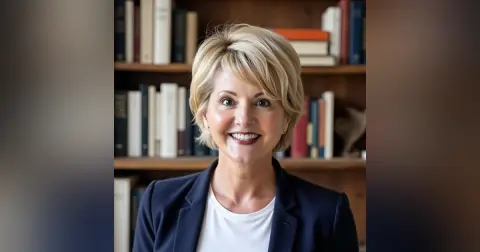
Dr. Brad Miller and Leslie Sousa talk about facing breast cancer with faith, humor, and an openness to moments of joy. Leslie shares how a routine mammogram in February 2020 led to a diagnosis just before the COVID-19 pandemic. Starting treatment early felt like a blessing, though chemotherapy, anxiety, hair loss, and the prospect of a double mastectomy brought fear and uncertainty.
Through it all, Leslie tried to take one day at a time and look for small signs of grace. She shares how she placed her fallen curls in a tree for birds to use in their nests, and how bright yellow socks paired with Bible verses encouraged fellow patients at the infusion center. She and Brad also reflect on faith, surrender, and how humor can lighten a difficult moment without covering up the pain.
Brad and Leslie explore:
- How Leslie felt spiritually prepared for her diagnosis
- Finding a sense of blessing in the timing of her mammogram and treatment
- Coping with chemotherapy, anxiety, hair loss, and surgery during COVID
- The emotional impact of losing hair and Leslie’s creative way of letting it go
- How yellow socks and Bible verses brought encouragement to other patients
- The difference between humor that offers relief and humor used to hide difficult feelings
- Letting go of control and noticing small moments of joy, such as hummingbirds
This conversation offers:
- Encouragement to lean on faith and take difficult experiences one day at a time
- A reminder that joy and hardship can exist alongside each other
- Ideas for finding small, personal ways to bring comfort to others
- Leslie’s perspective on looking at the whole view rather than focusing only on what’s wrong
Leslie’s upcoming book, A Broken Wing, Unbroken Spirit, is about twenty unexpected glimpses of grace, told through the image of a bluebird. Her story is a reminder that humor and hope can offer comfort and connection during a cancer journey, even while the challenges remain real.
Dr. Brad Miller 0:00
Hello again, good people. Welcome back to the Cancer and Comedy Podcast with Dr. Brad Miller. This is the podcast where we help people who have faced the adversity of cancer, or other adversity, but aren't done living yet, and who want to get on with life but need a little guidance. We'd like to call that turning the grim into a grin and to help you navigate and create a sense of hope, to cope, to cope with hope and humor. We love to do that by talking to people who are authors and leaders and speakers and people who have processed this, navigating adversity, especially cancer of their own right. And we have a great guest with us today, Leslie Sousa. She's with us here today. We're going to be talking about her story and about her upcoming book, "A Broken Wing, Unbroken Spirit. Leslie, welcome to our conversation today, my friend.
Leslie Sousa 0:52
Thank you, thank you so much. I'm very glad to be here.
Dr. Brad Miller 0:55
Well, it's an honor to have you with us. You've got a tremendous story to tell and to be a service to our audience; let's just kind of start here. Let's give a little framework for what happened in about February of 2020 that kind of rocked your world and kind of turned your world around. What happened around that time period
Leslie Sousa 1:19
In February of 2020, right before the COVID pandemic hit, I went for a routine mammogram on Monday. I had no cancer that ever ran in my family or anything. I had no concerns. I actually went on my lunch hour and came right back to work. On Tuesday, they called and asked me to return for more images. And I actually didn't like to miss work, so I was actually a little bit irritated because I thought, oh, the technician, you know, just rushed me through and didn't get good enough images. So I did go back. They wanted me back by 330 in the afternoon, so I went back, and they did more images, and then the technician pulled out this big giant needle, like bigger than I've ever seen in my whole life.
Dr. Brad Miller 2:08
Scary, huh?
Leslie Sousa 2:09
Yeah, yeah, yeah, definitely. And I asked her. I said, you know, what is that for? And then she got on the phone, and she was whispering. She's asking what this needle is for. So I believe that was the technician. So then the actually the radiologist came in, and she said very calmly that you know they were trying to be very professional and nice, and they were. And they said, "Would you like to have three biopsies now or come back in the morning. My cell phone didn't work in the room or anything, and so I couldn't get a hold of anybody to tell me what was going on. And by this time, it was almost, I think, about six, and so I chose to have the biopsies then. And
Dr. Brad Miller 2:56
But you still didn't really know completely what was going on. Is that right? You were a little bit in the dark about what was actually happening.
Leslie Sousa 3:02
Yeah, I really was, but until the radiologist asked me to stay afterwards, and so she took me back into the room, and she showed me what she was seeing. But I was completely numb. I saw what she was seeing, but it didn't register at all. I just, if anything, it just made me angry at that moment.
Dr. Brad Miller 3:27
Yeah,
Leslie Sousa 3:27
and then I was crazy. I got angry
Dr. Brad Miller 3:31
at them, angry at the circumstances. What were you angry about at that moment? What was that feeling?
Leslie Sousa 3:37
I was angry that I got called back and had to miss work because they didn't do the images well enough. But then I also got kind of angry at the radiologist because I thought, is she supposed to be doing this? She's supposed to be calling me back and showing me this, you know. But in hindsight, I know she was just trying to be kind. She was trying to show me. She was trying to, I think, give me a heads-up, help to prepare me for that call that was coming later that week. What ended up happening was on Thursday, I got up, and I was reading my Bible and reading my devotion like I do every morning, and I didn't like my devotion. It said, "It said, are you ready to be poured out on the fire?
Dr. Brad Miller 4:26
Yeah,
Leslie Sousa 4:26
to be like an offering or something like that. And it was, it was from utmost for his highest from Oswald was the last name.
Dr. Brad Miller 4:37
Yes, and I Oswald Chambers, I believe. Yeah,
Leslie Sousa 4:39
Yes, excellent, excellent, excellent book. But the tiny,
Dr. Brad Miller 4:44
just zing right to your heart, huh? Yeah.
Leslie Sousa 4:49
Yes, and so I read that, and I told God no. I said I'm not ready, and I got in the shower. I got ready for work, but. One thing I did was I took the book with me to work, and when I got to my office, I sat down, and I read it again. And when I got that phone call just a few hours later, it was the breast health nurse on one end and the radiologist on the other, and they told me that I had breast cancer. I was very calm at that moment because I, God had already prepared me. I already knew when I read that what was going to happen.
Dr. Brad Miller 5:29
So you weren't angry. Were you still angry at that point? A few days later, were you still? Okay, all right.
Leslie Sousa 5:33
No, I had just. It was just a little brief inconvenience.
Dr. Brad Miller 5:37
Yeah,
Leslie Sousa 5:37
anger, and then with the radiologist, it was just I didn't like what she was trying to show me, and so I guess I was trying to find somebody to blame this on. You know, running my family. This wasn't supposed to be.
Dr. Brad Miller 5:53
So if you weren't if you weren't angry, were you a little bit stunned? Did you take a breath? Were you blacked out, giggle? I don't know what. What? What did you do? What was your reaction when you finally got the word there?
Leslie Sousa 6:04
When I got the confirmation, I told them Thank you for calling. And as I said, I felt prepared by that devotion that morning. And I went to my staff, and I was very fortunate. Most of it, I didn't work in a Christian job, but my staff was mostly Christians, and I went out. I just very calmly told them what I had found out. I had never, you know, given them a heads-up or anything. That was the first time they knew anything at all could possibly be wrong with me. No, and I went out, and I told them, and I, and I said something that stunned me. I said, "God has been preparing me for this for a long time, and then I was like, "Where did that come from? And Friday I was before. Oh, excuse me, I'm so sorry.
Dr. Brad Miller 6:52
No, that's all. I mean, I just said that. That's awesome, and it sounds like you know you had this moment, kind of a shock moment, and initially, then you prepared yourself, and then you had this moment of, I don't know, resolve or clarity that this was the preparation part is what I'm getting at. You felt like you had been prepared for this moment, which meant also at that moment you kind of had a new task ahead of you, even if you didn't know what it was. A new opportunity before you? Does that make does that does that does that resonate with you at all? That's kind of my reading of what you're saying here.
Leslie Sousa 7:29
No, that completely resonates with me. I did have fear in all of that later, though. No,
Dr. Brad Miller 7:35
it's still still still unknown, but you felt like you had new direction. One of the things I know from one of our prior conversations or some of your materials talked about you sitting on your front porch during your treatment and realizing the timing of your diagnosis was a blessing. So say more about that. How was this a blessing? How did that kind of play out as a blessing?
Leslie Sousa 8:00
Sure. So, you know, I was diagnosed, and then I got the card in the mail. I went and I went through what I just explained to you on Friday. That Friday, that same week, I was before seven doctors. So, I got my port. I put myself on a cancelation list. I got that the next week. I'd already started my treatment by the time COVID hit, and once COVID hit, they weren't doing a lot of mammograms anymore. Just ones that were crucial, I believe.
Dr. Brad Miller 8:32
Right.
Leslie Sousa 8:32
But people, friends of mine, were getting their mammograms canceled. My job was deemed essential during COVID. I felt fine. My doctor said I never would have found any tumor or anything like that myself because I didn't have a tumor. Wow! I had had five small spots. So, but the moment that you're talking about, when I'm sitting on my front porch, I realized that had I not gotten that card and things progressively that they did, who knows when I would have gotten my mammogram? I had a very rare one of breast cancers. It was aggressive. It was very fast-growing. My doctor said I may not have had it. I may have just gotten it in November or December, and this was only February, and I had five spots already. And I know myself, if I was feeling good and I didn't suspect anything, I would let all those people that needed to go in once they COVID released that you know ability to go get a mammogram, the regulations or whatever. I would have let everybody else go first, and who knows where I would have been at that time. Yeah.
Dr. Brad Miller 9:45
Well, so that's part of your sense of sensitivity about how this was really a blessing. The timing of it just before COVID, and you said your job was considered essential, but you also, so you were still. Working in the midst of all that craziness that was going on throughout the whole world, and you also, if I understand, were going through chemo, radiation, surgery, and so on-pretty dramatic things to go through. So, how did you kind of handle all that? You're working, COVID's going on, surgery, the whole bit. What were your strategies? What were you doing? What were you? How were you handling all that?
Leslie Sousa:Well, I went through my chemotherapy; I only concentrated on that. And the first week of my chemotherapy, I could not go to work because my white blood cell count was so low; I wasn't allowed to be around anybody. So I did have someone fill in for me during that time, and then I had six treatments, one every three weeks. So by the third week, I was starting to feel better, and since it was COVID, my office was pretty much empty, and so I got permission from my doctor to go into the office. So those days I would go into the office, but I solely focused on my chemotherapy and getting through that. I didn't allow myself to think about the surgery, and it was just too much. It was too much. It was one day at a time. It was one day at a time. When I could, I would read my Bible and do my devotions. But eventually, I got to a point with the chemotherapy that I could not concentrate. And by the end, I had terrible, terrible anxiety from the medication. So once my chemotherapy was finished, I really thought, "Oh, I'm just going to feel this huge relief, but I didn't. I had no relief because a month later I was going to have to have a double mastectomy, and that was the part that I ended up being the most fearful about.
Dr. Brad Miller:Sure,
Leslie Sousa:I was scared of the chemotherapy too. I mean, I didn't know. I've seen movies. I've heard what happened to other people. Yeah, I didn't know how it was going to affect me. You know, so it it was a it's it's a very frightening experience.
Dr. Brad Miller:Yeah, yeah, and then and it's you know you're a woman of faith, and you usually had your Bible study to fall back on, and even that was challenged. It sounds like you were not able to concentrate, and you, yeah, I know you've talked about, you know, listening to God, and that things were a little bit cloudy and things like that. So what would you? I don't. Would you have any word or encouragement to anybody who might be listening to us who's going through that cloudy period, not able to focus on the essentials in life? Do you have any advice for them, or any word of encouragement for someone who's going through something similar?
Leslie Sousa:Sure, sure. I would tell them to lean into God as best that you can. I would tell them to worship God, to put the worship music on, even if you don't feel like it, to worship with all your heart, even if you only have one small part of your heart left at that moment. Whatever you're going through, whether it's cancer or any dark, dark trial, pray, and if you don't have the strength to pray, just ask the Holy Spirit to pray on your behalf, but lean into God. Don't run from God. Lean in and get your strength from Him because He does promise to give us strength. We just have to take one day at a time.
Dr. Brad Miller:Well, you've said I've heard you say tears or prayers too, and that kind of comes into play in this point, does it not?
Leslie Sousa:Oh, absolutely, absolutely. I cried a lot of prayers. Did
Dr. Brad Miller:yeah? So it seemed like there were moments when you don't have words, but you just kind of needed that release. So, you got the tears there, but I want to go kind of backtrack a little bit or take it from a different angle here. Was there any point in this whole process- the treatment, the absurdity of COVID, and a double mastectomy and all that kind of thing- when it does seem like this is so absurd? What's going on here? It's almost funny, or it's almost put. Were there any weird experiences during that time that kind of put a smile on your face? I know I've heard you say you like to choose humor over tears if you can. So, was there any way that you did that during this really difficult period?
Leslie Sousa:I did. I did. I learned through this period that joy and trials can coincide, and you have to look for it. I'd wake up every morning, and I'd ask the Lord to give me the desires of my heart, and I started noticing those desires. You know, just little glimpses of joy along the way. But as far as being funny was, I knew my hair was going to start falling out. Well, first of all, they knew my hair wasn't going to fall out, and I had-they did. I had a new oncologist. She ended up being amazing. She was wonderful in every single way except for this one little moment when her hair wouldn't fall out. So I was so relieved. But then when I went back, she said, "Oh no, your hair is going to fall out, and it was too late for me to order this special wig I was going to order. It was a wig anyway, neither here nor there, but I, I came upon this. It was an unknown author, so I can't give anyone credit for it. But it was a little story, and I started to identify with it because it talked about how the woman looked in the mirror one day, and she had three hairs, so she decided to braid her hair, and then she just went on and had a wonderful day, and then the next day she has two hairs, so she does pigtails, and she goes on and has an awesome wonder glorious day or whatever it says. And then the last, well, not the last day, the second to the last day, she has one hair, so she decides on a ponytail, and then the last day when she completely loses her hair, she looks in the mirror, and she says, "This is the best day yet. I have to fix my hair at all. And that was the best day ever.
Dr. Brad Miller:Well,
Leslie Sousa:Go ahead, please, if you want to. Well, I think that's
Dr. Brad Miller:awesome. I just, I also know that you have said, in some ways, part of your persona is that fashion is important to you, that type of thing- so that's what's had an effect on you, you know, in your fashion sensibility, I guess, or whatever it would say. Could you say more about that? And this is something that impacts everybody who loses their hair, but I think particularly women who take some pride in that. So go with that for a second. Go help me understand that better.
Leslie Sousa:Okay. Okay. Um, it was so hard for me because that was the one thing everybody used to compliment me on. I had naturally curly ringlets, and um, so I lost a lot of my identity, but it also crossed over to my femininity. So it was very difficult for me, but um, I knew my hair. Once I knew my hair was going to fall out, I thought I was prepared. And then one day, I got in the shower, and this giant clump fell out to my feet.
Dr. Brad Miller:That must have been a shocking day, huh?
Leslie Sousa:That was such a hard day. I just started bawling, and I was like, "You knew this was going to happen? Where did this come from, and I got out of the shower, and I called one of my old son, and he was like, "Mom, just let me come over and shave your head. And I, I really, for whatever reason, I didn't want him to have to do that.
Dr. Brad Miller:Yeah,
Leslie Sousa:And so I, um, my scalp started getting very tender, and it was painful, so I started just going on my front porch again, back to the front porch, with a small brush, and I would just brush my hair, and it would fall out. And I would take the little curls that I had, and I would put them up in this tree in our front yard. It was full of birds, and I just did it because I was trying to find a purpose in it. You know, I never had like this long, beautiful hair that could be cut and it would be made out of. But I thought, what can I do with this? And so I put them up in the tree, and I hoped that the birds would make nests out
Dr. Brad Miller:of them. That's all. That's, but that's, but that's an awesome story there. It really is, and it just shows you that you were in the midst of a very painful personal moment, including kind of some challenges to your femininity, as you said, things like that. That you were able to do some creative thought with that, and not just mourn it, but to do something with the mourning. You know, you're losing your hair. You're mourning that, and then you're able to think, " How could this be productive, and put it out there, and that's awesome. So, I think there are some very awesome things about that. I commend you for thinking that way, and I think that it might be a good coping strategy for other folks when they lose their hair to find something to do with it. I know some people save it, as you said. Some people try to make a wig out of it, things like that. But
Leslie Sousa:Yeah, sometimes people donate it or wigs from somebody else. And I would have, I would have done that, but I didn't; I didn't have hair for a wig.
Dr. Brad Miller:But it seemed like this was a moment of grace for you that you were able to have a sense of God's grace in the midst of a hard moment. Would you agree with that?
Leslie Sousa:Oh yes, absolutely. I feel like God just gave me grace upon grace upon grace, going before me in circumstances and making a way before I ever got there.
Dr. Brad Miller:Yeah, I saw
Leslie Sousa:that over.
Dr. Brad Miller:And you have a book coming out pretty soon called "Broken Wings, Unbroken Spirit. It's really about stories about grace. So, tell us a little bit about that in terms of how that relates to what you've been sharing with us here today.
Leslie Sousa:Sure, sure. The book is about what I went through. It's 20 unexpected glimpses of grace while walking with the Lord. Excuse me, and it actually happens to a bluebird. All the things happen to a bluebird, and it.
Dr. Brad Miller:The bluebird is all through every story of grace in this.
Leslie Sousa:It is. It is. There's a picture on each page. I have an artist, actually a watercolor artist from Italy, who's actually going to be doing it for me. That's something new that just transpired, so I'm excited about that. But the book is an encouragement of what God will do for you if you allow Him, because it is a choice to walk alongside you through your trials, and so it goes into just the different ways that God.
Dr. Brad Miller:Well, tell me in the course of that book or other stories. You say there are stories of glimpses of grace. Tell me one of those stories that put a lump in your throat.
Leslie Sousa:Okay, so I would say to put a lump in my throat, I think one thing would be when I, when I, the night before I was going to have my mastectomy, I was told that I had to shower, and then I had to put the medical-grade iodine all over my body, and that was an awful thing to do. I had a Christian counselor at the time, and he said, "You know, say goodbye to your breasts however you need to. I didn't. I don't think I ever figured out exactly what that meant. But I, but I did stand in the mirror and look at myself for a long time because I knew that the next day my body was going to be completely changed.
Dr. Brad Miller:Sure, sure.
Leslie Sousa:And so, one funny thing, my husband. I did ask my husband if he wanted a picture. Excuse me, to remember them by, and he said he wouldn't forget him. He could remember him, and that still makes me laugh. There you
Dr. Brad Miller:go. Well, well, that shows you. There you go. So that shows you got a good, a good, a good husband there, and yeah, but you were good support for you, and you were a good sport to offer. You know, yeah. This is my my under you know the part of the whole dynamic, especially with breast cancer. I'm a prostate cancer survivor. You've got to deal with the dynamics of marriage and human sexuality and the whole bit. It's all integrated intimacy
Leslie Sousa:too, and everything
Dr. Brad Miller:intimacy and so on. Yeah,
Leslie Sousa:I was just gonna say I was looking in the mirror and I was orange.
Dr. Brad Miller:Oh, the iodine made you orange. Wow. So there you go. So you kind of had a lump in your throat and a laughing moment all at once, and that's kind of the way life is sometimes, isn't it? We kind of laugh to keep from crying.
Leslie Sousa:It really is. But God, the next morning, because it was COVID, I had to go through the double doors by myself. My husband just dropped me off at the hospital.
Dr. Brad Miller:Oh boy!
Leslie Sousa:And oh boy, not actually a nurse, but someone who was checking me in and taking my glasses and everything from me. This is one moment that I really saw God in a couple of different ways, but all my doctors started coming in. I had like seven, and they came in to meet with me before the surgery, and then the nurse came in, and she would, and the lady who had walked me through the door, she was like, Leslie, I do not believe this. She goes, " You have the best doctor in our whole hospital in every single area, and she goes, and that nurse that you just got is my very best friend. So that was really affirming,
Dr. Brad Miller:Isn't it? That makes you feel a little confident that they didn't have to say those things, but they did, and that helps you build your confidence. But Leslie, Les, I'm interested in the yellow socks. You told me about the yellow sock story. Let's go with that for a minute. What's the story on the fuzzy yellow socks, how this came into your life, and how this got a part of this whole story? So unpack that for me a little bit.
Leslie Sousa:Okay, okay. So you can't be sad wearing yellow socks. Is that is that is
Dr. Brad Miller:Is that a rule? Is that a rule? Okay,
Leslie Sousa:That's my rule. There you go. I like it. I
Dr. Brad Miller:like it.
Leslie Sousa:I had read a story about a man who collected that no man who always wore yellow socks, and when he died, a young girl. I think she was probably. He was probably her grandfather. I'm not sure about that, but she started collecting them because in his honor, in memory of him, and he used to say that he used to say you can't be unhappy wearing yellow socks. So I started passing them out. I started putting my cancer story with a pair of yellow socks and a Bible verse, and passing them out in the infusion center every time that I went because it made my time there happier because it was blessing somebody else.
Dr. Brad Miller:Well, you're blessing somebody else, and that's what it's all about. And hey, when you're passing out socks, you're touching people's souls, right? I just, I'm sorry.
Leslie Sousa:Exactly. There you go. I had to. Hey,
Dr. Brad Miller:I had to. I had to sneak a dad joke in there. You know, that's
Leslie Sousa:okay. I've heard some of your bad jokes.
Dr. Brad Miller:There you go. Well, that's kind of my deal- the dad joke thing. But you-you said you don't see yourself as a sob story, and I'm not hearing that in you. You've had some moments of sobbing, but you're not a sob story, and we kind of key in here on Proverbs 17, where it says a cheerful heart is good medicine. And so, for you, how does humor come into play? Already in our conversation today, you've laughed out loud on several occasions. I kind of assume that's the way you go through your day. You laugh a lot, and something strikes you funny, or maybe you just have a natural laugh or giggle. Is that kind of who you are, Leslie? I just want to kind of see that's, yeah. So so when does but you know sometimes humor can be a little bit of an avoidance tool as well, and so when when in your estimation is humor a medicine, and when do we sometimes use humor to kind of laugh things off, and maybe we shouldn't, or to kind of dodge the hard stuff? You know, you know what I'm saying by that. So
Leslie Sousa:Yes, I do. So
Dr. Brad Miller:How do you approach that?
Leslie Sousa:I think it lightens the moment, and so sometimes I choose it. Sometimes I just like to say something just out of the blue, just to make people laugh.
Dr. Brad Miller:No,
Leslie Sousa:But I've also used it before, like as a defense mechanism, and you know, just to kind of cover the real feelings that are going on in there. So I, I would say I've done both. There's a little bit of both.
Dr. Brad Miller:Oh, that's fair. That's fair, of course. Well, you know, I was also going through some of your materials here. I came across your YouTube channel, and I just got a kick out of Faith Fashion and Fur. One of your YouTube programs was something about decluttering your home and heart, and I just know it's kind of something you've also done some work with, but let's go back. I want to kind of try to probe a little bit on that. There, let's just say go back to your diagnosis and your cancer journey, and if you had one thing to declutter your heart about, or to clear out your heart, and you kind of had to clean out one thing from your closet from that time, what would it be to kind of get ready for the fight that's before you? What would you get rid of?
Leslie Sousa:Control.
Dr. Brad Miller:Control. Okay. Why? Why would that be? Why?
Leslie Sousa:Because I really thought I had learned to sit still with God. That's the name of one of my books, but it wasn't until I had to sit still with cancer that I learned true surrender. I always knew I didn't have control over anything anyway. I mean, none of us do, but I would think I had surrendered something, and then there would be something else. So it ended up being a long process. I would give it to God. I would take it back. I would give it to God. I would take it back. But through my cancer, I really came to a point where I felt. I'm sure you know. I have things that I still need to work on as far as surrendering. I'll have more things in my future. As I said, it is a process. But I really came to a point of giving it all up. I just purged myself of all of it, and I think that's one reason why I feel even more joyful today.
Dr. Brad Miller:Well, I love that you've been able to, in a very real way, go back and declutter that part of your life-the control part- and, as you say, kind of give it up to God and to grace. I love the fact that your book is all about stories of grace, your broken wing. Looking forward to that coming out soon. And I want to thank you. I want you in a minute or two. I just want you to share how people can get that book and things like that. But I did want to kind of bring our conversation around to this thought about how you serve other people, and let's just say that there's a woman in an. Fusion chair somewhere. Who's in a bad space mentally, emotionally, spiritually, scared, a long way from getting down the road. Maybe she's lost her hair, and maybe she's, you know red from iodine or whatever this thing would be, and she's not happy about the whole situation, you know, and she's in a bad state with more tears than anything else. What's one small thing that you might encourage that person to do to start moving toward hope, towards embracing grace, and maybe one thing that you might encourage her to maybe even look for a smile about.
Leslie Sousa:And what's the very last thing you said? Look for
Dr. Brad Miller:Maybe that she could kind of look for something to smile about.
Leslie Sousa:Oh, to smile about.
Dr. Brad Miller:Yeah,
Leslie Sousa:I would tell that woman. I would say, "This too shall pass.
Dr. Brad Miller:Okay.
Leslie Sousa:To. as hard as it may be to take one day at a time to ask the Lord to give you the desires of your heart, but also to go about your day with your eyes open, looking for those little ways. Mine was hummingbirds that would show up on my front porch, and I'd never ever had them before. So just look for those little things that can bring you moments of joy. It may not be joy all day long with what you're going through, but look for those moments that God brings your way.
Dr. Brad Miller:Awesome, awesome. Well, that's a delight. I love that analogy of the hummingbird, and kind of look for things. You try to be aware. I think that's what I'm hearing. You say a lot about your story here, Leslie, is to try to be aware and alert to what's going on around you. That all is not lost. That you can look forward. That this will pass. And I love that. And let's look for those signs. Those signs of grace.
Leslie Sousa:Don't concentrate on that one little ladybug on your window. That is blocking the whole view. Pay attention to the whole view, not just the little ladybug. Because sometimes we get too focused.
Dr. Brad Miller:Yeah,
Leslie Sousa:you know, in just on our troubles. I think that's what helped me with the socks too. Because I wasn't thinking about myself when I did that. I was able to think about other people because someone's always going through something worse than what we are.
Dr. Brad Miller:Yeah,
Leslie Sousa:they really are.
Dr. Brad Miller:Well, those are all signs of grace and signs of hope, and certainly that's what we will look to do here, cancer and comedy, to offer people ways to cope with hope and humor, and you've certainly been able to speak to our audience in some poignant ways here today. And I thank you for being our guest here today. How can people find out more about you, Leslie, about your upcoming book, and the way people can make contact with you? How can people reach out to you?
Leslie Sousa:You can find me on Substack under Leslie Souza S O U S A. I do write a lot of articles there. I also write for Upper Room Magazine, so you can subscribe to that magazine. Arise Daily Devotions, which is an online devotional that you can receive. My books are on Amazon. I heard recently they're online at Target. I have a walk around Israel, sit still, and let the sun shine in. So I hope I also have joyful that you mentioned my joyful joyful dot blog, which is basically my website. But I do have some blog articles on there, and I hope that you will reach out to me, and you're upcoming,
Dr. Brad Miller:And you have a book coming up before too long as well. We're recording this in October. When's when can we expect your new book to come out, Broken Wing?
Leslie Sousa:Yes, yes, I'm working on that diligently. So hopefully, too.
Dr. Brad Miller:Well, we'll put links to all of these contacts for Leslie Souza on our show notes on our website, cancerandcomedy.com. Our guest today, Leslie Souza. We thank you for being our guest here on the podcast that looks to help cancer-impacted people to cope with hope and humor. The Cancer and Comedy Podcast.
