


 Apple Podcasts
 Spotify
  RSS Feed
 The Holiness of Humor: Rabbi Bob Alper on Laughter, Loss, and Love
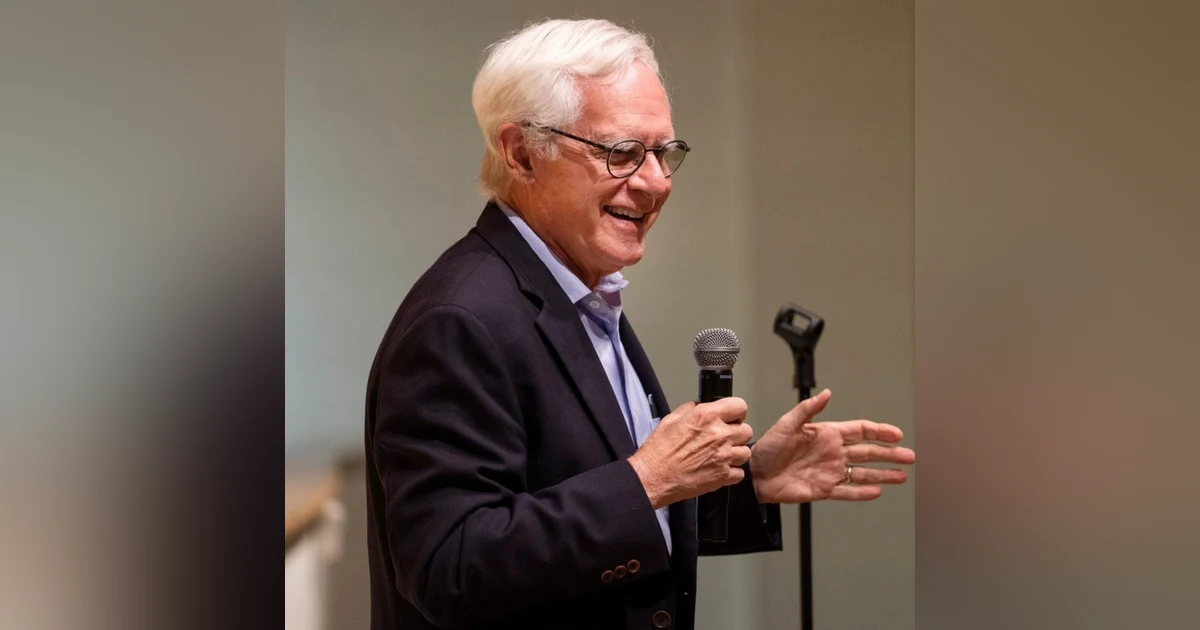
On this episode of the Cancer and Comedy Podcast, Dr. Brad Miller sits down with Rabbi Bob Alper — quite possibly the only practicing rabbi on the planet doing stand-up comedy on purpose — for a conversation about faith, illness, and the strange holiness of making someone laugh on the worst day of their life.
Bob has been on stage for nearly 40 years, from the Comedy Store to Sirius XM, sharing bills with names like Bob Newhart and Jerry Seinfeld, all while serving congregations and conducting High Holiday services for more than three decades. He's also a bladder cancer patient of ten years running — a diagnosis he's turned into one of the few comedy bits in history to feature the words "urethra" and "cystoscopy."
With warmth, self-deprecation, and a rabbi's ear for story, Brad and Bob get into:
- The 2000-year-old Talmudic trick Bob still uses in every sermon and every set: open with a joke, relax the room, then get serious
- Why 50 years in the pulpit is really "50 years of experience performing in front of a hostile audience"
- The moment he spotted blood in a urinal in Vancouver, Washington — and what came next
- How he reframed cancer to strip it of its power: four scrapings, a decade of checkups, and a doctor who says this isn't what's going to get him
- The true story of the podiatry resident who observed his cystoscopy (and the punchline a fellow comic gave him)
- Laugh in Peace: Muslim, Jewish, and Christian comics on one stage — and the two student leaders who never spoke until a comedy show made them go to dinner
- The grim, closed-door humor of a Philadelphia cancer center staff ("in cancer, the Mets always win") and why that gallows laughter kept them whole for their patients
- "The Woman Who Rode Horses into the Sea" — the dying patient with no family or friends who was remembered not as a diagnosis, but as the hero she actually was
- The Vermont driver's license photo that has become a piece of pocket gold, the DMV clerk who told him "we've been waiting for you," and the free cup of coffee it earned
- His mother at 86, hours from death, delivering a perfect laugh line about her 90-year-old boyfriend — the gift Brad and Bob both call the thing you remember most
And the line Bob calls the highest point of his entire comedy career — a woman dying of cancer who came up to him after a show and said: "For an hour and a half, I forgot I was sick."
This isn't a celebrity comedy interview. It's a working playbook for anyone whose life has been knocked sideways by illness, grief, or loss:
- Hear why comedy isn't just entertainment — and why even an agnostic rabbi hesitates, then insists, on calling it holy
- Learn how naming the embarrassing, undignified parts of treatment out loud takes their power away
- Understand the difference between humor that heals and humor that wounds, and how caregivers walk that line
- Get Bob's answer for the person convinced they will never laugh again: not today, maybe — but someday. And the grieving mother who proved it
You'll come away with hope, a few laughs you didn't expect from a cancer conversation, and a reminder that healing isn't only about eradicating disease — it's about being seen as who you really are, all the way through.
Dr. Brad Miller 0:00
Hello, good people, and welcome to Cancer and Comedy. This is the podcast where we help cancer-impacted people heal with hope and humor. I'm Dr. Brad Miller. Today's guest might be the only one of a kind on the planet. Perhaps he's a practicing rabbi who does stand-up comedy on purpose. His name is Bob Alper from bobalper.com, and he has been making people laugh for nearly 40 years, from the comedy store to Sirius XM, and connecting with people like Bob Newhart and Jerry Seinfeld. It's about clean laughs, deep faith, and a healing heart. Bob Alper, welcome to our conversation, my friend.
Bob Alper 0:41
Thank you very much, Fred. Thanks. Hey,
Dr. Brad Miller 0:43
It's good to be with you, and I love your story there. You know, I'm a Protestant Christian pastor, and I've done a little bit of stand-up comedy myself, and I know that there's a challenge in that, but I'm just really interested in talking to a rabbi who's a comedian here today, and I'm interested in this story here. You're not you're a rabbi. You had your you you had a synagogue. You had a career. You kind of had your doctor your doctoral degree. You're kind of heading towards a career in counseling and and in the and and in the synagogue. And then comedy happened. So tell me, kind of give me a little background there, my friend. Give me a little context of what we're talking about here.
Bob Alper 1:26
Well, in my routine when I'm performing, I always I always use jokes and funny stories in my sermons in front of my congregations, which has given me over 50 years' experience performing in front of a hostile audience.
Dr. Brad Miller 1:39
I hear that. I hear that, my friend. I've been there, done that one. Yes, yes.
Bob Alper 1:43
And I, I started a. I remember during Rosh Hashanah morning, Jewish New Year, I began a sermon. I said, for the past two weeks, my wife and son have been in Peru on vacation. I stayed home to write sermons and prepare for the high holidays. You're welcome.
Dr. Brad Miller 2:01
So, the the the
Bob Alper 2:04
technique, though, is as old as the Talmud. 2000 years ago, a guy named Rabba was a teacher in the Talmud. It said he used to begin each of his lessons with a joke.
Dr. Brad Miller 2:15
Yes,
Bob Alper 2:16
and he said that would relax the students, and then he got serious. I do the same thing with my sermons. You relax people with a joke, and then you get serious. And I-it's that technique I used all through my rap. And I serve large congregations from 72 to 86, and then after that, I started doing comedy counseling, a little bit of counseling, but mostly comedy. And I conducted High Holiday services for another synagogue, but I actually established for another 33 years. So I've never been out of the pulpit, only smaller amounts. Yeah, when I got into stand-up comedy, but I got into stand-up comedy in 1986. That was the year that formal stand-up comedy because I always, I was always funny,
Dr. Brad Miller 3:04
yeah.
Bob Alper 3:04
Even as a kid, little kid, I was always funny,
Dr. Brad Miller 3:06
yeah.
Bob Alper 3:07
And in high school, I was in the Jewish youth group. I was, we'd have conclaves, week-long conclaves, once in the summer, once in the winter, and the last night we'd always have talent night, and I lived for those nights, because I prepared a Bob Newhart or Shelly Berman routine, and I did it in front of the kids.
Dr. Brad Miller 3:28
Right, and
Bob Alper 3:29
I found two things happened. First of all, I was elected to offices in the organization, and secondly, the girls paid a lot of attention to the yes.
Dr. Brad Miller 3:39
Funny helps. Funny helps
Bob Alper 3:41
wonderfully. But yeah, your
Dr. Brad Miller 3:44
your story resonates so much with me, Bob. You know, I'm a preacher's kid, for one thing, and then I'm also, you know, I was involved with church growing up, and then throughout my history, and my basic thing always has been, and still is now when I speak, you know, whether it's in a faith-based setting or some other group, is almost always some sort of joke to break the tension. Then get into the content, and sometimes I try to have a humorous story of some sort to wrap things up. And I found the same thing with youth group stuff, what have you. Try to be the life of the party. That is awesome, but you spend a lot. You spend a lot of time leading congregations, very large congregations, if I'm understanding in cases. And so, what do you think you learn there in congregational life, or maybe behind the pulpit, that you now use in comedy, or vice versa? For that matter, what kind of transferable skills do you find there?
Bob Alper 4:45
It's sort of, you know a lot of a lot of comedians come out of teaching,
Dr. Brad Miller 4:50
yeah,
Bob Alper 4:50
You know, just stand in front of 34th graders and keep their attention, and the same thing comes out of the clergy, out of congregational life. You have to keep people's attention. A lot of my work in congregation was not only preaching but also teaching, and particularly teaching the teenagers, but any group. And humor is a very effective technique. It works wonderfully, and you know, it's also a counseling technique. Humor can help people. There's a story again out of the Talmud. Elijah the prophet was at a marketplace with a friend, and he pointed across the marketplace. He says, "You see those two men over there? Yeah. Says they have a share in the world to come. Why is that? His friend said Elijah says, 'It's because they're comedians. When people are sad, they cheer them, and when people are angry with each other, they help make peace between them, and that's what comedians do. It's it's it's not. I tell people comedy is not just entertainment. I even hesitate to use the term, but there's a holiness to comedy.
Dr. Brad Miller 6:00
Yes,
Bob Alper 6:00
when it's done well,
Dr. Brad Miller 6:02
I agree. Well, you know, it loose it looses people up. It kind of builds bridges between people from different political perspectives, or interpersonal perspectives, or genders, or race, or any number of things. If it's done well, you know, comedy can be a way. You know? You know, the comedy can be a dividing force at times as well, but I think what you're about and what I'm about is the type of comedy that helps bring people together and certainly helps people to heal and to be hopeful and be generous moving forward. And exactly, I did
Bob Alper 6:35
a thing called the Laugh and Peace tour, which I started in the year 2001, where I worked with Muslim comedians, and we had a minister, an American Baptist minister named Susan Sparks. She joined me, so I worked with her, and I'd look out there, and I mean, literally see college students, young men wearing yarmulkes sitting next to young women wearing hijabs, laughing together.
Dr. Brad Miller 7:00
Yes, and
Bob Alper 7:01
Our mantra was when people laugh together, they can't hate one another. And the the example, the the the clearest example was at Georgia Tech. I was performing there with a Muslim comic named Azar Usman, and we were backstage before the show. The president of the Muslim Student Association and the president of the Hillel, the Jewish student group, were talking, and I overheard them say to they were trying to figure out where they were going to go for dinner.
Dr. Brad Miller 7:28
Oh wow! And later on, they explained
Bob Alper 7:30
to me that even though their offices were next door to each other in the student union, they never spoke to each other until they began planning the Laugh in Peace concert, and now they're going out to dinner, and that's what comedy can do. And it's
Dr. Brad Miller 7:44
And just to go, just to be spiritually oriented for a minute. That's a spiritual experience, isn't it? When people, when you can get people from an Islamic background, a Christian background, a Judaic background to come together and laugh and be together, that's awesome. That is awesome, and that is really what it's all about, and so what? What you're about there is bringing people together. I hear that in our conversation so far, but I also know that you've been with people and you've had your own hard moments yourself. And you know, every clergy person, you know, has to deal with these hard situations: funerals, deaths, illnesses, things like that, and yeah, I know you said something in our prior conversation. If you can make people feel better or even forget about their sickness for a bit, that's kind of a holy calling. To tell me more about that,
Bob Alper 8:32
That was, you know, it's happened a few times where a woman comes up to me after a show, alone, kind of shy, and says almost as a confessional shit, "My husband died six months ago, and tonight was the first time I've laughed.
Dr. Brad Miller 8:51
Wow!
Bob Alper 8:52
Oh, I mean, and then to top that, if it were, and I mean, there's no competition.
Dr. Brad Miller 8:59
Sure, but the the the the
Bob Alper 9:00
highest point in my entire comedy career took place after a show when a woman I knew was dying of cancer came over to me. She looked at me, and she said, "You know, she said, "for an hour and a half, I forgot I was sick.
Dr. Brad Miller 9:15
Wow, that is special,
Bob Alper 9:16
and I'm thinking
Dr. Brad Miller 9:18
that is special.
Bob Alper 9:18
I have the gift and the ability to give her something that I'm the luckiest person in the world,
Dr. Brad Miller 9:25
and that's healing. You know, I think that's what people need to understand. That here on our podcast, we talk about healing and wholeness and hope. It's not necessarily that your disease is going to be eradicated. You know, we're all going to be gone someday from something, but it doesn't mean that your soul can't be healed. You can soar. You can live for fullness in life, moving forward, and you can, for just a little bit for forget about forget about things. And it is. I believe it's a calling. Do you believe that as well? In a sense of a some something bit a bit of a holy with that.
Bob Alper:Yeah, I don't think it's pie in the sky calling like any other career, and that was my career. You know, when I was a freshman at Lehigh, we had an aptitude test where you'd be ready to score one to 50 as to what you were most qualified to do, and my highest score came as a funeral director, which is not that dissimilar from being a
Dr. Brad Miller:razor. Right.
Bob Alper:My lowest was, I think, it scored minus six, which broke the curve on engineer, and that was not for me.
Dr. Brad Miller:So, you were going to be a left-brain guy, not a right-brain guy. That's for sure. Well, Bob, you've had your own challenges with cancer, so tell us a little bit about that. You've had your own diagnosis, and tell us a little bit about that same bet to you.
Bob Alper:It's when we when I'm thinking about this, you know, I have cancer, but I sort of always forget about it. I almost think I don't even deserve to share because it's if it's if it can be put, a good cancer; it's easy cancer. I had bladder cancer.
Dr. Brad Miller:All right, bladder cancer
Bob Alper:in 2016. I'll never forget. I was in Vancouver, Washington, Southern Washington, and I had a show to do, and I was peeing, and I looked down in the urinal for some reason, and I saw this little red dot. I thought, oh, somebody spit in. I said, no, this is blood. That's
Dr. Brad Miller:not. That's not good. Yeah.
Bob Alper:Yeah. So I went back to my urologist. He said, yeah, we have to do what's called a cystoscopy. We have to look inside your bladder. Yeah. And they found cancer, the good kind. It was on the wall. They said, "We'll set you up. We'll scrape it off. And they did. And I've had to go back four times under anesthesia, have it scraped off, and then, you know, I go back for checkups first every three months, then every six months, then every year, and then it comes back, and they scrape it off. So it's been, you know, 10 years, and my doc says, you know, bladder cancer isn't going to kill you; you're going to die of something else
Dr. Brad Miller:Yeah, and sound like you've been able to kind of reframe your cancer diagnosis to disempower it from your life, and I now understand you. Kind of also making a little bit of a little bit of the material for your comedy routine. Well, something to do with this, right?
Bob Alper:Yeah, i i got i got material out. I don't tell the audience that I have bladder cancer. They don't need to know that. And frankly, it's it's so so under control. It's not that important. And I know so many people suffer from horrible cancer that I'm so grateful. And but anyway, so in the act, I've worked it into a bit where I say to the audience, I'm going to use two words that no other comedian ever uses. You can Google it. I'm going to use the word urethra and cystoscopy.
Dr. Brad Miller:Ah, wow, wow!
Bob Alper:I had to have a cystoscopy. That's where they go into your bladder, and they and what they do is they put a tube in your urethra, and at the end of the tube is a light and a camera on a little tiny iPhone 12. When I say. And I say, my doctor wanted to look at my bladder. He found it beautiful. That's all I say about it. And this is a true story. I was waiting for it to begin in the operating room, and they do it as an outpatient. They look at your bladder, but if they have to scrape and remove anything. You have to go under anesthesia. So I was in the operating room. The anesthesiologist walked in with a very attractive young woman. He said, "This is Dr. Richmond. She's a resident, and she'd like to observe the procedure. Wow! I thought, "Well, great is not going to be humiliating enough.
Dr. Brad Miller:Oh my God! Why don't we add this to it? Oh God! But
Bob Alper:Then I thought, you know, I'm gonna be asleep. I said to her, I said, fine. And I looked, I said, so, what's your specialty? And she said, podiatry.
Dr. Brad Miller:But wait a minute, she's there to podiatry. Podiatry. You know, you got between your bladder and your foot is a you know, it's a pretty good title.
Bob Alper:But so so that's how, and that's a true story from beginning to end. However, a colleague of mine was telling that story, and he gave me another ending. So I continue. I say podiatry, but the thing is, when I woke up, all of my toenails had been trimmed.
Dr. Brad Miller:You got me on that one, Bob. Oh my gosh. No, I mean that's you know that's wow you know okay I mean we can go we can go for the big tangent on that one alone couldn't we if we yeah it's but it's it's cool that you'd be able to take this medical situation though and turn it into a laugh line or two and you know a lot of people would be embarrassed you know your you know your tongue your bladder, you know your your urethra, your penis, and everything else. There, you talk about that being observed in all kinds of weird, you know, awkward situations. But you turn it into a laugh line. You reframed it. You kind of took its power away, and we laughed at it. We had some fun with it, and that's cool. You know, that's cool.
Bob Alper:There's another example of humor and cancer that I thought of. My wife says a psychotherapist.
Dr. Brad Miller:Okay,
Bob Alper:hire a psychotherapist, and as I say in my routine, we have a we have a really good relationship and agreement. I never criticize the way she did therapy, and she always criticizes the way I do comedy, so it's a good relationship.
Dr. Brad Miller:It works. It works, doesn't it? It works perfectly. So,
Bob Alper:But when she was, she went to Bryn Mawr Graduate School of Social Work, and while she was a student, then she she later actually went back to Bryn Mawr on the faculty for a while until we moved to Vermont. But while she was a student at Bryn Mawr, she worked because her student placement was a cancer center in Philadelphia, and the staff had their own offices. And when they would close the doors of the offices, they were very, very funny. One guy in particular, a close friend, was hilarious, and let me tell you the kind of grim humor that they came out of that office when the doors were closed. One was, "What's the difference between cancer and baseball? The difference is, in cancer, the Mets always win.
Dr. Brad Miller:Gosh,
Bob Alper:I mean, I'm talking about cancer metastasizing; it's grim, grim humor.
Dr. Brad Miller:Yeah,
Bob Alper:and they do that behind closed doors, and because of that, they strengthened themselves. Yeah. So when they were outside, and they were working with the patients, they didn't drop their sense of humor. They wouldn't ever do something like that with patients, but it strengthened them. And humor was also a part of working with the patients too. But
Dr. Brad Miller:Yeah, I saw that their humor was used to kind of sustain their their their professionalism in the sense of helping them to deal with the stress of their situation, but they were professional enough to know that the humor could be destructive to their relation with the with the with their patients, and I think that's kind of the tap dance that comedians and pastors and rabbis have to play sometimes. You know, have to be careful about using humor that could be derogatory and things like that. Now, Bob, I'm sorry. Go ahead. Finish up your book.
Bob Alper:There's a wonderful story that comes out of a cancer hospital, and it's in my book. It's my book is called "Life Doesn't Get Any Better Than This: The Holiness of Little Daily Dramas, still available on Amazon. My other book is called "Thanks, I Needed That, and other stories of the spirit. All separate little chapters, a total of 75 chapters. And in one of the chapters, I tell the story of the Cancer Center, and it's not a funny story, but it's it's to me, one of the very meaningful stories. When Sherry was a student, she was assigned a woman to take care of her cancer. She had a bunch of people that she dealt with, and this woman was all alone. She had no family. She had no friends, and she was dying. So Sherry did the appropriate things. She talked to her about what was. How could she help her? How could she communicate better with her caregivers, with the doctors, with the nurses, the staff? How could she improve the quality of her few days that she had left? And she did all that. And when they were finished, Sherry looked her and said, "Okay, now tell me who you are, and the woman told Sherry who she was, and then in short order a scrapbook was produced, and Sherry read the things in the scrapbook, and then with permission of this woman, this patient, she went back to Bryn Mawr, and she wrote a paper about this woman, and the title of the paper was "The Woman Who Rode Horses into the Sea, because this woman, who had nobody, no family, no friends, she used to ride horses off the steel pier in Atlantic City. She was a hero,
Dr. Brad Miller:Some sort of a show, some sort of a show type of thing. Yeah. Yeah. Okay. It was a it
Bob Alper:was a classical, a classic form of entertainment in Atlantic City, where they would ride horses off the steel pier, and she was an athlete. She was a hero. 1000s of people would applaud her and gasp at her courage, and that's how she died, as the woman who rode horses into the sea, not as a dying, lonely patient, but as who she was. And
Dr. Brad Miller:what what a legacy that leaves, and what a legacy that is uplifting. And you know, it's the kind of what, like the proverb says. It's a cheerful heart. It's a cheerful story that that that uplifts. Now, Bob, you've got something that's kind of cheerful and interesting and kind of quirky that you do with your driver's license. So tell me about what what you do with that and how that might be interesting to our audience here.
Bob Alper:I'm going to describe it. I'm going to show you, and those who are watching will be able to see it. But for years, since I guess late 1980, I've lived in Vermont. And by the way, a survey just came out of the 120, 121 best places to live. It's in the New York Times, and the fourth best place to live in the country is South Burlington, Vermont.
Dr. Brad Miller:Is that is that where you're at?
Bob Alper:No, I'm south. But the best small city, the best city is Burlington, Vermont. No, sorry, they were number 1111, so they're four and 11 of 120. No, they wouldn't rank our town. We live in a small town, so yeah, but Vermont is it's a wonderful place in which to live, and when I went for my driver's license, I was able to get them to do a funny picture. I'm going to hold it up,
Dr. Brad Miller:yeah,
Bob Alper:so you can see.
Dr. Brad Miller:Well, can you do? Yeah, just right there. Stop right there for our YouTube audience. You'll be able to see this, but go ahead, describe it, Bob. Yeah, it's
Bob Alper:it's me not wearing glasses because you can't wear glasses, but with my mouth wide open and my hands on either side of my neck as if I'm choking myself. It's hysterical,
Dr. Brad Miller:and you got a big smile on your face
Bob Alper:and a big smile, and whenever I show it to people, 67% of the time, people will say they let you do that.
Dr. Brad Miller:Yeah, so that's the back of
Bob Alper:my license.
Dr. Brad Miller:Yeah, oh,
Bob Alper:yep, they let me do that, and I showed them it's written right on.
Dr. Brad Miller:They're written right on your license. Yup, comma, they let me do that. I love that. I love that because that's. I know here in Indiana where I live, man. They're pretty strict. They're pretty strict about that. You got to have a you know a you know a serious face and no glasses.
Bob Alper:Everywhere is like that. But Vermont, we're a little different. They let me do it up until right after 911. They would let me do it then. But then eight years later, when I went back, I said, "This is my old license. The guy said, "Well, sir, you can't wear a hat. I said, "I won't wear a hat, and you can't wear a. I won't wear glasses. And so we did it. And the next time, they said Another guy who's, they change people all the time. I said, "Your face has to fill the frame. I said, "My face will fill the frame. So this time, which was last November, I went back because it was due. I had to do another picture, and I my I was going to go to the counter, and they wouldn't let me do it in Rutland at the Department of Motor Vehicles. I was prepared to say, okay, thank you. I'll do it somewhere else and go to Bennington or Saint Johnsbury or Burlington; I would keep going until I could get someone who would.
Dr. Brad Miller:So you kept looking for the right photographer guy exactly at the BMV. Okay, so I
Bob Alper:approached the counter.
Dr. Brad Miller:So this became a quest for you, didn't it, Bob? It became a quest. Okay, because
Bob Alper:it's a piece of gold.
Dr. Brad Miller:There you go.
Bob Alper:Now I'll explain why it's gold. Yeah, I approached the counter and had my old license, and I showed the young woman, and she looked at me. She said, "We've been waiting for you. And then she took me to the photography booth, and she took the picture, and she looked at. She said, "I don't like the lighting. Let's do it again, wow! And then she adjusted her camera. Took her about 10 minutes to adjust the camera, and she got it just right. And she was thrilled. And this is what you
Dr. Brad Miller:did-the picture we just saw with you, you know, making the funny face and everything. Well, that's awesome. And
Bob Alper:and it works. I mean, I have a picture which I show people leaving the Hertz parking lot in Houston at Hobby Airport, and there's a woman whose job all day long is to look at driver's licenses and paperwork and paperwork and drive. That's all she does over and over. It's not a great job, and I come there with a serious look and I show her my license. And she looks at it, and she does a double take, and then she smiled, and then she laughed, and she said, "Thank you, you made my day. You
Dr. Brad Miller:made my day. So I took a picture of her with the smile. Oh, that's oh yeah, some picture of
Bob Alper:her holding the, and it happens so often that people say, "Thank you, you made my day, you paid my day, and to have the power in my pocket to make people laugh. I mean, I was in the convenience store getting a cup of coffee, and I said to the woman, "I want to show you my driver's license. Oh, sir, we don't need to look at your license. No, I said I really would like to show you my license. So she said, "All right, I'll look at your license, and I showed it to her. And then she smiled. Then she laughed. Then she called the other workers over so they could have a party too.
Dr. Brad Miller:Yeah, that's awesome.
Bob Alper:They said, "Okay, so what do I owe for my coffee? Oh, we're not going to charge you for coffee.
Dr. Brad Miller:Well, that's awesome. I do something kind of similar. I carry around with me a bunch of like two-by-two cards with dad jokes on. I'm not kind of known for dad jokes, and so many times when I'm at a whatever paying for gas or convenience store, whatever, you know, I give them my credit card or my few bucks for something, but I also give them a dad joke, and they give me something similar to that. But I just give it to them, and so they go and I and I often get that same thing. You know, I could use that good news here today, and I think that's kind of the theme of one of your books, isn't it? Basically, you know, thanks. What was the title again? Tell me again. Thanks. I needed
Bob Alper:title of the book is Thanks. I needed that, and the title, the chapter title, comes from a time when I checked into a hotel late at night. The young clerk was by the desk. I with a serious look. I always gave my driver's license, and he looked at it, and he didn't laugh. He smiled, and then he looked at me with a very sad expression. He said, "I've had a really rough day. Thanks. I needed that.
Dr. Brad Miller:Wow.
Bob Alper:And so that's the title of the book. You know, I think
Dr. Brad Miller:I think that's that is a real theme of what we do here in cancer and comedy. That you know we know that you know, when it comes to cancer and other bad things in life, your wife's a therapist, for instance. You need professional help. You need medical doctors. You need therapists. You need financial counselors. You need these people in your life, but we also need lighter moments that anybody can provide. You know that anybody can do, and I love that about what you're saying here. In fact, I know one of the things we talked about in our prior conversation. You talked about a program that you sometimes lead called the spirituality of laughter, and so can you say a word about that? Kind of how this all integrates together. How you see God kind of showing up in these type of moments?
Bob Alper:Yeah. First of all, I'm an agnostic, so I don't I don't do the God talk. I don't see God in those things.
Dr. Brad Miller:Okay. I
Bob Alper:just see value, and I see it's a way to get people through really difficult moments and lift their spirits. So it, but I I use examples. Give you an example of my mother, how laughter helped her as she was dying. She was in a hospital. She was dying of lung cancer, and they put her on a respirator for the third time. They called us. We were in Vermont. She was in Baltimore, and we got a call in the middle of the night. Well, your mom is. I'm the new resident. Your mom has been having trouble breathing, which she did. So we put her back on the respirator. I said, "You realize she didn't want to go on a respirator, and she has three times when she signed forms saying she doesn't want to. Oh, wait a minute, let me look through her. Oh, here it is. Well, oh, I didn't see it here, so we have to keep her on. And I said, "No, you don't. So the next morning, I called her doctor, who tried to convince me to keep her on it, and I said, "What's the upshot of it? He told me he he wanted to wanted me to try and convince him because that was appropriate. And when I said this is what my mother wants, he was perfectly fine with it. He was acting appropriately, but he was doing his job, and then he said, "Well, you know, I can order her to be taken up, but why don't you come here first and have it done while you're here, which is a good idea. So he drove to Baltimore, got there at night, and at around midnight they took her off the respirator, and my mother was kept breathing, and at four in the morning, I was alone by her bed. My sister, my wife, my niece, and her husband were elsewhere in the hospital. It was my turn. My mother was 86, a widow. She had a boyfriend, Ted, who was 90. Okay, so she woke up, and surprisingly, she started talking. And I looked down. I said, "Mom, Ted was here all day today. He loves you. And she looked up at me. She said, "He adores me.
Dr. Brad Miller:Well, guess there. There we go. There we go. And
Bob Alper:Here she is. She's dying, and she gives us this gift of humor. There she laughed
Dr. Brad Miller:too. Wow! And she spent
Bob Alper:the next day. They took her to her room. She was on the phone. Had visitors that night. She had difficulty breathing. They increased the morphine, and that was the end. But you know, I think about that. You know, one of the most trying days of our lives for losing her, and the laughter is what I think of most. Right, she gave you
Dr. Brad Miller:She gave you a gift of laughter, and that's awesome. It sounds like, and I know that's part of what a big part of what you do. You know, you are a working comedian, and you've worked with a lot of pretty big names here in the comedy world. And we're going to find out more about how people can contact you in just a minute, and where your show schedule and things like that. But I did want to ask you one more question here, and that is just, let's just say that there's someone out there right now who's having a kind of tough time, Bob. That they have they've been knocked down by something in life that's kind of beaten them up a little bit. Might be cancer, might be something else, and they don't think. Man, I can't laugh anymore. There's no laughing here. This is just tragedy going on in my life. Maybe my life is over. So, what would be your word? What would be your word to that person? What would you want to say to them that might be from your experience that you speak it to their life,
Bob Alper:to leave themselves open, to know that someday they might be able to laugh. I think, in particular, when I was serving a congregation in Philadelphia, I was working with a couple whose child had died, and I recommended that they go to a group called Compassionate Friends, which is a support group of people who've lost children. And they did, and they came back. They said how helpful it was, because they came into this group, and she saw people laughing. I mean, the mother, her child had died a few months before her. Yeah, I thought I would never be able to laugh, and yet I met people who have gone through the same thing I've gone through, and I realized that yes, you can laugh someday, maybe not today, but someday, and it gave her hope, and that was important to see that people who've suffered immeasurably could still laugh, and so you know that's the message. Sure,
Dr. Brad Miller:and we believe laughter and hope and humor they all they all are interrelated. You know, if you allow them, if you allow them to be well, what a gift you've given us here to today, Bob. Bob, you are a working comedian. You are the author of a couple of books here. Tell our folks how they can find out more about you if they want to see you perform or learn about your books or anything else. How can they find out more about you?
Bob Alper:First of all, my website is Bob Alper B O B A L P E r.com. I always tell people think people think our name is Alpert, like the trumpet player. It's not. We say it used to be Alpert, but we dropped the T at a party in Boston. Okay, so it's bobalper.com on the website; that's the way to contact me. It has information. It has a video. If they'd like to see some videos, just go onto YouTube and put Bob Alper there, and you'll get about I think it's 8080, or 90 short clips on YouTube, so they can watch it there. My books are just put Bob Alper in on Amazon, and my books will come up, and that's what you guys.
Dr. Brad Miller:And we'll also put connections to that on our website, cancerandcomedy.com. Bob Alper, thank you. This has been a real joy to be with you today. As I said earlier, I kind of resonate with you, my friend. You know, I'm a retired United Methodist pastor, and I had a lot of a similar track as you. I haven't gone the professional comedian route. I've done the podcast thing instead, but I certainly lean into the humor part of things that really resonates with what you do on it. You made me laugh out loud today, and not everybody can do that. So appreciate well, you know, you've given us a kind of a picture of what can happen, of how humor can we can take the hard stuff, and we can still have a laugh about it. So I just want to encourage folks to check out Bob Alper at BobAurpper.com. You go to one of his shows, pick up his books, look at his videos, and that's a good place to. Start. Remember, friends, a cheerful heart is good medicine, and blessings on you, Bob. And to all of our lifter-uppers, we hope we call our followers here in cancer and comedy. We look forward to keeping good moving and moving from the grim to the grid.
