


 Apple Podcasts
 Spotify
  RSS Feed
 Breaking the Silence on Prostate Cancer: Michael Bovarnick’s Mission to Educate and Empower
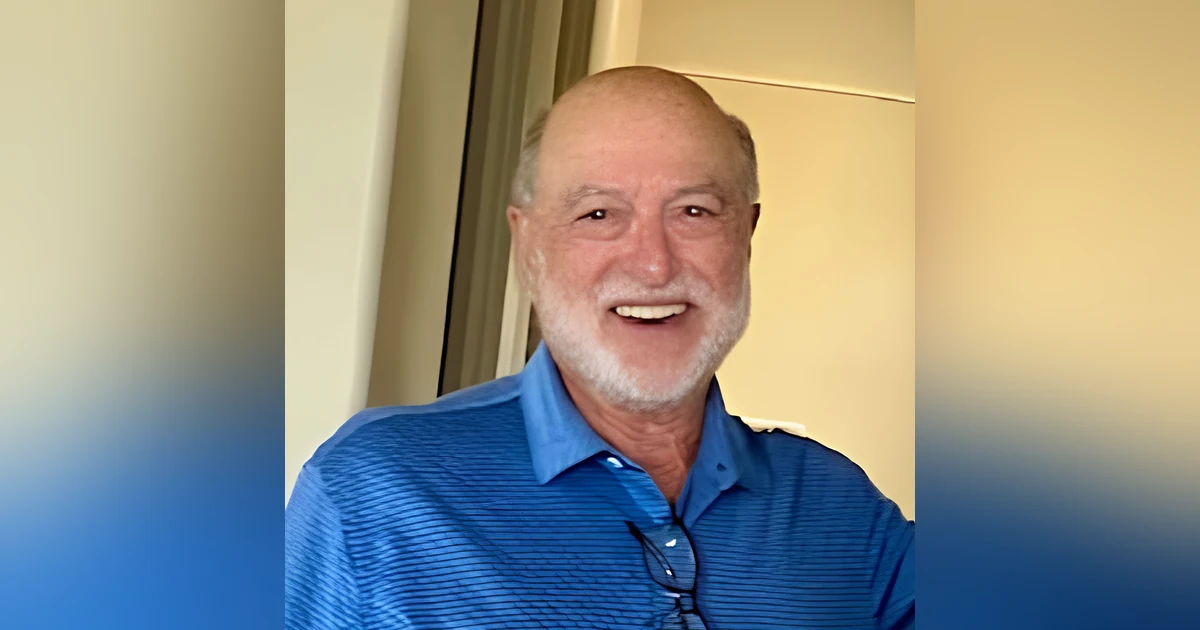
Dr. Brad Miller welcomes Michael Bavarnik—two‑time prostate cancer survivor, founder of The Prostate Education Project, devoted husband of 62 years, and tireless patient educator. Michael traces his journey from watching his father endure a brutal, old‑school course of prostate cancer, to facing his own aggressive disease, staying undetectable for 20 years, and then getting hit with a recurrence that forced him to rethink everything.
What unfolds is a story that’s blunt, practical, often funny, and full of hard‑won wisdom about cancer, marriage, masculinity, and why silence is so dangerous for men.
Brad and Michael explore:
- Family history and first diagnosis
- Nerves, sex, and the “two brains” problem
- Twenty years of “undetectable”… then the PSA climbs
- Radiation, ADT, and the mental battle
- The Prostate Education Project (English + Spanish)
- Marriage, intimacy, and what men avoid talking about
- Practical tools and core beliefs
- Life after “you have prostate cancer”
This guide offers:
- Clear explanations of PSA, staging, surgery, radiation, and ADT in everyday language
- Support for couples redefining intimacy, manhood, and connection after treatment
- A roadmap for the first weeks after diagnosis, so patients and loved ones aren’t lost in jargon and fear
- Encouragement to keep asking questions, keep testing, and keep choosing education over silence
The harsh realities of prostate cancer don’t disappear—but with information, honest talk, and a bit of humor, they become challenges you can face with clarity, courage, and support.
Brad Miller 0:00
Hello, good people, and welcome to the Cancer and Comedy Podcast, where we're all about helping cancer-impacted people to heal with with hope and humor. My name is Dr. Brad Miller. You know, most men, and I'm certainly in this category, we rather talk about just about anything else in the world than prostrate cancer, and I know this because I am a victim, or I'm a prostrate cancer patient. And when that word comes along, you'd almost rather talk about anything else. And that silence is costing lives. And my my guest today is refused to stay quiet about this matter, his name is Michael Bavarnik. He was actually diagnosed with prostate diagnosed with prostate cancer 23 years ago. Beat it, then he's had to face it all over again a couple of decades later. So instead of retreating or going quiet or anything like that, he's 83 years young at this point, and he built the prostate education project. So no man has to walk this road in the dark. So we're going to be in store here in this episode for some wisdom, some modesty, and and some context that's perhaps even a little bit humorous. So let's get into it, Michael. Welcome to our conversation, my friend.
Michael Bavarnik 1:14
Thank you, thank you, Brad. Appreciate it. Thanks for the opportunity.
Brad Miller 1:18
Well, glad to glad to have you, and we had a good conversation a couple weeks ago about what you're up to here on the the Prostrate Education Project and the website there is theprostrateeducationproject.org. So people may want to check that out. We'll say more about that in our conversation here today. But Michael, prostrate cancer is kind of a part of your life. You shared with me that your that your father died of prostrate cancer, so this was already kind of a part of your life when you were diagnosed. So you know you knew about it, kind of family history wise. So what went through your mind the first time you went through this? And so let's kind of start there to build some context.
Michael Bavarnik 1:59
That's an interesting question because when I when I was diagnosed at a fairly young age and having seen my seen what my father went through with it, it really hit home. And I hate to say it, I didn't want to live in my father's shoes and just go through go and go through what he went through brief brief history. My father was diagnosed at age 75. I'm going back 40-some odd years ago, and as you well know, the treatments and protocols have certainly changed. He had external radiation at the time. Went through 14 years and was pretty good, and then that last year was a year of hell, and nobody should die the way my father died. So, and again, I had that history. And as I said, when I was diagnosed, I made the decision that if the prostate was eligible to be removed, that's the way I was going to go. Okay. And so, my my choice after without doing all the preliminary stuff, I should I should preface it by saying I have a son alarm in the medical business, and through his assistance at the time I got in to see some doctors pretty quickly, and again I had a pretty aggressive cancer, and as I say, the decision was made to to surgically remove it, and I was living in New Hampshire at the time, and I found a surgeon in the Boston area who was doing the only one in the United States 23 years ago that was doing a laparoscopic radical prostatectomy.
Brad Miller 3:36
Okay,
Michael Bavarnik 3:36
and so again, without doing the whole story, I ended up working with this surgeon, and he went in and did the surgery. Pathology came back. The cancer had one centimeter to go before it broke out of the core.
Brad Miller 3:56
Yes,
Michael Bavarnik 3:57
no, no nerves were taken. And again, you've lived through this. No nerves were taken. Which, of course, as as we know, if you lose a nerve, there goes some sexual ability. You lose both nerves. You lose both nerves. You're done. And when we and I don't know about your own experience, but when you hear these words, you have prostate cancer. A, what's my life expectancy going to be be because we were male. You know what's my sexual capability is going to be the intimacy of relationships, and especially at a young age.
Brad Miller 4:30
Yeah, of course.
Michael Bavarnik 4:31
Anyway, so we went, and again, I had a great surgeon, did a great job, and continued to make sure that I had PSA tests on a regular basis, and I mean regular, I had a minimum of twice a year.
Brad Miller 4:48
Yes.
Michael Bavarnik 4:49
Okay. Being a paranoid hypochondriac to some degree, I wanted to make sure that that PSA remained undetectable as you. Again, a well well aware.
Brad Miller 5:01
Right.
Michael Bavarnik 5:02
Once you have it out, or you've had you had radiation, that's where it has to be. The numbers change. So fast forward, we now 20 years later, and all of a sudden, my PSA starts elevating slightly, and I I recognize it was a situation. Bottom line, again, my PSA started going up to ultimately it was at 1.7, and having it removed, that's a high number.
Brad Miller 5:29
Yes,
Michael Bavarnik 5:30
head scan shows
Brad Miller 5:31
especially, since you were undetect you were undetectable at some point. Is that right?
Michael Bavarnik 5:36
I was I was undetectable for 20 years.
Brad Miller 5:38
Oh my goodness! Wow,
Michael Bavarnik 5:40
undetectable for 20 years, and I mean I I can't say it, but coincidental when my PSA started to elevate, it was my last COVID shot. But that's another whole discussion.
Brad Miller 5:51
All right,
Michael Bavarnik 5:52
but anyway, I can't. Yeah, we'll never know that. But anyway, PSA did start to elevate, and again, because fortunately, again, my son-in-law being in the business, I went in and got a PET scan immediately, and it showed two nodes on my left pelvic wall showed up, and
Brad Miller 6:14
and they get your attention up. Yeah.
Michael Bavarnik 6:16
Oh, it sure does. I say where
Brad Miller 6:18
that comes from. Yeah.
Michael Bavarnik 6:20
And the quick, the quick, the quick story is, I mean, through again the through the help of my son-in-law, saw the urologist. He had the urologist couldn't do anything basically because it had gone to that point. He had the urologist had already made an appointment for me with a radiation oncologist here in Reno, which is where I live, and choice was because of where it was he was going to do five days of SBRT pinpoint radiation, and we did that first PSA. My PSA at the time of that when we finally went in was 2.7, and. and first PSA dropped to one. He was thrilled, but then at the 90-day mark, it went up to three. So,
Brad Miller 7:11
so you're heading the wrong direction. It just and just for just for audience to know, PSA is the indicator of when you do a PSA test, and many people know this, but many people don't. The PSA is the indicator, and basically, the higher number you have, the worse off you are. And if you're undetectable, you have a zero, as you mentioned there. And those of us who deal with proximate cancer, it can range. But basically, I think over a seven is a problem, a real problem. And you're head, you're head the wrong direction. Yeah,
Michael Bavarnik 7:39
I think it's important to note also that again, when you've had the prostate removed and/or you've had heavy radiation, it is supposed to remain undetectable. Yes. The normal, the normal accepted number, if you will, the guidelines used, and you again, you've been through this, is zero to four. If you have a prostate above four, stats are really racing flags.
Brad Miller 8:04
Right, right.
Michael Bavarnik 8:06
With the with being undetectable, the benchmark is point two, 0.2. Above that, it you got a problem.
Brad Miller 8:17
No, that's very much my very much my experience too. I've had the radical prostate after me, and right now that was a little more than three years ago. Right in the last since I had the surgery, it's been zero. But it's like you said, we keep it keep track of it, and and so now. But I'm interested also, Michael, and kind of your psychological impact the second time you were diagnosed with this, because you basically, I assume you kind of thought maybe I got this thing beat, and then what did that kind of do to your your mind space when you had this second time around? You get the diagnosis
Michael Bavarnik 8:51
the second time around now, knowing that it came back and I knowing and knowing how this cancer can spread really affected me mentally, and again, I'll go back a little bit because after the first round of radiation, I had to go back in and start on ADT treatment because of the elevated cancer. And the second PET scan showed again another node on my left pelvic walls, and it also metastasized to my my tinite transverse process. So again, that all said, necessitated the need of ADT treatment, which I was deadly against. But that was the course of action, along with more radiation. So that that did a mental job because you don't know the the reaction the body is going to have to ADT treatment, the second round of radiation, and where is that going to go? So that that had a much greater impact on me mentally than the first time around. And when I was when. Rediagnosed, and I recognize the fact that so many more men are now being diagnosed with this awful disease, motivated me to do this project that I that I started.
Brad Miller:Well, you mentioned you mentioned how that you yeah you you mentioned earlier and kind of thing how there's there's two sides of this really. There's the physical health side, but you you know you've kind of described it. Men basically have two brains because you have the physical health part of it, and you have the the sexual implications, and you know you got impotence, you got incontinence is another factor there, which is a real thing, and so. But you said something that I thought was interesting that you said the second time around when you were diagnosed, you said something about kind of an aura or a feeling, or that you needed to do something about this further to educate others. Can you say a word about how that kind of happened for you?
Michael Bavarnik:You know, it it just it just kind of, as I said, it just really hit me that realizing the fact that most men are uneducated are not willing to talk about this subject, and the reality of life. And again, I keep saying you've lived this experience. Quoting the American Cancer Society numbers, we in 2025 it projected for women in breast cancer known diagnoses is about 350,000. In prostate cancer, it's roughly 330,000.
Brad Miller:Right.
Michael Bavarnik:We never hear about prostate cancer. We hear about breast cancer, and again, with all due respect to our women, and it just motivated me. As I said, I talked to my son-in-law. I talked to some physicians at the hospital here in Reno, and they said, "Yeah, give it a shot. And I just started out with you know I presented a book to the hospital. I started working on, and that led to developing this project, which has now taken on a life of its own. And as as I think you were aware, not only did I it's not only done in English, but it is also done in 100% medically accepted Spanish. Well, I think that is that is an that's an underserved community,
Brad Miller:right? If I remember correctly, for whatever reason, I'm not even sure why Hispanic and African American populations have a little higher incidence of prostrate than than Caucasian people do, and so. But it sounds like this kind of you had kind of an aha moment or a moment during your treatments or during the process of dealing with the second time around that you're going to do something with it, and you, I really want to get in the details of what you offer here in a minute. But it just really sounds like you made a decision, Michael, to thrive in the middle of this, despite of you know what for many people could be devastating emotionally and physically, and it relationship wise. It sounds like you got a pretty good support system. It's but what's what's keeping you grounded in the whole this situation? What's keeping you going?
Michael Bavarnik:Really, is the fact that now I realize because of where this has gone that I'm now really helping other other people. I can see it in my analytics, my Google Analytics, and the number of people that are finding this project have been helping. And I and I now have clinics using this program for their patients because we know that in most cases, doctors and clinicians, as good as they are, just don't have the time to sit and talk about the details of what we're experiencing and what you've experienced, what I've experienced, and quite frankly, I think the greatest thing for me is, at my age, this has been a great mental motivator and stimulator to let me, if you will, rise above what it is.
Brad Miller:Yeah. Well, and I think that's obviously you're having some impact here, and just sounds like you've been able to find what you know what we look for here in cancer comedy is kind of look for what can be the productive side? What can be a little bit of the positive side, and sometimes even the humorous side of all this situation? So, and you've mentioned how you've had some the effects of this, you know, kind of got your attention, and sometimes they were just a little bit humorous to you. You, you know, sleep sleep deprivation, some other things. Can you kind of relate to at all how there's really a bit of absurdity, kind of those there absurdity about this whole deal? Can you relate to that question at all?
Michael Bavarnik:Well, when you say absurdity,
Brad Miller:well, well, you know, for instance, you know, you're going along pretty good shape for 20 years. Then you have to deal with all everything regarding this, and you. I know you had some issues with sleep, loss of sleep. You have the sexual implications. You have your body changing things like that. Has humor at all been a part of your experience in terms of coping with all those kind of.
Michael Bavarnik:As you as you refer to and infer to as my my favorite saying now is you know men yeah have two brains one in your head one between your legs absolutely we joke we jokingly say most men unfortunately think with the one between their legs and sure you know some some of the things that I found somewhat I don't want to say comical but it's reality as an example, my first medical oncologist that I was working with here in Reno, the lovely female, beautiful young lady,
Brad Miller:right,
Michael Bavarnik:and and I keep I kept saying, you know, here you are, some viral young man in the 50s or 60s, and you have to go in and you start talking with this woman about your testicle shrinking, yeah, and the fact that you can't get an erection anymore. And I see, you know, and I joke they've talked about with that with this medical oncologist, and I guess you, in some way, you know, as tough as it is, you try to have some solidity with, and
Brad Miller:well, parts of that are just weird. The part that's just weird. That's kind of what I mean by the absurdity of it all. You know, I just have recently went through a urology exam myself regarding sexual health and had somewhat a similar experience. Just, just odd. It's just odd, you know. You know,
Michael Bavarnik:not to interrupt you. The other thing I found too, and it's on the personal side, and you with you try to have some, I guess you want to call it comedy, whatever, and is dealing with your partner and your spouse.
Brad Miller:Well, let's talk about that. Yeah, you've mentioned in our prior conversation how important your spouse was in the soul process. So tell me how that went there in your relationship with her, because this affects, you know, when prostate cancer comes along, it's not just your as a man's health, you know, it is your partner, your spouse, other other people in your life. But tell me about that.
Michael Bavarnik:Well, and again, I come back. Most men, you know, think you know, sexual pleasure is the only way to satisfy a partner or a spouse, and intimacy is is is so much a part of it. Unfortunately, I have a partner of my wife for 62 years that has just been by my side every step of the way. Wow, that's awesome. And is understanding, is compassionate, and you know we we we joke about the sex side of it to some degree,
Brad Miller:right?
Michael Bavarnik:And and and again, I'll come back and said this is a topic that most men are not willing to talk about. Their their ego gets in the way, and unfortunately, on the negative side, it does have a dramatic impact with their partner's partner or spouse. And the stuff I've read, many women are suffering along with, and sometimes worse than men because there's no there's no emotion anymore.
Brad Miller:Yeah,
Michael Bavarnik:there's no intimacy anymore.
Brad Miller:So there's a the voices have been quieted for whatever reason, personal.
Michael Bavarnik:Oh yeah, it could
Brad Miller:be shame, guilt, all kinds of things, performance anxiety, all manhood.
Michael Bavarnik:The manlihood is the manhood is gone.
Brad Miller:Your manhood has been the threatened, that kind of thing. And so, what do you think, men in particular, but even men and women, especially people in sexual relationships with one another, what are they missing out on here by not dealing with this? What are they missing out on if they don't deal with this with some form of some form of another on the emotional, mental, even spiritual side?
Michael Bavarnik:Well, I think I guess to answer that question. I I think because of it, too many relationships end up really having problems, and the spouse suffers terribly.
Brad Miller:Again,
Michael Bavarnik:and and I guess communication and some of the comments, you know, knowledge knowledge reduces fear. So if you learn more about what's going on, or and I guess some of the key phrases that I use, understanding builds confidence, and education empowers patients. And I think the sad part is most what I'm my experience in listening and and and talking with doctors and so forth, most people just come in and they they don't educate themselves. They don't work at not that AI is going to give you all the answers, but learning about their own situation. What can I do? The options that you have, and and again, working together with your spouse, diet critical, educate exercise critical,
Brad Miller:yes.
Michael Bavarnik:And so I think most people miss most people miss the point and talk. They don't they don't talk to one another anymore, and that's basic.
Brad Miller:And the sexual part of it is. Important part of it, but it's integrated to all the other parts. You know, your health, your relationship, your intimacy, all that kind of thing there. And you mentioned something there that I think is so important. I think it's the foundation of what you're all about, Michael. You said education is the key, or you know, communication and education is part of this. So you created this website, and with all the resources that are the project the prostate education project.org is where you can find it. So what are we going to find there if we go there? If we go there, what's a a man who's diagnosed with prostate cancer? What's his spouse or a caregiver? What are they going to find there that's going to be helpful to them.
Michael Bavarnik:Going to find a first 30 days what to look for, what to ask, and you basically bottom line is you're going to have answers to questions you did not know you needed to ask.
Brad Miller:Yeah,
Michael Bavarnik:and in that in in that you know I talk about, and again I'm not speaking from a clinician standpoint. I'm talking about from from a lived experience, but trying to give some background to some of the definitions, the differences of the you know diagnoses, the stages of diagnosis, treatment options that are generally provided, medications, what happens on medications, ADT the symptoms that go talk about I talk about intimacy in there. I talk about sexual function. We talk a little bit about diet and exercise. So again, basically, too many times people come in and and really they don't know that they don't know the questions that they need to ask, and I'll bring out a point of a good friend of mine that I've known for 30 years. Three or four weeks ago, I found out he's now diagnosed with metastatic cancer, prostate cancer. It's now in his lymph nodes, and he went on to the he went onto the website. But when he went into the doctor, he was prepared.
Brad Miller:Yeah,
Michael Bavarnik:he knew what to ask.
Brad Miller:So this is just a practical tool for people when they go to see the doctor, because as you mentioned, you know, doctors have whatever they have-1015, minutes max-with you usually, absolutely. And and then so, and they're dealing with the medical side of things, and more power to them. You know, thank God for that, and you know, we're grateful for that, but there's so much. This is such a complex, convoluted issue, and the fact you're dealing with questions that people are are asking or not didn't know what to ask is is powerful. I'd be interested in in maybe with your friend Donny or any others, what kind of questions have they asked you, or what kind of things do you see on your website that that are kind of a common thing that people are looking to have some resources for?
Michael Bavarnik:Well, his because of his cancer, you know, when he started describing the medications that he was going to be on, because he had to go on ADT first before he did started radiation. Basically, question: What can I expect? What should I? How is it going to affect me? He's an avid cyclist. How is it going to affect my body?
Brad Miller:Yeah.
Michael Bavarnik:Then going into the radiation, knowing he has to do five weeks and five days a week of radiation, how that's going to impact his life, the tiredness, and so forth, so that that helped him understand where he's going. And when he when he goes in, and I was just with him this past week, when he goes in and talks to his oncologist, now he he has these questions that as she can answer for him,
Brad Miller:right? That's awesome. Well, I think it's so important, and it must give you a sense of fulfillment as well. That your project and your your knowledge that you have gained is helpful to people. Is that part of a fulfillment aspect for you too, Michael?
Michael Bavarnik:My yes, it is, and as I've said now, that this thing has taken on a life of its own, and my goal at my age is that this is going to be a legacy living well beyond me after I'm gone.
Brad Miller:So, what do you? What is my hope? Yeah. So, what do you think? You know, you help people, other people, and you mentioned this legacy. So, what do you think this project, this project, has taught you? What has it taught you about the situation at hand and about others?
Michael Bavarnik:What has it taught me? It's taught me that, unfortunately, in strictly an opinion, that there's no uniformity in the medical world today, and the sad part of the medical system again, personal opinion, that so many today are being being diagnosed at younger and younger ages with severe metastatic cancer, and it just bothers me terribly that either the lack of tests. The lack of quality medical care for men just seems to be lacking, and the lack of education. So that's my goal is to do what I can.
Brad Miller:So you've kind of learned the problem there, and so I just want to kind of kind of close our bring our conversation around this way. Let's just, and yeah, I'm sure you've had this experience in one form or another. How is, you know, what would be your word of encouragement to someone who, you know, they've just gone to the doctor and they've gone with their spouse. They are similar, you know, they're a man in their 60s, let's say, and they've got the word I've got significant cancer, and I need to decide. You know, there's all these questions out here: radiation, surgery, other treatments, things like that. But what would be your word of encouragement to them in this whole process?
Michael Bavarnik:My word of encouragement is that when you hear those words, you have prostate cancer. Your life changes, and just to let people know that in today's world, that the treatments have have been have improved so dramatically that life expectancy, even in somebody in their 60s, unless it's completely metastasized in the body. But even with that, with chemotherapies and so forth, life expect life expectancy. Life goes on, and it may not be easy all the time, but life will life continues, and you just do your best to stay above it versus letting it take control of your life. And one of the key lines that I now you know came up with is you know I close it would cancer change my diagnosis, education changed my journey, and my hope is that this project can help change yours.
Brad Miller:Wow, that's a great place for to kind of leave our conversation, Michael. I just I just want to say that I really resonate with our conversation. Much of your experience has been is aligns with my experience. I was diagnosed with cancer shortly after I retired at at age 63, just a month or so after I retired, and so my wife and I had big plans to travel and so on and so forth. And we've done our fair share of that. Don't get me wrong, but just certainly we had to hit the pause button on everything for better part of a year to deal with this, end up having, and I would had life threatening mass in my prostrate was such where had to be dealt with surgically with a radical prostate. I always get I always get that name wrong. Prostate prosthetic and with a with a radical and done that way, and so in the last three years or so, I've had you know undetectable. So I'm encouraged by that, but I'm also more encouraged. You know, I'm really encouraged by people like you who've lived it for 20 plus years, even when you've had this situation come back and hit you hard again. You're still living it. So
Michael Bavarnik:my my my answer is you know if you're going through this, and the key is even if you as you have had and I've had you had prostatectomies, you do not do not stop getting tested because the statistics unfortunately the statistics are there that even at, in my case, the 15 to 20 year mark, per John Hopkins studies, there is a one one to 2% chance that that cancer is going to come back. Well, you just you just don't stop getting tested.
Brad Miller:Yeah, what you're saying is literally what my dog told me when I had the surgery through over three years ago, he said, "You know, basically the fact of we you're not detachable right now, but as you get older, the chances continue to increase that you're going to have to deal with this again. And basically, you know, you're you're 83 and I'm 68. You're kind of a testament to me that you know to to this. You know, I don't want to be dealing with this in my 80s or any other time, but I know it's a reality that that can can be, and that is when I just want to thank you for creating the for creating the prostrate education project.org and your heart for people like me and many others out there and others who can take heart also for not only us who are patients but their spouses and other people in people's lives to give them some resources because I think one of the more important things that you said here today, Michael, is this is an unsaid thing. People are being embarrassed. You know, involves sexuality, relationships. It can impact marriages, all that stuff, and the mental side of it is can just play games with you. I know that, no question. And and you know, with your ego, all kinds of stuff that that can happen. But you're providing a great resource here, and it's needed. I can tell you that's one of the that's one of the things that motivated me to create this podcast. Be honest with you, three years ago, was I felt the need for for this type of education for cancer overall, and certainly prostate cancer in particular. And so I just want to say that Michael Bavarnic is his name. the The website is theprostrateucationproject.org. And if there's one thing I want our listeners to carry with you here today, it's this: that the you know the questions you're afraid to ask are often the ones that can save your life. And so ask them. And so Michael gives us a resource to do, and not only in English but in Spanish as well. And so that that's wonderful. And then if you're the guy dealing with this, ask the questions. If it's if you're a woman or someone else that you love in your life who's dealing with this, ask the questions and have those uncomfortable conversations. And I hope those conversations today give all of our listeners a little bit of hope, and my only encouragement otherwise is for people to share this, particularly with people in your life who may be dealing with prostrate cancer, and so that's what we look to do. So our guest today, Michael Bavarnik from the Prostrate Cancer Education Project. I'm Dr. Brad Miller from the Cancer and Comedy Podcast. God bless. Take care yourselves, and we'll see you soon.
