


 Apple Podcasts
 Spotify
  RSS Feed
 Finding Light in the Shadows: Rock Bands and Resilience Through Cancer with Author John W. Pattison
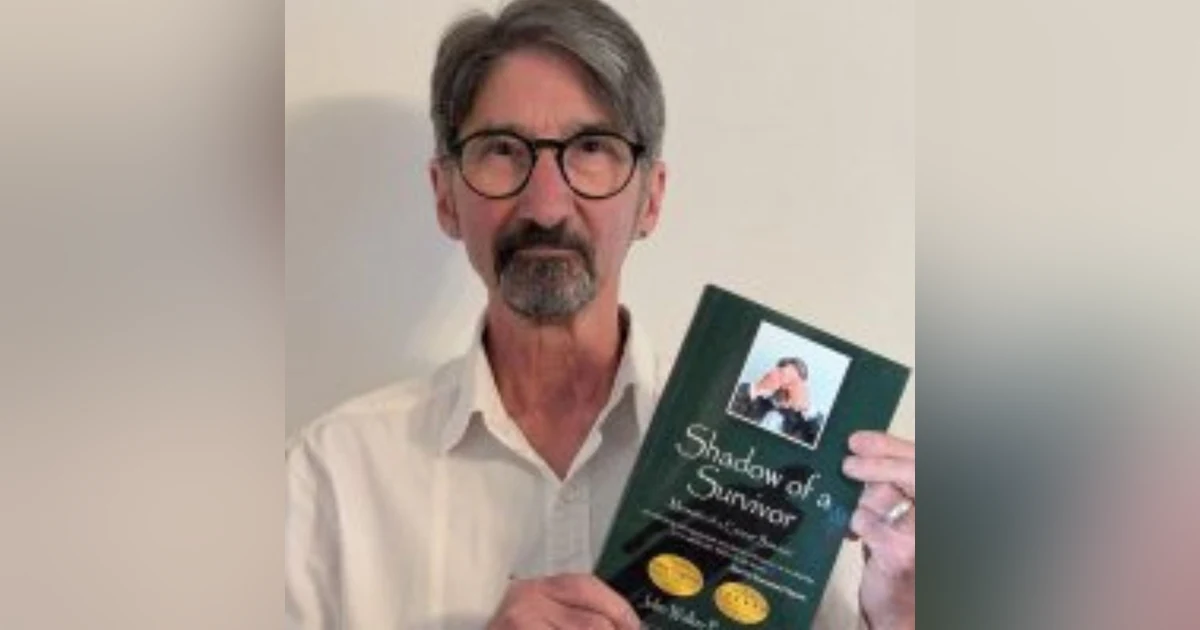
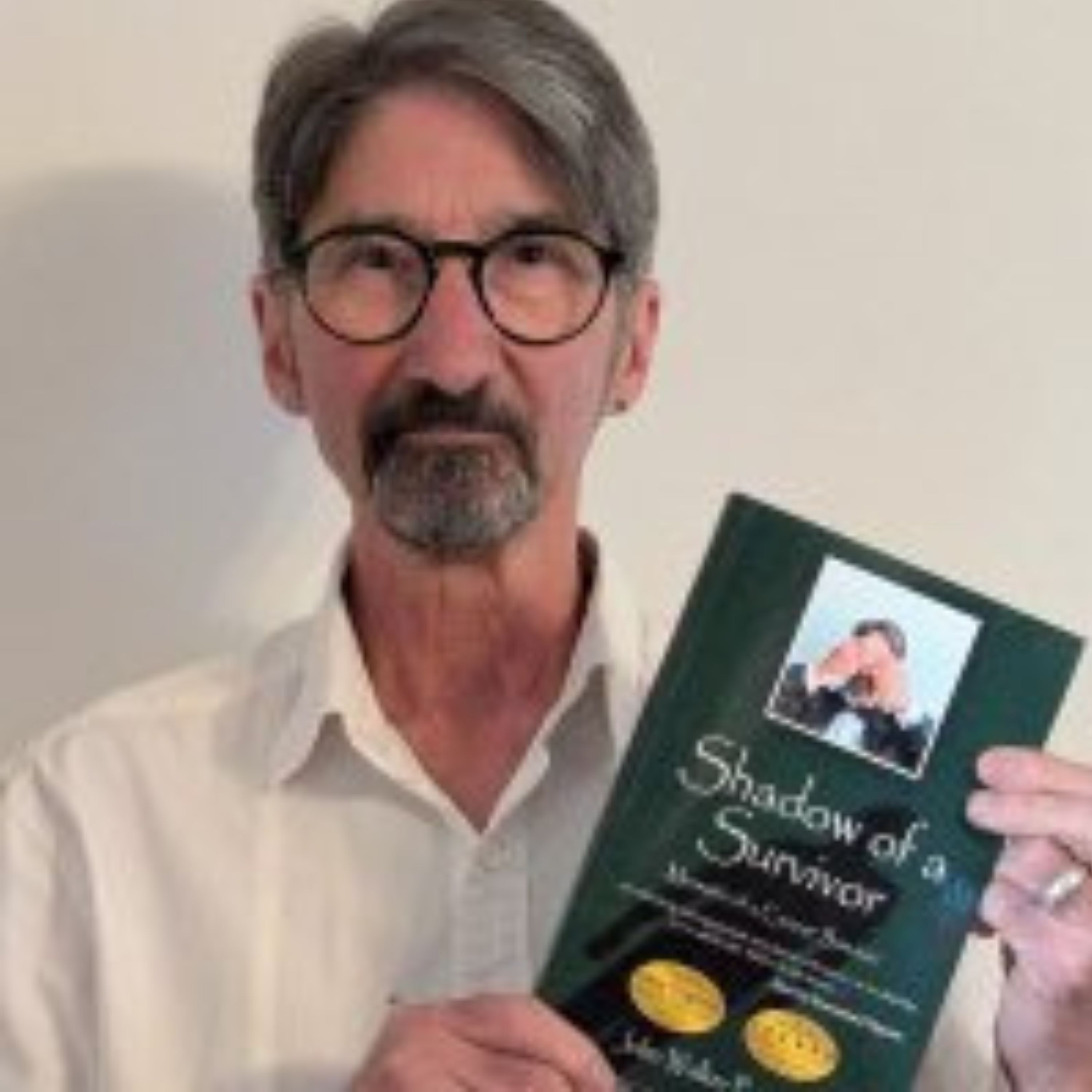
On this episode of the Cancer and Comedy Podcast, Dr. Brad Miller sits down with author, retired senior cancer nurse, and lifelong “rock-and-roll kid” John W. Pattison to explore what it means to live a rich, meaningful life over 51 years of stage IV Hodgkin lymphoma, multiple relapses, and deep emotional and spiritual struggle.
Diagnosed at 18 with a rare, advanced Hodgkin lymphoma in northeast England—and told more than once he wouldn’t survive—John has gone on to become a senior cancer nurse specialist, award‑winning memoirist, children’s author, and honorary member of the Lakota Sioux Nation. In this conversation, he shares how cancer has undeniably shaped him, but never defined him.
This episode walks through John’s remarkable story, including:
- A lifetime of cancer and relapse – Diagnosed with stage 4 Hodgkin lymphoma as a teenager, told his chances were slim, and has lived for decades with the physical and psychological impact.
- Music as medicine – Found escape and strength in the space‑rock band Hawkwind, eventually joining their road crew and performing “Ten Seconds of Forever,” his spoken‑word piece about hearing “you have cancer.”
- Storytelling and children’s books – Became the playful “elasticated grandpa,” turning wild adventure tales into children’s books that use humor and imagination as emotional chemotherapy.
- Lakota Sioux connection – Drew deep spiritual inspiration from the Lakota story, visited Wounded Knee, spent time on Pine Ridge Reservation, and was named an honorary member of the tribal council.
- Finding humor in hard places – Even in hospital, he could laugh—like the time he lost control of his wheelchair on a hill and crashed into his own car.
- When cancer hit his daughter – His adopted daughter Donna also faced a rare, life‑threatening cancer as a child, then went on to become a world‑class swimmer and double silver medalist for Team GB, transforming pain into strength.
From John’s story, Brad and John draw out practical, heart‑level lessons for anyone impacted by cancer or serious illness (including caregivers and loved ones):
- Cancer can shape you without defining you
- Vulnerability can be a strength, not a weakness
- Everyone’s cancer journey is unique
- You need anchors of meaning and hope
- Humor and creativity are powerful medicine
- Legacy matters—even if you’re still here
This episode isn’t just a tribute to John’s extraordinary resilience. It’s an invitation—for anyone walking through cancer, caring for someone who is, or facing any deep adversity—to:
- Let your hardship shape you without defining you
- Find your own sources of inspiration—music, story, culture, faith, or play
- Embrace vulnerability as a pathway to strength, not a sign of failure
- Hold on to humor, imagination, and connection, even in hospital corridors and treatment rooms
If you or someone you love is facing cancer, John’s story will help you see that:
- Your life still has meaning, value, and possibility—even in long, complicated journeys.
- You don’t need to fit anyone else’s script for how to “fight” or “cope” with cancer.
- You really can, in John’s words, be shaped by cancer but never defined by it—and continue to live with hope, purpose, and even laughter, right through every chapter of the story
Dr. Brad Miller 0:00
Hello again, good people, and welcome to the Cancer Comedy Podcast with Dr. Brad Miller. This is the podcast we look to offer a cancer-impacted people a sense of navigating their situation with hope and humor. We love to talk to people who have their own stories of navigating cancer and other adversities in life, and having then something to offer to people who've decided not to give up on life. And today we're pleased to have with us John W. Pattison. For his book, he's going to be talking about today is called Shadow of a Survivor, and his website is John W. pattison.co.uk he He is a dreamer, a survivor, and living proof that the human spirit is remarkably hard to extinguish. At his 18 years old, John was diagnosed with a rare form of Hodgkin lymphoma in northeast England, relapsed four times, and was told he wouldn't make it, but he did. He went on to become a senior cancer nurse, a specialist, an award-winning memoirist, an author, and a children's author. He's been ordered, he's been honored by the Lakota Sioux Nation here in the United States, and has performed on stage with a rock band. So, John, welcome to Cancer Comedy. We're glad you're here, my friend.
John W. Pattison 1:22
I'm delighted to be here, Brock. Thank you.
Dr. Brad Miller 1:26
Well, you've got quite a varied story, and just to set the context a little bit, you were - I mentioned in the introduction - you were diagnosed with a rare form of Hodgkin's lymphoma, but I think it's very worth noting that this was some time ago. So, tell us a little bit about why. How you are a, I guess, a record-setting person in terms of dealing with this form of cancer. To give us a little context here.
John W. Pattison 1:51
Yeah, yeah, okay. Thanks. So I was born way back in 1957 in a small town on the northeast coast of England. My childhood was happy, but uneventful. I then left school with a handful of worthless qualifications. I much prefer to play the practical joker, hence the reason I left school with worthless qualifications. And I started working a lot of shipyard during the early 70s, however the joyous sound of adventure followed me all around the country like a dog chasing its own tail, as I followed Space Rock Band Space Rock Legends Auckland from city to city, but as that music seeped into my veins, an inexplicable fatigue consumed just about every action I made. I also lost weight, like a candle burning in the sunlight, which I hadn't noticed until the lame got smaller and smaller. Only then did I notice that my light had dimmed, my weight had dropped to around six stone, and I realized that my feeble frame was being attacked by something, but I had no idea what it was. I had lumps and bumps, drenching night sweats, recurrent infections, and a rasping cough. So, returning to work, which I needed to do to fund my travels around the country to follow Hawk rent, I really struggled with the manual labor of heavy, heavy shipbuilding industry, and eventually I collapsed at work. Something had me in a deathly stranglehold and was refusing to let go, but clearly I had no idea what it was, and little did I know it was, and would shape my future and my philosophy right up to the present day, and so in April 1975 I was admitted to hospital, where a whole barrage of tests were undertaken and revealed that I had stage four cancer, lymphocyte depleted Hodgkin lymphoma, to be precise, and at that time my parents were told that their chance of survival was very slim, so from being a young carefree spirit, that initial diagnosis placed me firmly on a roller coaster of emotional turbulence, where I guess fear just didn't arrive, it crawled underneath my skin and refused to leave, sitting in my chest, heavy and constant, turning every thought that I had into a worst-case scenario, and I just couldn't escape those thoughts. Every quiet moment I had gave the cancer more space to develop, and I felt as though the cancer was now starting to not only take control of my body but also my mind as well, and there was no way I could see that I could stop it. So life was about to take off sadly on a trajectory that was filled with unexpected challenges, remarkable comebacks, and a deep spiritual journey.
Dr. Brad Miller 5:00
and that's what credit, and that's we're going to get into in some detail here, but just to be clear to our audience, you've been dealing with this form of cancer, stage four cancer, off and on for 51 years, and that is pretty doggone amazing, right there, and so there must be a time at this whole process, where you can, okay, you know, I'm Brazilian, but this is a bit much for me, and you describe yourself as kind of a light-harder jokester guy, you couldn't joke your way out of this one, could you?
John W. Pattison 5:32
Yeah, no, you're absolutely right, you couldn't, and again, as a young, immature 18 year old, it was more than that could really take, to be perfectly honest.
Dr. Brad Miller 5:45
Well, you've said in one of our prior conversations that the psychological damage of this cancer diagnosis was very, very real 51 years ago, but it's, it's real today too, and you're now a, a cancer senior cancer nurse, so you not only have lived the patient experience, now you're living the parents of these, the experience of a healthcare provider, and so what do you see in your patients that doctors and nurses may not see that you see? Well, what do you, what do you have to offer here?
John W. Pattison 6:25
Just, just to, with the greatest of respect, Brad, just to correct you, there, I'm actually a retired senior cancer nurse, okay, specialist now, due to some long ongoing health-related problems, due to the salubrious treatments that I had in the 70s, but yeah, going back to your question, it's a question I get quite regularly, and to be honest, I can't give you a definitive answer to that, primarily because I think every single cancer patient has a story to tell, but more importantly, every single cancer patient has a different experience, deals with, and in my case doesn't deal with some of the psychological trauma in different ways. So I would never ever say to a patient, or listen, I underwent chemotherapy and radiotherapy many years ago, I know what you're going through, because that would be wrong, and I don't know what they're going through, because, as I say, everyone, you know, experience is different, you know, we're all, we're all different, but in, in my role as a senior cancer nurse, it seemed as though fate was, it was pushing me to what I really should be doing in life, that was the way I saw it. I think when you're born, you're dealt a hand of cards, and I don't think there is any other option other than to play those hand of cards, and it may sound strange to some of your listeners, but I think a cancer diagnosis was part of my fate, and without that cancer diagnosis, I wouldn't be the person that I am today, and in many respects, as I say, it may seem strange, but I'm grateful for my cancer diagnosis, because it has made me the person that I am today,
Dr. Brad Miller 8:22
one of the, and part of the person are today, and part of your journey, which I just find fascinating, is you've chosen to approach your cancer situation through basically following a a rock band called Hawk Wind, and you basically are kind of a super fan, and you did some kind of roadie type work with them, and super fan, and kind of reminds me of some people I know who are kind of deadheads, you know, follow the Grateful Dead around, and that type of thing, and then you help write one of the lyrics, one of those songs, things like this one, you also have some real connection with the Sioux Nation here in the United States. You're in England. I just think it's interesting there. So, these tell me these, you've decided to hook into one of the things we'd like to talk about here, living life with hope and humor, or having, you know, some delight in life in your life, so tell a little about that. We'll first start with Hawk Wind. What got you connected up to this rock band? And I have to be honest with you, you know, I'm an old rock emerald disc jockey from way back, and they were new to me, they were new to me. But tell me a little bit about what got you connected to their music, and what was so important to you about your recovery to basically follow them around.
John W. Pattison 9:47
Yeah, so Hawk Wing were formed way back in 1969 They have indeed done multiple tours of the US, very successful tours of the US. When I was a young school boy at the age of 16, I discovered Hawk Wind, and it wasn't just the lyrics, it was the escapism that those lyrics gave me, and the electronic music. It was very much a blend of psychological, psychedelic music, quite similar to early Pink Floyd, and I could just identify with that quite from an early age, and I would travel all around the country to watch them from London all the way up to Scotland, and I got to know a number of the road crew, and eventually got to know some of the band members, and then if we fast forward to 2007 because Hawkwin had inspired me during my cancer treatment, and I'd be in backstage, as I say, after many, many gigs, I pushed myself forward, and I spoke to the band's manager, and I suggested that I could be part of their road crew, really. It was a bit of a joke, but she, she took it on board, and knowing my background, she actually said that will be fine if you want to do that. So, much to my wife's disgust, in 2006 and again in 2007 I became a member of the road crew in Portwing, so I found different kind of medicine riffs and rhythms replacing the sterile place of a hospital, and then in 2007 at the final gig, which was at Donnington Festival, I stepped onto the stage and I recited my lyrics that I had rewritten to one of their numbers, which is called 10 Seconds of Forever, and it's a number about the creation of the universe, but I rewrote the lyrics to reflect the first 10 seconds of a cancer diagnosis. Wow, and they invited me on stage to narrate my lyrics, and if you would like, I would love to tell you those lyrics.
Dr. Brad Miller:
Yeah, well, I would. Yeah, please let's hear them. And then I want, then I want you to reflect about how this whole connection music and this particular band is therapeutic to yourself and maybe over conceptually to others.
John W. Pattison:
Yes, yes. So you have to try and picture the scene at a large festival in the middle of Yorkshire in England, and as I say, the background music is very psychedelic. So I stride onto the stage to recite my lyrics, and here they are in the 10th second of forever. I was informed that my world would end, and with it my very existence. In the ninth second of forever, I felt a numbness overcome my body, the tingling sensation of fear, and the chronic pain of this reality. In the eighth second of forever, I thought of a leaf, a stone, and the creaking branches of the ancient oak tree, and the innocence of life. In the seventh second of forever, I remembered an empty room where voices spoke to me about nothing, and in the sixth second of forever I thought of the life I would not lead and the effects of my confused mind in the fifth second of forever, I thought of the toxic poison that attacked my fragile veins, and in the fourth second of forever I could remember nothing I did not love. In the third second of forever I thought of my father, my mother, and my sister crying in the penultimate second of my diagnosis. I saw the rain caressing the window, the marshmallow clouds drift through the sky, and in the first and final seconds of what seemed for ever, I thought of the others, those who had not been so fortunate, and the long past that had led to now.
Dr. Brad Miller:
That is a powerful statement. And what a privilege that the members of Hawk gave you to be able to share that on stage at a big, at a big festival, and so tell me, what was therapeutic about that? What was, and what were some lessons learned from, from your medicinal ways of using music that may be helpful to other people?
John W. Pattison:
Yeah, so although Hot Wind or a rock band, they do have. A quite a number of ambient musical numbers, and I would regularly get up in the middle of the night, unable to sleep, tossing and turning, obviously fears and worries about, you know, relapse after relapse after relapse, and I would play their music, and it just, it was just an escapism, I'm thinking, you know, music just does that, and I think we all identify with different types of music, but it hawk went for me as a young boy, seeing them live for the first time in 1974 and then just listening to the music over and over, their music was almost hypnotic, and it just really did help with the escapism and the distraction of what was, you know, a threat to my mortality.
Dr. Brad Miller:
So, escapism, distraction, and that's one aspect of it, but I also sense that the and the lyrics that you have rewritten there, there's a sense of healing and wholeness, and kind of a hopefulness moving forward, as in this experience as well, that music can can give, and I just think that's a part of what we like to share here, to have something hopeful to look forward to, yeah, whatever form that it takes, and you, in your case have done it with music, you've also done it in writing, you've also done it in your connections to the Lakota Sioux Nation, but let's just talk, you, you've, you've been a writer as well, you wrote a children's book, which I think in its own way was kind of an escapism type of endeavor for children, say a word about your, about your children's book.
John W. Pattison:
Yeah, so I have always been an elasticated grandpa, so I've, you know, I've captured the Loch Ness monster before letting him go again. I've climbed, climbed Mount Everest barefoot. I've traveled to Jupiter and back, and these stories I would regularly relate to my grandchildren, so when I eventually retired, my good lady wife suggested that I should put these down on paper, and my current book is called The Fastest Water Pistol in Splodge City, which is clearly a play on the old Wild West, and is it's set in Arizona, but I have a new book, which should be coming out late summer this year, which is called The Kingdom of Huckleberry Jam. I've then got mind-boggling stories for next year, and a manuscript that I just recently finished is called Luna von Beulah, the mystical mouse from Missoula.
Dr. Brad Miller:
You're just a, you're just a, you're just a kid, aren't you, John? You're just a kid, you're, you're kind of a kid with the children's book, but also kind of just a rock and roll teenager, you know, with your band and things like that, and so these are all parts of your personality I think are kind of cool and fascinating. There's another part of your personality I find fascinating as well, and I'd like you to unpack a little bit. Tell me a little bit about what got you connected to the Lakota Sioux Native American nation here in the United States, you're from England, and so I know you've, you've traveled several times to Dakotas and other places. So, tell me, what got you connected with that?
John W. Pattison:
Yeah, my wife and I traveled to the US at least once a year, sometimes two and three times, and if I was 25 years younger and in better health, I would have certainly made my home in the US. That's how much I love the place, but going to the Lakota Sioux, yeah. Although I got a lot of inspiration from Hawk Wind, my main inspiration, my fundamental inspiration during those dark, dismal days was indeed the Lakota Sioux, and just after my first brutal collision with chemotherapy, a book arrived at my door. It came in like a quiet, a quiet passenger from another world, and it was called Bury My Heart. It wounded me, that had been sent to me by my mum's sister, who lived in North Carolina, and within its pages, I found not just history, but a spiritual refuge, a landscape of endurance that mirrored my own struggle in many ways, and I've never been able to describe how the Lakota Sue became my durable inspiration, guiding me through suffering with a deep sense of meaning, but I did make a promise to myself that if I survived, I would stand up and I would visit Wounded Knee, and when I finally did, when I finally visited Wounded Knee with my wife beside me, it felt less like a destination. Like a homecoming, a place where the air itself seemed to carry memory, spirit, and something quietly sacred, but when you stand on the ground of Wounded Knee, that the spirituality is tangible, but for me, the Lakota, in faces of such adversity, they were almost wiped out by European settlers, and yet they remained proud, brave, and their spirituality was, you know, just kept them going, and I wanted to emulate that during my, my time on chemotherapy.
Dr. Brad Miller:
Yeah,
John W. Pattison:
and many years later, that connection deepened beyond anything I could have imagined, because in 2018 I traveled from the UK to Pine Ridge Indian Reservation in South Dakota, but this time not as a visitor, but as a guest of the Lakota. They invited me to share a living, to share their culture, a whole week on the reservation, it was like a bridge between two worlds. Each conversation, each ceremony that I attended added weight to a bond that I'd once felt through only words on a page, and on the final night on the reservation, I was extremely humbled, and unusually for me, lost our words when I was named as an honorary member of the tribal council, and that moment carried a gravity that seemed to echo across time, a recognition not just of my survival, but a connection and a respect between a shared community.
Dr. Brad Miller:
Wow, that's awesome. What, so what do you think you brought back from the Lakota Sioux Nation at Pine Ridge to to your situation and dealing with your cancer, but also what you then offer to others in terms of your writing of things you've done? What did you, what did you bring back from there that you share?
John W. Pattison:
Undoubtedly, pride, I think they, you know, they, their pride was just unbelievable, but I sincerely want my legacy here to shine as a beacon of hope and inspiration for other cancer patients and survivors, because in my view, if you're fortunate enough to survive a cancer diagnosis, well, that legacy stays with you for the rest of your life. I like to see it to people, never look back on your life unless you're prepared to smile and be reflective, and never look forward unless you can dream, because we all need dreams, we all need inspiration, and it's my aspiration that my book, Shadow of a Survivor, will play a part in delivering that hope and inspiration to others, because when I retired through ill health, I wanted to still contribute to other cancer patients, and my book is self-funded, it's not about, you know a financial endeavor, but I sincerely, I honestly want the book to be able to inspire others as well.
Dr. Brad Miller:
Yes well, let's talk about that a little bit more, and about your book, Shadow of a Survivor, because you've already mentioned the ebbs and flows of your survival journey over over 50 years and several reoccurrences of your cancer and your journeys with the with Hawk, when your journey with Lakota Sue. I know you have some family stories as well with your daughter, but tell me, Who's this book for, and why should someone see it as a resource to help them?
John W. Pattison:
Yeah, well, I wrote Shadow of a Survivor as a raw, honest to come of survivorship. I firmly believe that it's, it's jam-packed with authenticity. It'll stimulate every emotion you possess, importantly, not just tears, but also laughter as well, because clearly, you know, as we've already highlighted, humor is very, very important
Dr. Brad Miller:
indeed. It
John W. Pattison:
is fundamentally a story of hope, and I hope that will deliver that all-important inspiration to anyone touched by society's greatest fear, cancer. And it's more than an award-winning chronicle, Shadow of a Survivor is a heartfelt, often humorous, as I said again, but always honest reflection on a life that's shaped by illness but never defined by it, and I like, I like to describe Shadow of a Survivor as a love letter to survivorship, spirituality, music, family strength, and above all, hope.
Dr. Brad Miller:
Wow, that's awesome. Well, you mentioned humor several times. Here is there any humorous anecdotes or stories, either from your book or from your experience, that you just might be able to share with our, with our audience?
John W. Pattison:
Yeah, there is. One in particular, Brad. Yes, so after I relapsed on four occasions, and after I'd had palliative chemotherapy, I was admitted to Newcastle General. Now, to set the scene, you have to remember that in the 70s we didn't have CT scans readily available, so some of the tests that I had to undergo were as a replacement for a CT scan, so I had something called a lymph fan geogram, and that was to, to, to examine my lymphatic system, and the way to do that is to cut your feet, both feet open, and to drip a color dye in. Now, once you've had that done, you're then confined to a wheelchair for 24 hours. So, when I'd gone to Newcastle General Hospital, I'd driven myself up, I parked my car just outside of the ward, and when I'd had the lymphangiogram done, I was in my wheelchair, and the following morning I thought I'd better check my car, so I wheeled my chair into the lift, went down to the ground floor, and as I came out of the oncology exit, I started to go towards my car, but I hadn't realized that it was on an incline, it was going down, so as I was trying to control the wheelchair, the speed was getting faster and faster until eventually I hit not any car, my car.
Dr. Brad Miller:
Oh my goodness,
John W. Pattison:
at this point I wasn't bothered about my, my feet. I wasn't bothered about my car. The only thing I was concerned about was whether anyone had seen me. I was laughing at strictly ridiculous situation.
Dr. Brad Miller:
Wow. Well, so you just, you know, you were a runaway wheelchair for a little bit there. Yeah, and then, yeah,
John W. Pattison:
no one ever admitted seeing me, but I'm sure someone must have seen that.
Dr. Brad Miller:
Well, just, you know, just be glad it did was a time when there wasn't a lot of people with their phones to do, you know, video of it, or what have you. But yeah, but when I touch on one other thing with you, I think it's important for our audience to hear as well, but you've, it's not only been you, your own self, but you're dealing cancer, and do these various ways, but you, you know, you have a daughter dealing with this as well. So unpack that part of your chapter, because it's important that we understand that our experience can help others as well.
John W. Pattison:
Sure, sure. So, for me, less than 10 years after my unexpected recovery, many of the thoughts swirling around my head was freedom from cancer, when it finally comes, it wouldn't come without cost, and that proved to be the case. Now, I'd never been told, as a result of the treatment that I received, that I would be rendered infertile, and yet in a knee-jerk reaction, I got married, but it was built on unsteady ground, a relationship raised too quickly in the shadow of my survival, and although, although that marriage was destined to fail, we eventually adopted a little girl, Donna. She was small, luminous, and a bundle of joy, and it seemed that life was eventually normalizing, and as it should be for me, a light kindled not by blood but by choice. Yes, and for a time she felt like the proof that life could be rewritten, that something very tender could grow from my scorched past, but unfortunately fate, cruel in its symmetry, returned like an old adversary wearing a different face. My four year old daughter, Donna, was diagnosed initially with a lymphoma. She underwent six months of chemotherapy, and during the brutality of chemotherapy, the same as myself.
Dr. Brad Miller:
Yes,
John W. Pattison:
and then at the end of six months, she was losing weight, she was getting recurrent infections, and we were taken to one side, and, like my parents, we were told that she wouldn't survive. This wasn't a lymphoma after all. This was a very rare form of adult leukemia, and, as I say, they told us that she wouldn't survive. However, she did. She became stronger and stronger after about six months, and where I'd once been battered into endurance, she rose like something unbreakable throughout seeing merciless storms. She didn't just survive, she surged forward. Turning her suffering into six success, as she grew stronger, she wanted nothing more than to learn to swim, and yet, despite her epilepsy, she proved to be an incredible swimmer, and eventually she represented Team GB at the World Swimming Championships in 1998 two silver medals, making me the proudest father in the world.
Dr. Brad Miller:
Indeed,
John W. Pattison:
yeah, you know, watching her, I saw not just a repetition of my story, but its transformation as well, proving that even the darkest inheritance can be reshaped into something fierce and defiant.
Dr. Brad Miller:
What an incredible story, and you've not experienced it yourself, resilience and defiance, and all these, all these episodes where you have been down and out and left, you know, left for dead, basically, and your daughter left for dead too, and coming back and coming back, coming strong, using whatever resources you've had available, and a lot of it has to do with your with a spirit of of hope and humor, which is like we like to talk about here, and so the what incredible story that you have here, John, and you've made a lot of choices in your life that have helped you to do these things, and you've now created these resources on your website, and your books, and your other things that you have, but I'd like you to speak for just a minute, as we kind of close our conversation to that person who may be going through some difficulties themselves, maybe they've been diagnosed with cancer, maybe they have a four year old daughter who's been diagnosed with cancer, or maybe they have some other adversity, which is really dragging them down, and they're hearing your story today and say, "Oh man, that's good for you, but here I am in the midst of the struggle right now, I am in that pit, that place. So, what would be your, your words to share with someone in those kinds of places, and what would you offer to them?
John W. Pattison:
Yeah, it's a good question. I think cancer gives you a vulnerability, however, I think vulnerability doesn't always have to be a weakness. Vulnerability can be a strength as well. We all know that cancer remains a very emotive subject, particularly for those touched by its outstretched tentacles. Throughout my journey, I felt a fate hand guided me through the complexities of an often painful passage, but it also revealed a path that allowed me to find moments of clarity and peace amid the chaos, and ultimately I found myself, and I like to think that my life has been shaped by cancer, as I said, but never defined by it, to that end, I mean, I don't want to sound facile, but if it wasn't for my cancer and that of Donna, I wouldn't be the person I am today. And just to repeat what I said earlier, I think all cancer patients, we need, we need something to focus on, we need an inspiration, whether that be use it, soccer, football, sport of any description. It's important to have an inspiration that can, you know, whether it be a short term goal or a longer term goal, they're all important, you know, inspirations. And I think we all find those in our own way, I don't think it's for any one person to say this is how you should live your life through a cancer diagnosis, because Shadow of a Survivor is not a prescriptive guide to cancer patients, because I don't believe such a prescriptive guide exists.
Dr. Brad Miller:
Yes, yeah, well Well, that I think that's very helpful of sharing of your experience, and I love what you shared there, but you're shaped by your cancer journey, but not defined by it. And I love, I love that effect. The the mission statement I've written for myself is very similar to that about shape but not defined by it, so I think what you've shared here today, John, is going to be helpful to many of our people in our audience who are looking to live life to the fullest and to not give up and to be resilient and to live with hope and humor. So, how can folks find out more about you and what you're all about, about your book, about your website? Tell us, how folks can be in contact with you.
John W. Pattison:
Yeah, well, I would absolutely love to hear from any of your listeners as well. So, my website, which is www dot John W pattison.co.uk and there's information about Shadow. A survivor, and indeed, my children's books on there, and also an ability to contact me. I'd love to hear from people, but in addition to that, Shadow of a Survivor is available from all usual outlets: WH Smith, Foils, Barnes, Nobles, and of course, Amazon.
Dr. Brad Miller:
Yes, and we will make it available here, all these connections on our website, Cancer and comedy.com Our guest today, what an incredible story of resilience and hope and humor in the midst of a 51 year challenge with cancer in his life and with his daughter and other situations, and what a fascinating story. I invite people to check it out. The book shadow of Survivor, John W. Pattison, from John W. pattison.co.uk He's been our guest today here in the Cancer and Comedy Podcast. Thank you, John, for joining us today.
