


 Apple Podcasts
 Spotify
  RSS Feed
 Bridging Health Equity: Dr. Eugene Manley on Cancer, AI, and Making Science Accessible.
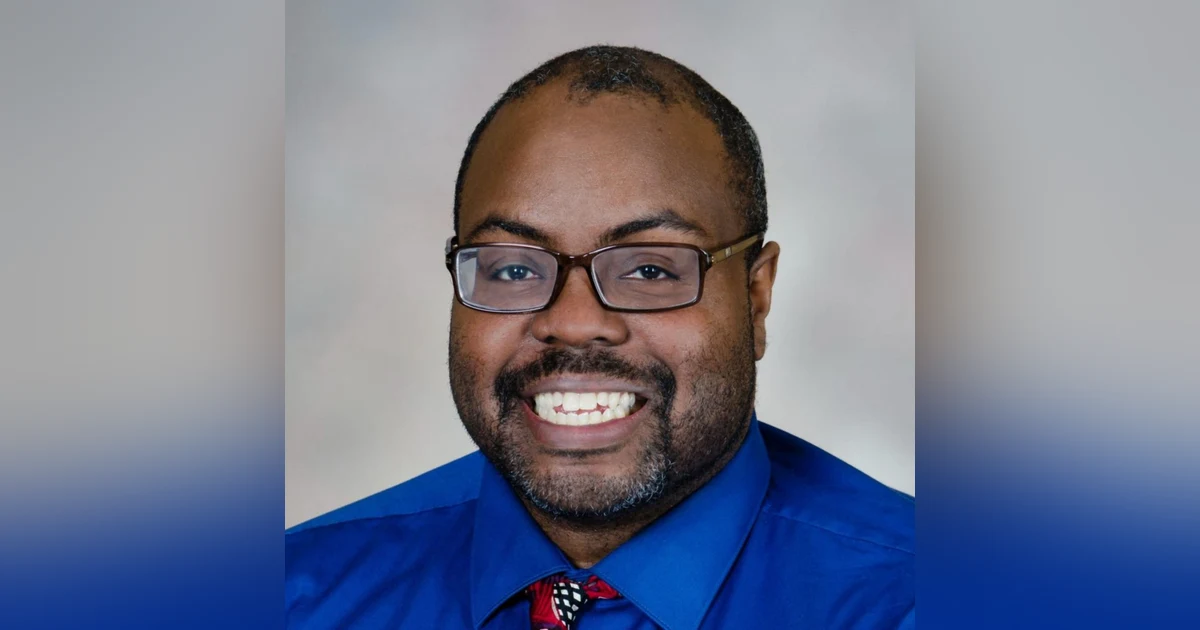
On this episode of the Cancer and Comedy Podcast, Dr. Brad Miller sits down with Dr. Eugene Manley—cancer scientist, nonprofit founder, Black health equity advocate, and STEM mentor—to talk about what really happens at the intersection of cancer, racism, AI, and everyday people just trying to survive the system.
From growing up as a kid in Detroit with severe asthma and a dad who smoked, to earning a PhD in lung cancer and building a nonprofit to serve communities that medicine has historically ignored, Eugene shares a story that is at once painfully honest, outrage-inducing, hopeful, and surprisingly funny.
In this candid, clear‑eyed, and often laugh‑through‑the‑pain conversation, Brad and Eugene dive into:
- Growing up sick in a smoky household and how early hospital experiences led him toward science
- Watching his mom battle both cancer and a broken system as a low‑income, Black woman on Medicaid
- Why he built SCHEQ to boost STEM pathways, degree navigation, and health literacy for diverse communities
- Creating the Lung Cancer Health Equity Summit so Black and Hispanic patients aren’t “the only one in the room”
- AI in cancer—promise and pitfalls, especially when algorithms are trained on non‑diverse data
- How to navigate a new cancer diagnosis, including key questions patients should ask but often don’t
- Translating complex science into 5th–8th grade language through vetted infographics and patient input
- Facing medical racism firsthand and teaching people to read their charts, get proxies, and advocate for themselves
- Sustaining joy and inspiring the next generation, from karaoke and community care to mentoring future Black and Brown scientists
This episode isn’t a polished TED Talk about “fixing healthcare.” It’s a real‑world roadmap for:
- See clearly how race, income, and education shape who gets cancer care—and who doesn’t.
- Learn the key questions to ask so you’re not steamrolled by jargon, paperwork, and broken systems.
- Understand how AI, advocacy, and plain human persistence can team up to close deadly gaps in care.
- Find language for injustices you’ve felt but couldn’t quite explain—and concrete steps to push back.
- Walk away with practical strategies, plus hope and humor, for changing healthcare from the inside out.
Together, we can keep turning the harsh realities of cancer and inequity into the grin of communities that are informed, empowered, and no longer alone in the fight.
Dr. Brad Miller 0:00
Hello, good people, and welcome again to the cancer and comedy Podcast. I'm Dr Brad Miller, and this is the podcast where we look to offer a bit of hope and humor to people impacted by cancer and other adversities in life. And a part of what we like to do is talk to people who are who are exhibiting some hope and possibilities for people in all kinds of ways in the work that they do. And today, we're pleased to have with us Dr Eugene Manley, who is a cancerous scientist, a nonprofit leader, a black healthcare advocate and stem mentor, who helps audiences make sense of AI cancer and Health Equity without the jargon, and he helps people to connect what's happening in the lab, the clinic and the classroom to what real people experience in their bodies and in the healthcare system. His website is check.org That's S, C, H, E, q.org, Eugene, welcome to our conversation today, my friend. Thank you so much for having me on. It's a pleasure to be here and have this conversation. Awesome, awesome. Well, as mentioned here in our short introduction, you really do have wear a lot of hats here, and that's commendable in so many ways. Cancer scientist, nonprofit leader, advocate, mentor. Tell me about it. Tell me kind of the process for you, what got you started in all this. And it sounds me like you've got, really got a mission that helped you to found your website check and you also have a lung cancer Summit. So just take me kind of what shifted for you to get in this area of life.
Dr. Eugene Manley 1:48
I think you know, originally, you know, I grew up, you know, my father was a chronic smoker. I was a chronic asthmatic as a kid, and was in a hospital 20 to 30 times a year with my asthma until I was about 10 years old. So I got used to doctors and needles and and medicine. The only thing you could not do to me as a kid was try to give me one of those fingerprints. That's the only time I acted like a kid. But you got saw a lot of how healthcare was and wasn't delivered to my family. I saw how my mother had to navigate care, you know, she was on Medicaid and was poor, and how she often got mistreated. And then, as I went through my education, I went between my interest in engineering and my interest in biology, and did some biomedical engineering in between, and then ended up doing a PhD in lung cancer, and then went back and forth between musculoskeletal biology and cancer biology. And then finally left the academic space and went into the nonprofit space. Now when I went into the nonprofit space, I had no idea it was going to launch a nonprofit. I just, you know, was really just trying to get employment and get a job. And so I ended up working at the AACR, doing development, sort of that got me aware about fundraising. And then I worked at two lung cancer orgs. That is where patients started reaching out to me to ask me to develop content and programming around disparities and inequities. And then in between that well and right before that, my mom had been diagnosed with breast cancer, which I did not know had run in my family, but I also saw how she still could never really understand medical information, never could get things out of my chart, never could read the stuff. So In combination, these things led me to create check as a way to help diverse kids. One, know they can go into STEM fields. Two, help them navigate the degrees, the degree transitions, and hopefully get them in the workforce so that then they can advocate for these populations that aren't represented. And then three really try to increase health literacy, health equity. So deciding to create infographics to break down complex, even basic and complex medical information and cancer information, try to include diverse representation. And then also that led to the creation of the lung cancer Summit, health equity Summit, because there was nothing out there for diverse and underserved populations. So we talked about solutions to address disparities and inequities, not just a problem. So that's what made the conference unique.
Dr. Brad Miller 4:33
So several things led you to, as you said, you saw a problem here, particularly as I'm understanding it, with kind of racism, medical racism, as it were, another thing, if I'm if, if I'm discerning what you're sharing here, and that you experienced that in your family and kind of culturally and systematically, and that with your mother and so on, and that you you mentioned there, and you decided to do something. About it. So before we go to for a long would you like to unpack the the acronym for Shek? Would you do that for us? It may give us a kind of bit of a framework here.
Dr. Eugene Manley 5:08
So check long version stands for STEM and cancer, health equity and the second M is mathematics. You know, typically people will say STEM or STEAM or 2m so it's science, technology, engineering, math and medicine. Or if you do steam, it's arts and medicine. So it's really, they're all kind of similar variations on the same word. But I just wanted to really include the medical part,
Dr. Brad Miller 5:35
yeah, so when people go to your website, they'll know a little bit what that's all about. And so you experienced this, this here, and you saw the need, and you sought to meet it, among other things, with your cancer Summit. Tell me how that's going. What are the some of the impact that said that has had? Are you seeing some results with this in a positive way?
Dr. Eugene Manley 5:56
Yes. One is, you know, typically, we try to hold it in a city with a large, diverse population, and the patients have come after me every Summit. Oh my god, I've never seen so many people that look like me and the other speakers, they are so down to earth. They're understandable. They're relatable. So they take this complex information to make it understandable. We make sure that, you know, we try to not have it so technical that we lose people and you know, and they just have this sense of community because they see people that they never get to see at lung cancer meetings. Typically, when you go to a meeting a lung cancer meeting, you may be the only black or the only Hispanic, or maybe one of four or five, and you've never seen anyone else that looks like you, so you don't really ever feel sometimes like you can ask questions, and typically, you know, black patients, Hispanic patients, have other needs that they can't generally ask in a majority room because, you know, they don't know how it's going to be perceived, or they don't have the same access information and resources. So trying to break down those barriers for them. That's my understanding. That's my understanding. Eugene correct me if I'm wrong that lung cancer has, statistically has a higher prevalency among black and Hispanic populations, and therefore there's a discrepancy here. Is that the case, there are still massive disparities. They are closing partly because of the changes, you know, the more, partly because of the work we've done in getting more people screened. But there are still significant disparities, and they still are directly relevant to income, education and access to care.
Dr. Brad Miller 7:43
Yeah, okay. Mentioned. One of the things you mentioned here is, you're, you know, you're a scientist. You're, you know, got a PhD, you've been involved with cancer research and so on. But you also mentioned AI in some of our conversation here, and it's, you know, it's very prevalent. And so how are you? How is AI, if at all, helping cancer patients today? What isn't going on with that? And is it closing into this gap? For instance, with you mentioned disparities in terms of serving black Hispanic populations,
Dr. Eugene Manley 8:20
I will give you two sides of the coin. Ai, for most people who don't know, is it's an algorithm, and it's basically using data that's already out there, or developing data based on either how people act, talk, behave, or perceive. And so typically, it is built on the data that's already out there, which is mainly from non diverse populations, and this often is used to develop algorithms, develop treatment protocols, develop biomarker testing. So AI is already all over, and when you look at it in healthcare, there's a pro and a con as a tool. It can be used to improve screening and diagnosis if used and designed correctly. So I'll give an example when lung cancer. We have an algorithm called civil which will look at low dose CT scans, and it can predict based on a scan, if a person will have lung cancer up to five years in advance. Now, this original scan was done in a National Lung Cancer Screening Trial, which was not a very diverse population. However, they you then use this algorithm and data sets from FQHC, a federally qualified health center in Chicago of U of Illinois, Chicago, at Mass General Hospital and a hospital in Asia, but I believe Korea and in all three separate data sets, they still were able to predict lung cancer based on a scan up to five years of when it was actually ultimately detected so indirectly or. Accidentally, it showed you can detect lung cancer, and so if we can use that and start getting more people screened early, we can get better survival. Now the example of a pitfall of this is everyone in technology jumps to say, well, AI is going to solve all our problems. But if you don't do due diligence and think about which population has a disease or has a risk, you exacerbate disparities. And for example, there is a group that said they had some kind of AI that could detect breast cancer and dense tissue. And then someone said, Well, what's your training set? And test set? And the training set of like, oh, well, this is this Suburban Hospital in an affluent area, and most of the patients are women. And then they said, Well, what is your test set? Who did you confirm? Oh, same population, because, you know, we were able to show this impact. And then immediately a black person flagged that said, Well, why do you think that would work? Because if you don't know the biology or the disparities, you tend to not understand that black women tend to have dense breasts, which is one of the major reasons they have increased risk of breast cancer. So if you developed an algorithm or not this population at all, and you didn't test it on this population, there is no way you can prove or show with any confidence that it will work.
Dr. Brad Miller:
So it's a tool to use. And yeah, we just need to use. We don't check our brains at the door. You know, we need to be mindful ourselves about it and how to use it as, indeed, as a tool, not A, not as a crutch. So, yeah, so I've, I would like you to kind of get a little bit, you know, a little bit more personal director a minute if you, if you work with someone, or if you are in a position where people hear the words, you know, screens been done. You might have cancer, or we need to do more tests, or what are some questions that you might want to bring to bear here for people to be helpful to people you know as they go through this? Let's say it's a black woman who you know is going through the situation you did. What are some things you might say to be encouraging them, especially given some of the experiences you've had where there has been some issues in the medical system,
Dr. Eugene Manley:
I would say, you know, I can't ever give people advice from being diagnosed with cancer. I can give you advice from what I've learned from talking, you know, to my mother and other people. But in general, when you're navigating these things, first thing you want to know is, you know, what is your diagnosis? What is your stage? Do they have a nurse or a patient navigator? Because typically, those are the people that will help break down all that stuff in the binder they give you that you're not going to understand and you're going to be so overwhelmed once you have a diagnosis. Because you know, when you get that diagnosis, you may have 10 other thoughts in your man, like, what will I have insurance? Will I lose insurance? Can I afford to pay this? Can I take time off of work? Will I lose my job? Who's going to look after my kids? Who's going to pay my mortgage? What about my car note? And so you got 10 Things raised in the last thing is probably what they're saying. It's likely going in one ear and out the other. So trying to have a prescribed list of questions that you can go in there with, you know, you know, in addition to the stage, the type you know, ask, what type you know, is there biomarker testing for this cancer? If it is, have they done comprehensive genomic testing, because you don't just want to do biomarker testing, but you may miss some markers. So is there a way to get all the potential things screened in your cancer? So when you start a therapy, you want to know, is this the best therapy for me, or am I just getting a band aid that may end up causing me, you know, to have more metastasize and more resistant tumor. And then you want to ask about, you know, what is chemo like, what can't, you know, ask about the adverse events. You know, what kind of things you need to prepare when you go to your infusions and so, and then see if you can get a proxy, or someone from the hospital to be able to look after you. I don't know if that's possible, but, you want to try to get as many questions answered about the staging, the diagnosis, the treatment options. What are alternative options? You want to have everything laid out in front of you and then understand what their best guess is, and then you make your choice based on what you think you need. And the last thing I want people to know is, even though they don't always tell you this, you are entitled to ask for a second opinion.
Dr. Brad Miller:
Yeah, one reason, one of the reasons I asked you about that Eugene, it seems to me that you're involved with the business of kind of interpreting or making manageable language wise, and otherwise just exactly what you described. Described there with, you know, you mentioned infographics and webinars and things like that. So tell me, kind of how, what's your process there, of how you kind of do that? Because there is a lot, you know, when somebody goes through cancer or other matrimony, as you said, a lot of us thrown at you. But how have you been able to simplify, as it were, the data to make it relevant to people who are dealing with this. Well, you know, a lot of this was based or, you know,
Dr. Eugene Manley:
my mother not having college education and just what she faced. So it you once you understand that not everyone has the same education, or understanding you need to break it down so it's relatable. So we try to make sure we keep it at a fifth to eighth grade level. We work with some universities to have their students take initial stabs at creating the infographics we say, you know, make it health literate, make it understandable. And we also try to work with diverse students so they can get that experience and sort of understand that it's something that creating actually has a real benefit. And then once we get those infographics, we have our patient advisory board, which is diverse, then look at those infographics, see if they're understandable, digestible. Okay, is something said the wrong way? Do we need another image? Does it need to be represented a different way? And then once the patient advisory board approves it, board which then confirms that it's medically accurate. And then we see if there's any other touch ups that are needed, and only once it gets past those two then do we start to slowly release them on the website. And the longer term play is, hopefully, in about another year, we'll have enough infographics created, then we can start combining them and doing different curriculum based on, you know, disease states, but that's going to be a little bit of
Dr. Brad Miller:
a while. Yeah. Well, I love what you said there about you test it out. You kind of have, you know, focus groups, if you will, for people to really, you know, patients, you know, really to not a bunch of doctors reading this, but you've got a bunch of real people who are going through this to respond to this and give you your feedback on the same line as you deal with people. And you mentioned your mother and your own family, you've mentioned people of color and others that you serve particularly. Do you have any experiences? You know, one of the themes
Dr. Eugene Manley:
of our podcast here is people kind of looking at things that are serious, like we've been talking about here. And a part of the approach is to see if there might be some lighter moments, or moments where some joy or some celebration slips in to the whole process that helps in the whole process. Have you seen anything like this, or anything where there's been some joy or some some good things happen out of the whole process, where people have experienced that? Um, let's see. So I think maybe for me, you know, when I had my reconstructive surgery last year and and I had the medical racism, which was quite harrowing. You know, you never expect to to get someone to lie in your medical records and say you have no pain and can ambulate when you're sitting there with Percocet every four to six hours and in a cast and non weight bearing. And I remember talking to my friend and and I sort of was talking to my friend, and they were like, Yeah, you were talking, but you weren't talking because I was on the OP agent. They were like, they're like Eugene. That was quite entertaining. So, you know, apparently opioid or Eugene is a riot. But I don't, you
Dr. Brad Miller:
don't
Dr. Brad Miller:
remember that? No, so, so, yeah, so you've had that experience where you were just being silly or being, you know, under the influence, as it were, and, and you know that, and that can happen and and a part of what I get that here is there's some times when we need to see just a little bit the absurdity of it, all right? It's just kind of absurd and ironic and all those things. And you can, you kind of have to laugh to keep keep from crying, because I know you've experienced a lot of difficult things in your own experience, and you were an advocate for others. And I love what you're, what you're, what you're doing here, let's, let's talk to those students out there right now, or the parents, maybe those students who may be listening
Dr. Eugene Manley:
to us. So what do you tell a young person, maybe a young person of color who may be thinking about, you know, maybe I want to be a scientist or a cancer researcher or some sort of an advocate, because I've had some sort of experience, maybe where I've seen somebody kind of left out. How can you encourage, maybe people who need to be encouraged in this area? This is something that's near and dear to me, because, you know, I grew up in Detroit, and I was a first gen scholar. Color. And the biggest thing is you want to try to catch these kids early. I would say, if you catch them around third grade, those who might have an interest in science, you can foster and nurture that interest, because if you wait to fourth or fifth grade, you might get some but then at that point, they may be in the sports, video games, other extracurricular activities. But around third grade, they're still very receptive sponges. But if they are interested, you want them to then try to get them to see other people in science fields. You know we normally do during Black History Month and Hispanic Heritage Month, daily posts of different Black and Hispanic people that have done stuff in science. You want to try to get them to go to the Science Museum or engineering museums in their town. You want them to understand what kind of work is done, who has done the work. And if you can get them to go to, you know, science meetups, or, you know, science days, career days, and hopefully get people that look like them that show up. Because the biggest thing that will make someone believe they can do it if they see someone that looks like them, because often, for many black kids, they never see anyone at all. And based on what society tells, many of us, we are told we can't do this. We can't be in this space. We're not smart enough, we're not bright enough. So you need to give them that spark and encourage, yes, you can do it. But when you even, even when you give them that spark, you have to also be realistic with them and say, it will not be easy. No, no journey. No part of this journey is going to be easy, and it gets harder the further along you go, but when you get to a point where you finally are able to make an impact, you will understand what the all the effort and push and struggle is for.
Dr. Brad Miller:
Sound like maybe somebody spoken your life around third grade to help you. Is that the case? Or if so, tell me that story
Dr. Eugene Manley:
actually, my spark really didn't happen until high school.
Dr. Brad Miller:
Oh, really, okay,
Dr. Eugene Manley:
yeah, I was always into the I was always a nerd and in the books. And, like I said, because I was in the hospital so much, I kind of knew needles. I kind of knew my medication, but it was my science department head in high school. It was a college prep school, but she kind of knew what each student needed, and she tried to put you in a position to get there. So she knew I had an interest in engineering, and knew I had an interest in biology, and she probably knew I had ADHD, which I didn't even know I had it, but she was like, Yeah, you're special, not bad special, but you're like, Yeah, you're you. She knew I was going to be the one that was going to go on my own path and do what I thought was right, no matter how long it took. And she even told me, she said, You are going to do the road less traveled. It's going to be hard, but you're going to make an impact. And I am so happy and mad at her at the same time right before that. But she got me my very, very first, helped me get my very, very first medical lab job at the Michigan Cancer Foundation. She was 11th grade. She said, apply for this apprentice program, because I had never heard of it. Applied, got in and did some work in I want to say it was leukemia, leukemia and like, 60 different therapeutics and looking at drug metabolism. And then when I learned one that there were these programs, I then went every summer and tried to apply for different biomedical research program. Even when I was doing my undergrad in engineering, I tried to do some kind of biomedical research. So she was the biggest reason I got into she was one of the biggest influences on me having a science career.
Dr. Brad Miller:
I just it sounds like she was also helping you understand that this is going to be hard, but you can do it and and that you have chosen in that pathway, that it's a and I think when you have that path where you where you choose to tackle the hard things, you can have some great rewards in that. And so I guess what you've done. So tell me how we have in our process during the hard times and even the good times, how have you partially stayed kind of grounded or avoided burnout or anything. Maybe you haven't, perhaps, but maybe protect your own joy while doing important work that has a lot of pressure to it.
Dr. Eugene Manley:
I think the hardest thing is avoiding the burnout. You know, once you're black in science and a PhD, you know, you have a couple things that you have to take into account. One, no matter where we go, anything we say can and will be used against us. So we have to make sure everything we say is scientifically accurate factual, because we don't get mulligans to make up stuff like other people.
Dr. Brad Miller:
You.
Dr. Eugene Manley:
We just don't we have to really be on point. We have to make sure we and to stay grounded. For me, when I was in grad school, I'll never leave. I'm gonna admit this in grad school in early vosdi We I used to go out dancing in the evening. That would be my way to be stressed because, you know, you're working so many hours in the lab and you don't get to see a lot of people, so you have to find an outlet. So mine was dancing and karaoke. You either have to find an outlet or some friends or groups that you can hang out with that Elise allowed you to vent, deal with the world, and then get back to face it. Now, one of the hardest times was, we'll still say, was around 2020 where we had Brianna Taylor and all of that stuff without trying to go in the political direction. But that was the one time my life, every single black person I know, we called each other, because that was, you know, we get so much sensory overload of, you know, what racism? What person got shot, what person got, you know, profile, but that was a really, really bad, just emotionally exhausting year, and that was the first time I, like every single one of our friends, we called each other a lot, and that is the only year that has ever happened in my life. So
Dr. Brad Miller:
it's not like you did a couple things, you danced, you to karaoke, and you supported one another during the stressful times, and I think that's a good, good advice for all of us to stay grounded, especially if we're doing important work that that makes a it makes a difference. Speaking of making a difference, has there been anyone out of your work or your life, or your personal counsel, or anything like that, that's been impacted by your work, that that's been a good thing to see, where they've been able to share with you that this is you've been helpful to me.
Dr. Eugene Manley:
I'll give you two examples which were unexpected because, you know, I'm so busy just doing and doing and trying to help, I don't think about all the time who I'm impacting, because, you know, I'm not necessarily searching for followers or but one of my really good friends from undergrad messaged me, I think on Saturday, I think I was on the way to the laundromat, and she was like, hey, Eugene, how are you doing? I'm glad to see that you are healed and recovered from your foot surgery, that you're walking around. And I want to say I appreciate watching your walking videos in New York, and it gives me a spark every day. And I was like, Huh? And what I was like, Don't be trying to make me get mushy. Like, how dare you. So apparently, no, she was watching. She's watching. And that really makes me feel good. You know, I said I'm not looking for validation. But you know, knowing that, you know, it is helping people. They're getting education. You know, I bring it in with my take on humor. And then, you know, an other thing is another person had reached out because a friend of theirs had went in for a neck or a spine surgery, and they were facing issues from their insurance about first said they could get, you know, a rehab, and then they couldn't get this rehab. And I said, Oh, she's like, I know you've dealt with something similar. Can you please talk to my friend and help them out? And so I called the person, and, you know, and they're older person on Medicare, and they're like, Well, I'm of sound mind. I said, No, you're not. I said, you're on Percocet. Said, I've been there. And if you act like you're on sound mind, then they will say you're alert and oriented. And anything you say they're going to accept is truthful. I said, one, get you a medical proxy in here that can actually make sure you read your records, and I said, Make sure if you have connections in your state legislature, which you do, that you make them start calling that insurance company, because if your first good rehab facility was covered, they can't, all of a sudden, say no And then try to only send you to nursing homes. There's no rehab when you have a surgery that could get you rehab, because if you go to a place without rehab, they're setting you up to die. And so my friend remembered that I talked about this, and so I walked them through this, and then the person said, Could you please text me? Because I'm on. I'm like, Yep, I'll text you. So I texted them so they will remember what to do.
Dr. Brad Miller:
Yeah, well, very practical advice, and I think that's a great thing. You've given some great encouragement to people about following a pathway that has to do with impacting health and welfare and justice issues and advocacy and all that's well and good, and I just say commend you for all, all that you are doing to serve serve the greater good, particularly the black and Hispanic community, which is from what you're sharing here, obviously underserved. And so we're glad to hear that. So if people can you know you're an advocate in so many ways. And mentor. If people want to learn more about what you are, about your website, or any other programs or anything else you're involved with, how can people be in contact with you? Eugene,
Dr. Eugene Manley:
all right. Thank you so much for having me on the easiest way is sec is the nonprofit, S, C, H, E, q.org, I have the LLC, which does other stuff around speaking leadership, specifically ADHD and leadership friction. That's innovation for impact llc.com, and then I, you can find me mainly LinkedIn, Eugene, Manley, Jr, phc, if you really trying to follow me and to a degree, manly Eugene on Instagram, but you just have to send me a request, and I have to believe you're not a bot. There's so many things with AI and fake stuff. And I'm like, nope,
Dr. Brad Miller:
yeah,
Dr. Brad Miller:
I certainly get get that, and we'll put put all those links in our show notes to cancer comedy.com so an inspirational story, lots of great things. And certainly know that the whole mission and advocacy for STEM and cancer research, your events for lung cancer are all very commendable and health equity. And also, I just love the way you were really trying to take these complex issues and make them understandable, because that is that's a huge issue for anybody, not just at the community. That's a huge issue for anybody to try to discern and navigate all the things you've mentioned here. His name is Eugene Manley from shek.org S, C, g.org, cancer scientist, nonprofit founder, and he's been our guest today on the cancer and comedy podcast with Dr Brad Miller.
