


Turning Misfortune Into Strength: How Dr. Josh Caraballo Embraced Hope and Healing
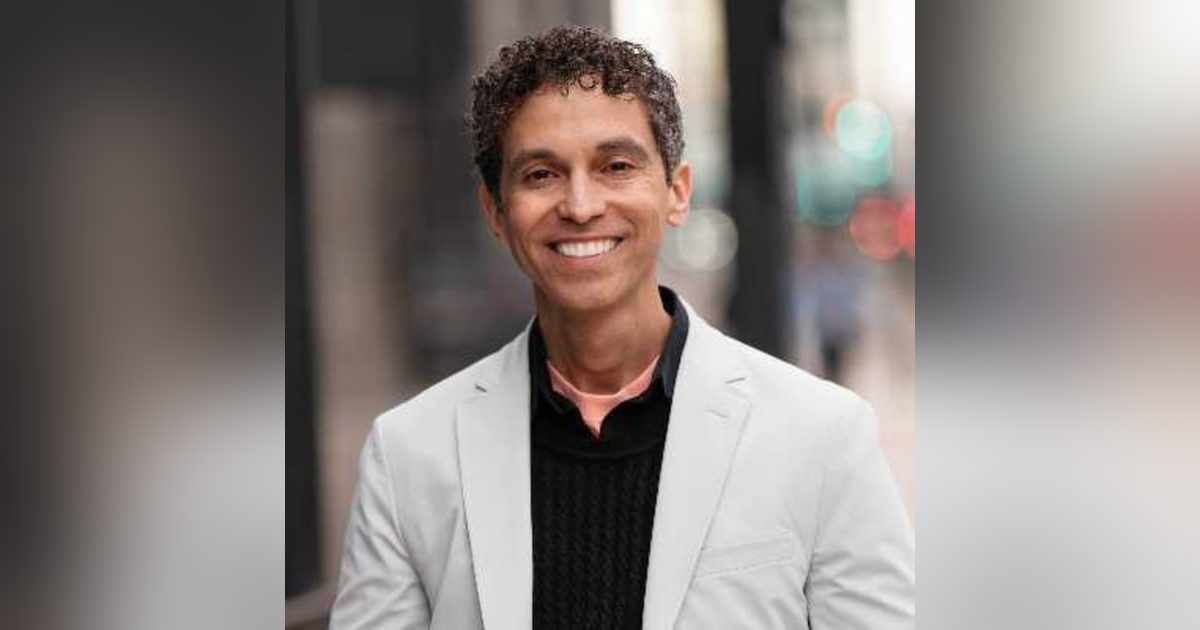


From Stage 4 Cancer to Purpose: A Story of Identity, Addiction, and Healing
On this episode of the Cancer and Comedy Podcast, Dr. Brad Miller sits down with Dr. Joshua Carabello, an industrial organizational psychologist and author of I’m Not Dead Yet, to explore a deeply personal journey that began with a life-altering diagnosis at just 18 years old:
What happens when surviving cancer is only the beginning of the battle?
Drawing from his experience with stage 4 Hodgkin’s lymphoma, Joshua opens up about the emotional and spiritual struggles that followed his diagnosis—wrestling with identity, faith, and the belief that his illness was somehow a punishment. Through honesty and reflection, he shares how those internal battles shaped his path toward healing and self-acceptance.
In this powerful, vulnerable, and hope-filled conversation, Brad and Joshua share:
- What it felt like to be diagnosed with stage 4 cancer at 18
- The internal struggle between faith, identity, and self-worth
- Believing illness was punishment—and how that mindset shifted
- Finding unexpected comfort through humor and cartoons
- Life after remission and the hidden struggle with addiction
- The turning point from victim mindset to purpose-driven living
- The PERMA framework and what it means to truly flourish
- Breaking destructive cycles and rebuilding a meaningful life
- Using personal pain as a platform to help others
This episode isn’t just about surviving cancer—it’s about what comes after. It’s a story of falling, rebuilding, and ultimately choosing purpose over pain. If you’ve ever faced a life-altering challenge or struggled to find meaning after hardship, this conversation will remind you:
You are more than what happened to you,
Healing is possible even after the darkest seasons, and
Your story can become someone else’s hope.
Dr. Brad Miller 0:00
Hello, good people, and welcome to the cancer comedy podcast. This is the podcast where we'd like to offer a word to help people cope with hope and humor those people impacted by cancer and other adversities in life. And we'd love to talk to people who have their own story of facing cancer or some other adversity, and they have their own way of coping with that and then to serve other people. And that is just the case we have today, as we have a wonderful guest with us today. His name is Dr Joshua Caraballo, and he is an industrial organizational psychologist. We'll unpack that in the course of our conversation. Among other things. Today we're going to be talking about his award winning memoir, I'm not dead yet, how I turned my misfortunes into strengths. This is a powerful narrative of chronicles his journey through some really immense personal struggles, including a cancer journey, and ultimately, emergence, emerging as a beacon of hope and resilience. You can we'll put links to his book in our show notes, and you can find him at his website. Dr, Josh dot solutions. Dr Joshua Caraballo, welcome to our conversation, my friend.
Joshua Carabello 1:17
Thank you so much. Dr Miller,
Dr. Brad Miller 1:19
pleasure to be here. Awesome, Josh. Well, great to have you with us here today, and you got we you and I were able to have a conversation a couple weeks ago and learn about one another a little bit. You got just a fascinating story. And just, we're going to get into some of the things the way you the work you do now, and some of the things you do, and in context of the setting of industrial, Industrial Organizational psychologists a little bit in your book. But let's just set the context by a little bit of your story about how you dealt with cancer and some other bad things growing up. And let's set the context there by your story there a little bit.
Joshua Carabello 1:57
Please, absolutely, and thank you again for the opportunity to share what I've been through with your audience and hopefully give them some hope absolutely at the age at the age of 18 years old, I was diagnosed with Hodgkin's lymphoma at stage four. It came back a second time, so my first foray into chemotherapy was did not resolve the situation. We could talk more about that. But one of the things we had talked about earlier on, we were deciding upon, you know, engaging in this podcast together, was, I think one of the most profound parts of getting cancer is not the diagnosis itself, but the fact that I thought that this came from God, because I was brought up, I was brought up in the Jehovah's Witness household, which taught me at a very young age that being gay was an abomination, and that if I were to ever act on those thoughts that I had in my head that, you know, I would be punished for the rest of my life, if not destroyed. And at the age of 18, this is exactly what had happened. I was able to leave the house, leave the coop, so to speak. I went back to New York City, which is the area where I was born, in Staten Island, one of the boroughs, and being in the city gave me the opportunity to, you know, just do whatever I wanted as an adult, it wasn't too much after that. Just a few months later that I started to have some symptoms in my chest area where I knew something was going on every time I would breathe in, I felt some type of pain. So fast forward through some X rays and testing and talking to some doctors, they found that there were two masses in my chest. One was the size of a football, and there's one growing behind it, the size of a golf ball. So putting aside the analogies of sports related activities that they use in the medical field, it was, it shook my world, and the only explanation I could think of in my head, which I do not believe. And to this day, just to be very clear, I don't believe that God gave me cancer, um, but at the
Dr. Brad Miller 4:20
time, that was a part of your your journey at the time, right? Yeah, plus your young guy, 18 years old, you've got layers on the physical health issue, but the emotional or religious family dynamics, several things going on,
Joshua Carabello 4:34
right, right? So in no way do I want to come across as I am blaming religion or religiosity for my circumstances, but it, as you mentioned, it was a big part of why I reacted the way that I did, which was to go into a deep depression and think that my life was over. Well, here I am today, showing proof that that was not the case. I. But as you might imagine, it took a very long journey to undo a lot of the belief systems that I had in my mind, including that God hated me was out to get me in some way, shape or form.
Dr. Brad Miller 5:14
So I imagine there were some levels of shame, guilt, sexual identity forming, all kinds of things happening here that were going on. And so tell me just initially, how did you deal with that, even to overcome the shock and to get on with life? However, because you had to have, you had, you know, if you had stage four lymphoma or stage four situation, you had to pull yourself together just for the physical health aspects. Did? Did you not?
Joshua Carabello 5:47
Absolutely, it's a great point. Brad, so what happens is, I think miraculously, when, when these sorts of situations happen in our lives, we do pull ourselves together regardless of what's happening. Because fundamentally, I truly believe that all human beings want to live, even if we say that we don't. There's, I mean, and there are, there are a few distinctions to this. So there are people who actually don't want to live, but I think that is the exception to the rule, and the research covers this as well in the IO psychology field. So with that said, like you might feel like the whole world is closing in on you, and that part of you that wants to live might feel like a very small or minute voice, but it's there, and when we are faced with the situation of having to take action in order to save our lives or try to do something to extend our lives, inevitably, we do it for the most part, and so that's what I found myself in. Yes, I felt all these ideas and feelings and beliefs, and I felt like my world was crumbling upon me. I had no indication that I might live beyond this, but I still wanted to do everything in my power to see if I could survive it. In addition to that, I had a very strong family unit. Even though I was brought up in a Jehovah's Witness household, they still showed a lot of love and a lot of support, which was crucial during this time, so I ended up moving back in with my parents to continue that journey and talk to more doctors keep getting probed and tested to find out and verify that indeed this was cancerous and something that needed to be dealt with immediately, then going on that journey with chemotherapy and radiation. I also think it was helpful. Two other things that that were very helpful, is renegotiating all the relationships, or the majority relationships, that I had in my life, including my relationship with God, was very, very important to me, and reframing what I had thought, which took a lot of time to undo the damage that was done in order to pave a way forward. Because I truly believe that you need some semblance of spirituality or religiosity if you choose to do so in your life, in order to have full fledged well being and flourishing. And again, the literature supports that as well. In addition to that, is finding ways of increasing laughter and humor in my life and when things got really, really bad for me, where I was in a hospital or faced with decisions that I was told might end my life, like needing a blood transfusion, which is also something that Jehovah's Witnesses usually refused, right? I would request that I be put into a room that had a VCR. Remember VCRs were? Oh, yeah, of course, of course. We can't, we can't even find those players anymore, but I would request a room with a VCR player so that my parents could bring in a bunch of different types of cartoons, specifically from Bugs Bunny Wow, because that type of humor really made me laugh. I found Bugs Bunny humor probably the best type of humor, and still to this day, I shared it so engaging and funny. I love what you
Dr. Brad Miller 9:24
said there about renegotiating and reframing on some very deep and important things. Your faith life, religious life, family life, health matters, but a part of this was Bugs Bunny. A part of this was leaning into something that's comforting and brings you delight. And so unpack it with me a little bit. What do you think was about cartoons and maybe bugs buddy in particular, which kind of helped, you, know, kind of helped you to navigate? One of the things we like to say. Say here in our podcast is, how do people cope with hope and humor? And so how was this a part of that process for you?
Joshua Carabello:
Yeah, I think it sheds some light as to, I think people can have a lot of variation in terms of what makes them laugh. And if it isn't obvious by now, like that low brow sort of physical humor is what I really gravitate towards and always have. So some people might think it's kind of mean or not funny to see an old woman, by the way, with a bunch of grocery bags falling down the stairs, you know. But I find that pretty funny, although I also tell myself this is not real. It's not a real old woman that's falling down the stairs. Otherwise, I probably wouldn't laugh in real life, but that's what bugs money was all about. It was, it was over the top. It was highly physical. It was, it was situations that would just would never happen in real life, or if they did, it would be totally, you know, anvils falling on top.
Dr. Brad Miller:
Yeah, I always took a bug's buddy has had a lot, a lot of absurdity to up, and a lot of cleverness, a lot of smartness, you know, a take on life of not take yourself too seriously, or not to, not to take the threat, you know, the threat of, you know, Elmer Fudd, or whoever it was, too seriously. You know, there's certain elements there that kind of D demystify all the horrors of cancer and other things like that. Does any that relate to you? Yeah?
Joshua Carabello:
Absolutely, yeah. I mean, you it's hard to watch one of those episodes and then take yourself very seriously, or take life very, very seriously, at least for for the time being. I mean, they're also, like dosage effects they talk about in the literature, which means it works for a little bit, and it can be very profound, sure, and very helpful. But there's a fallout effect, or time where it just kind of like, you know, reality tends to sit in and so you might need another episode or something, yeah, or, you know, little
Dr. Brad Miller:
aspect of Bugs Bunny type things is kind of like doing something that's pretty over the top, but not feeling too guilty about it. It kind of that's a little bit of a release, I think, for us as well. And so that's a part of it. Get to that, whatever the dopamine hit and all the chemicals and all that kind of stuff that happens there. And so you learn there that you got this serious situation. You're, as you said, you know, you're in the hospital, you're good, you know, or the treatment situation, I assume you went through pretty elongated period of time with chemo and so on. And so that's a part of your life then. And Kenz, so where did you come up with kind of this idea, either in your growing during this era when you're dealing with the cancer, or later on, kind of the Okay, I'm not dead yet. So what am I going to do about it, which let litter to your book there? So this idea of I'm not of I'm not dead yet, go with me there for a second. Absolutely.
Joshua Carabello:
It took a while when I was finally deemed in remission from cancer, which is five years after my last treatment, I wasn't ready to live life, not in a healthy way. I found myself in a deleterious cycle where I started to abuse drugs and alcohol, which I was unable to touch during the two years that I was in chemotherapy and radiation, for obvious reasons, but once I was able to go back to a quote, unquote, regular, typical life, I still was grappling with those fundamental questions of who I am. Am I worthy of love? Am I worthy of being being able to flourish, etc, and what do I want to do about this, all these questions? Yeah, and at the time, I wasn't ready to face any of it, so I started to self medicate, to quiet those thoughts and that anguish, so I didn't have to worry about or think about any of it. And that lasted for quite some time, and as you might imagine, only got worse over time, to where I got into more and more issues with my health and with the law and with my family and relationships and just not treating myself the way that I should. But once I started to grapple with those questions, what really was the impetus for all of it was not only getting in trouble with the law, so I was arrested three times at different stages of my life, stopped and started with my addictions, over and over again, and then came to a front where I just had to ask myself I wanted to live, if I wanted to keep living, or if I just wanted to end this right now at that time. So I obviously decided that I thought it was worth living, but I needed to also ask myself, Why? Why was it worth living? Because I. Yeah, I think a lot of people will go through a phase where something happens to them, and the thing is, Why me, yeah, you fall into that victim mentality. And I think that's okay for a while, but at some point you need to shake yourself out of that victim mentality in order to truly flourish in the world and to see, like, how you can get beyond that, and everybody's a little bit different. But once I started to realize I was enveloping myself in that victim mentality and needed to get out, I started looking at myself as not a victim anymore, but somebody that might be able to use my story and my situation, my circumstances, be able to help other people. So at some
Dr. Brad Miller:
point, Josh, you had this transition, basically, you're kind of on this downward smile spiral, trouble, the law and addiction, relapsing, so on that. But at some point, you kind of shifted over to how something about this experience, then could be a source of teaching or strength, not only for yourself, but for others. Was there any kind of aha moment there, or a turning point, or an experience that kind of, okay, this is it. This is where I'm going to go into something affirming, rather than destructive. Was there any experience that way?
Joshua Carabello:
There wasn't one element, per se that really was a turning point or the impetus, if you will, for all of this, it was a it was a multitude of things. So it was the continuation of my family supporting me even through the darkest times of my life and never stop, stopping to show their love and support. It was me continuing my journey with understanding my own spirituality and how I wanted to make a difference in the world, because my heart from from the earliest memories that I can remember about my childhood, I've always wanted to help people. So going back to those roots and understanding like I believe I was put on this earth to really help people. So strengthening, strengthening that feeling and that goal in my life was very helpful. Also going to school, so getting a master's degree in communication with a specialization in Motion Picture producing, but it was specifically for utilizing mass media in order to help people see the value of their lives and making good decisions so that they can flourish, and going on to study IO psychology at the doctoral level, part of it is for me to grow and learn with education, but a bigger part of that was to help out people communities who have suffered in their life. You mentioned a word
Dr. Brad Miller:
there, Josh, I wanted to go on with you a little bit that word is flourishing that you mentioned just a minute, and I owe your career now has to do with industrial organizational psychologists. I This f, this word, flourishing. It seems to be an important part of you, what you do now with your career and your own experience. Go with me there for a minute about what is important about this, about helping others to flourish. May help you to flourish as well, and maybe how that's part of your career is kind of a part of what you do with that.
Joshua Carabello:
Yeah, so flourishing is actually a concept that is very precisely measured in the literature, at least from the perspective of positive psychology. And so there's a model that I love to use called perma which is P, E, R, M, a, and it stands for, I won't go through every definition for the entire acronym, because we could probably spend an hour just on that Sure. But the P is for positive emotions, and this is like watching something that makes you laugh gives you a positive emotion. The thing that to watch out for it is that it has diminishing returns. You can only do it for so much in terms of dosage, and then it, you know, it just won't have the same effect. So that that's part of it. And the E is for engagement. So that is looking at what your strengths are, and trying to forge opportunities for those strengths to be actualized in your everyday behaviors. The R is for positive relationships, healthy relationships. The M is for meaning. That's where it comes, where you're living for more than yourself. That could be through religiosity or spirituality, as I had mentioned before, and the A is for achievement, so feeling like you're actually moving the needle on things that matter to you, whether those be very small wins or very large things or anything in between. So that's what perma is considered to be. And how we reach flourishing so by to answer your question the original question, it's by forging that for yourself, just like putting on your oxygen mask first, you're then able to help others do the same. Now, there's other ways to reach flourishing as well, and individual people who may not be researchers or psychologists may find their own version of flourishing, and that's just as good. What I love about perma is that it gives me a structure to work off of, and none of it is dictating exactly how I find when you talk about what a healthy relationship is, it's going to look different between you and I, and that's okay. How do we know that it's working? Is the outcomes that come out of that you feel good, you know you feel healthy, you feel like things are working. And it's not going to feel like that 100% of the time, just like if you're taking some candy or chocolate, it feels good, but after the third or fourth one, it kind of doesn't feel good anymore. There are limitations to our happiness and our flourishing, and so some of it has to be us going out there and experimenting with what works for us, instead of looking at what works for other people and trying to emulate that unique individuals. I love
Dr. Brad Miller:
that framework because it gives us at least something, at least in some form to measure ourselves with, to give some sensibility about that. You know you can say, okay, a positive statements or emotions or affirmations, whatever they be. We can least, we can be intentional to that if we, if we choose to. And I love that, because I think it goes to something else you and I talked about in our prior conversation. I really wanted to touch on with you and you. You mentioned that you went through, I think it's perma and the flourishing has to do with this, that you went through a time of remission. And in your time of remission, there was a part of that. There was a time you didn't really want to get better, because it was a little bit of kind of mixed emotions about that, if about survivors and things of that nature. Do you think there's some aspect of those of us who go through cancer, myself, yourself and others for sometimes a little resistant to recovery, because we kind of get some comfort, and the in the misery, I don't know, go with me there a little bit.
Joshua Carabello:
Yeah, there's a saying, and it might sound like a like it has nothing to do with what we're talking about, but just bear with me. There is a saying that, if you want something done, ask a busy person to do it, and it most likely will get done. Well, why is that? So there, like I had mentioned before, there are deleterious cycles and there are virtuous cycles. And when you're in a deleterious cycle, it is easy just to keep spiraling down. And you know, Misery loves company is another sort of like, one of those axioms in life. And so it is logical and understandable that when we are down, when life is making us feel down and out and negative, that it's easier just to become more negative and stay in that for a very long time. There's a quote by Nietzsche, which I'm not going to get perfectly, but it's if you look into the abyss, long enough, you become the Yes, and I really like reminding myself of that, because it's not to make excuses or to say, well, there's nothing you can do about it. Just stay there. It's to acknowledge that this is a human thing, and that it's understandable that we go to those places. And the opposite can be true as well. If you're in a virtuous cycle, it is much easier for you to add more virtue in your life to where things are spiraling upwards instead of downwards. And so both can be true simultaneously. And so we can find ways to really forge more happiness, humor, excitement, etc, in our lives. What also the literature has been very, very helpful for me to understand, is that the power of negativity is sometimes three to five, all the way up to seven times fold more powerful than positive things in your life. I wish that wasn't the case, but that is the actual reality, according to the science. And so if we do believe that, then when we find ourselves in a negative spiral, and then we're trying out to take trying to take ourselves out of it by doing positive things in our life, whatever that might look like, if it's perma or otherwise. But things are not happening right away for us, and so we get kind of like, we feel like it's not working, and then we stop that usually happens a lot, but by knowing and understanding that you have to work really hard to get yourself out of that much, much harder than you would if you were in a virtuous cycle. It's much easier to get out of a virtuous cycle into a deleterious one. But. Than it is vice versa, to get yourself out of a negative cycle and put yourself into a positive one. And so just by understanding that you know the sheer amount of work ahead of you, and that might be daunting, but instead of letting that go, you can say to yourself, I know the journey ahead is going to be tough. It's not going to be done overnight. There's no There's no quick fix. It's just going to be a band aid. But I'll take everything I possibly can while I try to get myself out of this. But it's going to be for the long haul that you're going to have to dedicate yourself to it. I think
Dr. Brad Miller:
some very good advice there. And I think part of things that sometimes people going through cancer, other adversities, they kind of feel overwhelmed. You know, you mentioned about we already have, all of us have layers of stuff we're going through. You mentioned, you know, you're 18 years old, you you know, your family issues, religious issues, sexual identity, things going on, and then you get cancer, you know, on top of all that. And, and you've already mentioned a couple things here, but it seems like it's worth US unpacking a little bit about maybe there are some strategies or coping ways that people can deal with overwhelm. Do you have any thoughts on that?
Joshua Carabello:
Yeah, it might seem simplistic, but I think journaling or writing down and I advocate again. The literature talks about like you can type it out if you want to, but there's something that happens with your brain when you actually take pen to paper, sure, and so we advocate more for doing things that way. Now, look, it's not going to solve for everything in terms of over being overwhelmed with life, but it helps to get a lot of the rumination that's happening in your brain out into the world. Another way to do that is by talking, whether that be through talk therapy, talking to a trusted friend, as long as you know that the people that you're talking to are not going to give you advice that you probably shouldn't you know. Be listening to social media could be another example of that, where you find, you know, people who are going through similar things, but then you have to be careful as to what you're saying and what they're
Dr. Brad Miller:
trying to support, to try to avoid the Doom scroll and try to get to that something that is affirming in some way another, and Sometimes it's a little hard to to discern that
Joshua Carabello:
yes, yes. So if you don't have a cognitive sort of capacity to have to pick and choose and make decisions because you're just overwhelmed, then I'd say, avoid it or minimize the amount of time to utilize those things and and try to go with what you can offer yourself, because you know there's another axiom, no matter where you go, you will be there. There you are, whether whether that be a physical thing or an emotional journey or a cognitive journey, it's you. So why not give yourself the tools instead of always trying to find things outside of yourself to help you get through things you need both you can't just have one or the other, but one of the things is the self talk that we give ourselves and giving ourselves a lot more self love when things go awry or when things are really shaky and We are overwhelmed, and then creating tools like I said, you can write things down, you can blog or vlog, as some people do, share videos, talk to a trusted friend or family member, and then maybe some of these other external things, like social media, can come as a secondary or tertiary strategy, so that you're trying everything you possibly can but you know, with certain aspects, you have to be just really careful as to what you're feeding yourself, because it might backfire.
Dr. Brad Miller:
Yeah, all those are great tips and very helpful and yet, and that's part of like navigating all this stuff. But you know, sometimes Josh, we just, we come face to face with the brutal facts which are before us, and sometimes they even come in the form of a person or a system. You know, healthcare systems, things like this. I know you happened. We mentioned in our prior conversation, do you deal with the issue of of youth and bullying as a part of what you deal with? And I think it's part of confronting both systems and people who you know are confrontational to us. So tell a little bit about that, about what do you see as some of what got you involved with that area of life, how does it relate to, kind of your own experience, perhaps. And then what you know, what are you doing there? Well, what are you doing in this nonprofit that you're involved with?
Joshua Carabello:
Yeah, there's a lot to unpack there. So sorry. Let me see if I can not drone on too long, and you can always help me to sure, like, come back on, course.
Dr. Brad Miller:
So how do we kind of, how do we confront bullying, and what are some ways people can really deal with that?
Joshua Carabello:
So part of my journey as a professional in the IO field. Field, io, psychology field, is that I've been embedded with nonprofits for over 13 years, and I've been on the board, the executive board of a nonprofit called NDE, or nd, which is national voices for equality, education and enlightenment, which is operating out of South Florida. And what they concentrate on are numerous things, but one of the core principles is to stop bullying behaviors in in school. And I happen to also be someone who is bullied when I was in middle school, heavily because I took on a lot of effeminate behaviors. And so those in school who saw that as a threat or something that should not be done, they they would threaten me with violence, and some cases, would actually engage in violence against me because of my demeanor, if you will. So putting aside all the things that it did to me is in terms of effects, because I'm sure we can glean what that would do to an individual and how someone might feel or look at the world, because of that, what you mentioned in terms of solutions is really important. And one of the things that I came out of doctoral my doctoral program, with understanding from an IO perspective, is that when you're looking at really important aspects of human behavior, you have to address these on three levels simultaneously. It has to be done at the individual level, at the group or community level, if you will, and also at the systems level. So you can apply this to just about anything. You can apply it to cancer and people who are going through issues you have. You have this whole personalized issue that you have to deal with. You have your family, which is, you know, at the group level, you have the institutions like you had mentioned, where you have insurance that may or may not pay, or may want to drop you for whatever reasons, because now you're hitting your you know, the threshold of what they're willing to pay. I actually had to go through that my parents more than me, because I was hospitalized during that time, but the insurance company was fighting not to pace certain parts of my treatment. So so, you know, I know we're bouncing around between two major aspects here, bullying and cancer, but my point is that
Dr. Brad Miller:
I think there's some better second point. So,
Joshua Carabello:
yeah, yeah, there's a lot of underlying intersections, and so I see it very similarly in terms of, how do we find ways of creating solutions for this? And they're multifaceted. They're complex, and usually a lot of human phenomenon, especially things that are going on that are negative and that need solutions, are not going to have quick fixes or one one thing that becomes a panacea. There has to be multiple things happening simultaneously, and so it's hard for one person to just look at the totality of it. All you need other people. You need to create your own village, if you will, if you don't have one at the ready to help you with that. But my point is, like, again, this has always been in my heart to help people. I went off course for quite some time, for several years, but once I was able to gain more clarity in my brain and in my soul, I went right back to what I felt was my purpose in life. And it's hard to know what your purpose is, especially when something like cancer comes your way, because there's no way that cancer is your purpose.
Dr. Brad Miller:
That's just Yeah, it's a destructive, destructive thing, yeah, one of the things that I like, we often like to ask the guest on our podcast, because it's such a dichotomy cancer and comedy. Cancer is the bad stuff. Comedy is a little bit of the lighter side of kind of attitude, how we approach things. So anything of this, you know, we talked about some pretty deep things. We also talked about Bugs Bunny and some things along that line. Was there any part of this whole journey, Josh, that, Oh, that just kind of looking back on it is just kind of the absurdity of it all, or anything else, a dark humor, perhaps, or some episode, or some aspect of this, to just kind of structure you looking back and just a little bit humor, a little bit funny, any aspect of this.
Joshua Carabello:
I think one of the things that really hit me while I was having cancer is my self presentation. You know, you lose your hair. Oh yeah, you feel ugly. You feel like your insides are, you know, rotting because of the medication that you have to take. You just, you just don't feel good about yourself. And the Bugs Bunny cartoons were. Resonated with me so much, because I'll never forget he's Bugs Bunny is cutting a monster's hair. At one point I remember this, but he's playing the role of a barber, and he's cutting a monster's hair, and the monster is just so, so upset. And it reminded me of something, like it didn't matter, like Bugs Bunny could be in the worst situation, look all messed up, and so could the monsters or whoever else he was dealing in the cartoons. And it was the funniest thing in the world. And for those moments, it helped me to understand, realize that it doesn't always matter, like it matters to us in that moment, it's an important thing, but at some point it's not going to matter anymore, and falling in love with yourself and being okay with a certain situation, although it takes a lot of work, it helps to just be able to laugh and not take yourself seriously, because then you could be like, Oh, my hair is out of place. We were even talking about this before, yeah, it's so funny for your audience. Brad, sure, I was like, Oh, my hair and, oh, yeah. So, you know, we still worry about those things, but it's great to just be like, You know what? Who cares about the hair? What matters more is this connection that we're having right now. Sure, sure, the communication, the conversation, the conversation, and then what your audience will pick up on that whether or not my hair is standing up or not. So getting beyond that sometimes is very helpful to be able to laugh.
Dr. Brad Miller:
Yeah, absolutely, absolutely. Well, getting beyond that is kind of what we're after here on what our podcast is all about, helping people to have strategies and reframing, is what you said in our conversation here to help them to we like to call it cope with hope and humor with their situation. And it your book here that you've written is, I'm not dead yet. How I turn my misfortune into strengths. So I'd like for you to go with me your one kind of one final journey in our conversation here today, tell me about a either a person who either read your book, or you've worked with in your practice, or just in your life, that is, you've been able to impart something in their life, that there's been some Aha moment, or some transition in her life that has been, you know, a good thing that's affirmed you as well. You have any stories like that?
Joshua Carabello:
I have one that's kind of sad, and I do hesitate to share, but it's the first one that came to my head, so I'm just going to share it. But I had a really good friend who I used to live with in South Florida. Now I live in Denver for the last five years, and when I released the book last year, he purchased it, read it, sent me a message on Facebook and said, I'm so proud of you. Thank you so much. I really need to talk to you. Do you mind if I, you know, have a conversation. So I agreed we talked, and he said, since we last talked, I've developed a really bad drinking habit, and your book has really resonated with me, and I want to quit really badly, so I'm going to go to a halfway house, and also, you know, go through the process of becoming sober, and I congratulated him and said, You know, I'm here to support you if you need anything at all. Just a few months later, he reached out to me again and said that he had cancer stage four that had spread, and that the doctors were saying that there was no hope, but he felt that he still wanted to have hope, and he reached out to me. And again, I, you know, acknowledged that he was going through a very difficult situation, and that I wished him all the best, and again, that I was here to support him. And he mentioned my book again about being a cancer survivor and also going through addiction. Unfortunately, he passed away about a month later, so the story doesn't end very well, but, but
Dr. Brad Miller:
yes, yes and no, I guess I would just you know, I want you to finish your thought there. But I also would say that the fact that he reached out and developed a positive thing, even in the midst of his circumstances, I see that as a win, but you go ahead and pack
Joshua Carabello:
it there, my friend, well, that's the point of writing the book. I can't say for sure that my book was the sole reason for him having purpose or wanting to change his life. A lot of that resides within himself, right? Sure, absolutely, All I can hope is that my book was a small part of that, and perhaps a small part of other people's journey as well. And that's what the point is, sure, to talk about these situations, not not to make people feel bad about us, but to give them hope and to. Show them that, you know, even from the darkest places of humanity, that we can rise above and we can flourish. And if that's all I do, then I feel like
Dr. Brad Miller:
that's he reached out to you for some reason, and you were a part of his life, and it gave him some hope to cope with his situation, to flourish, as you say. And so I got a feeling, Josh, that other people are going to be wanting to reach out to you as well and get your book and find out more about you. And if people want to do just that, how can people make a connection with you and what you're all about?
Joshua Carabello:
The best way to reach out is through my website. As you had mentioned at the outset, dr, Josh, dot solutions. That's in place of a.com or.org sounds a little weird, but it's one of those types of URLs. And then you'll see my contact information. I am very communicative, so I won't ignore it. May take me a couple of days to reach out or to respond, but I promise to do so. You also find information on how to get the book, as well as other things that are going on in my life. So feel free to peruse that at your leisure,
Dr. Brad Miller:
and we'll put connections and links to all of that in our show notes at cancer and comedy.com What a pleasure today to have with us here in cancer and comedy. Dr Joshua Caraballo and the author of I'm not dead. I'm not dead yet. How I turn my misfortunes into strengths, as we mentioned, you can find him at Dr Josh dot solutions, and we thank you for being our guest today, Joshua here on the cancer and comedy podcast. You.
